Kamadhenu's Curse Redemption & Origin Legend
According to the Thanjavur Sthala Puranam, Kamadhenu, the divine wish-fulfilling cow of Swarga, once committed an inadvertent error during a Vedic Yagna conducted by Sage Vasishta. As a result, Sage Vasishta pronounced a curse that Kamadhenu must live on Earth as an ordinary mortal cow. Seeking redemption and liberation from her curse, Kamadhenu asked Sage Vasishta for guidance. The sage instructed her to travel to the banks of the Kudamurutti River in Chozha Nadu, install a Shiva Lingam under a Mango tree, and perform daily milk abhishekam.
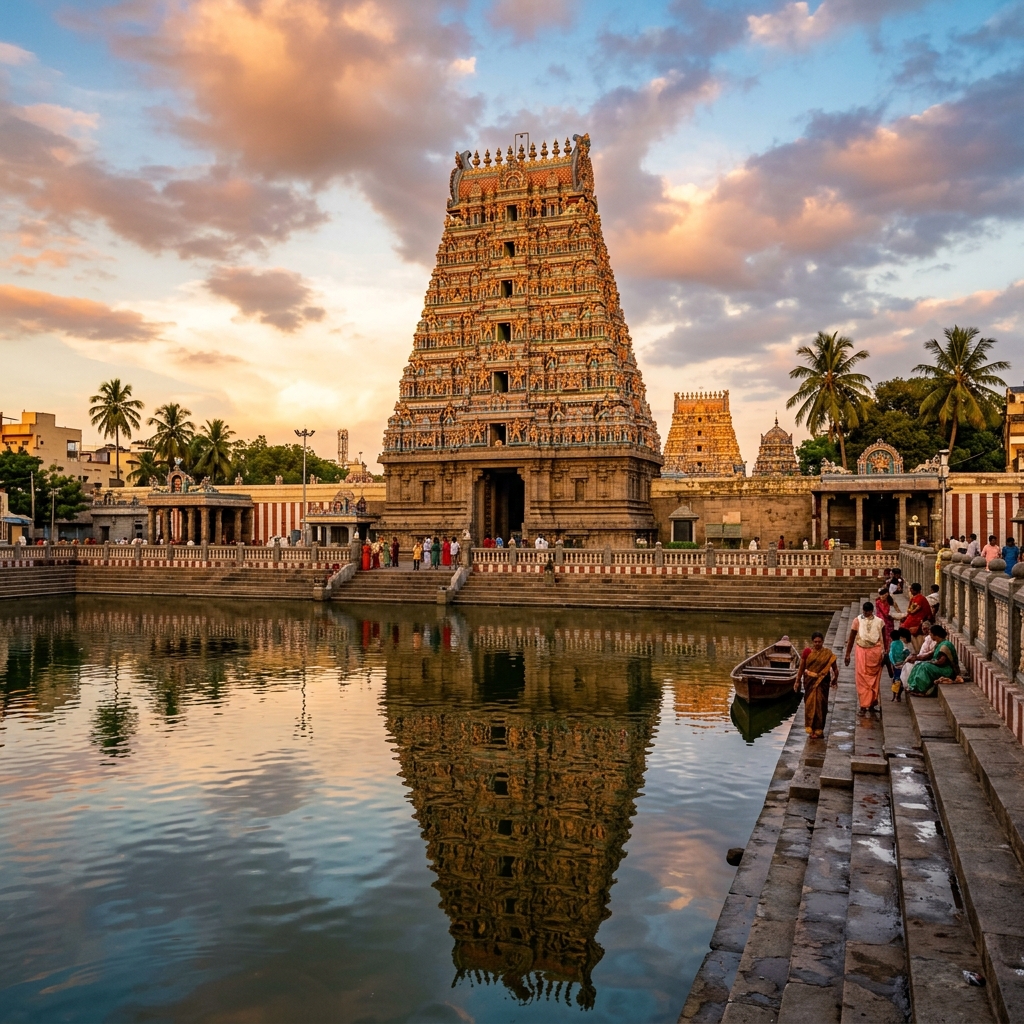
Kamadhenu arrived at Avoor, dug a holy tank using her horns—known today as Kamadhenu Theertham—and lovingly poured her milk over the Swayambhu Lingam every day. Pleased by her unwavering devotion, Lord Shiva appeared before Kamadhenu, absolved her of all curses, and granted her eternal residence in Devaloka. Since Lord Shiva accepted the milk offering from Kamadhenu (Pasu = Cow), He came to be known as Sri Pasupatheeswarar (The Lord of Divine Cows and All Living Beings), and the village was named Avoor (Aa in ancient Tamil = Cow).
Brahma & Vasishta's Spiritual Penance
Sages Vasishta and Agastya, along with Lord Brahma, performed intense penance at Avoor to seek wisdom and Agamic guidance from Lord Shiva. It is believed that Lord Shiva revealed the inner mystery of the Pancha Akshara Mantra (Na-Ma-Si-Va-Ya) to Lord Brahma at this holy sthalam.
Pancha Bhairavar Sub-Shrine Legend
A unique feature of the Avoor temple is the presence of Pancha Bhairavar—five forms of Lord Bhairava installed side by side in a dedicated shrine within the outer prakaram. According to temple tradition, worshipping these five Bhairavas on Rahu Kalam on Sundays and Ashtami days relieves devotees of severe planetary afflictions, financial debts, and fear of evil spirits.