Explore Calendar Community THADAM+ My Thadam
Cheyyar -Vedapureeswarar Temple, Thiruvettipuram Temple
Paadal Petra Sthalams

Cheyyar -Vedapureeswarar Temple, Thiruvettipuram Temple

Cheyyar -Vedapureeswarar Temple, Thiruvettipuram Temple

Vedanatheswarar and the Ambal Ilamulaiyamman,Balakuchambika The sthala vriksham is Panaimaram and the Theertham Kalyanakotitheertham Sambandar composed the Pathigam • Kanchipuram, Thondai Naadu Temples

Open in Maps My Thadam Check in

About the Sacred Destination

Presiding Deity
Vedanatheswarar and the Ambal Ilamulaiyamman,Balakuchambika The sthala vriksham is Panaimaram and the Theertham Kalyanakotitheertham Sambandar composed the Pathigam
Consort & Sub-Shrines
Sri Vedapureeswarar (Swayambhu Lingam) & Goddess Ilanmulai Nayaki / Balagujambal
Era & Dynasty
Pallava origin (7th–8th Century CE) with major expansions by Cholas (Kulothunga I & Rajaraja I, 10th–12th Century CE) and Vijayanagara Nayakas
Sacred Status & Classification
Paadal Petra Sthalam (Thondai Nadu Shrine #9 / Shrine #272 of 276 Shaivite Shrines)

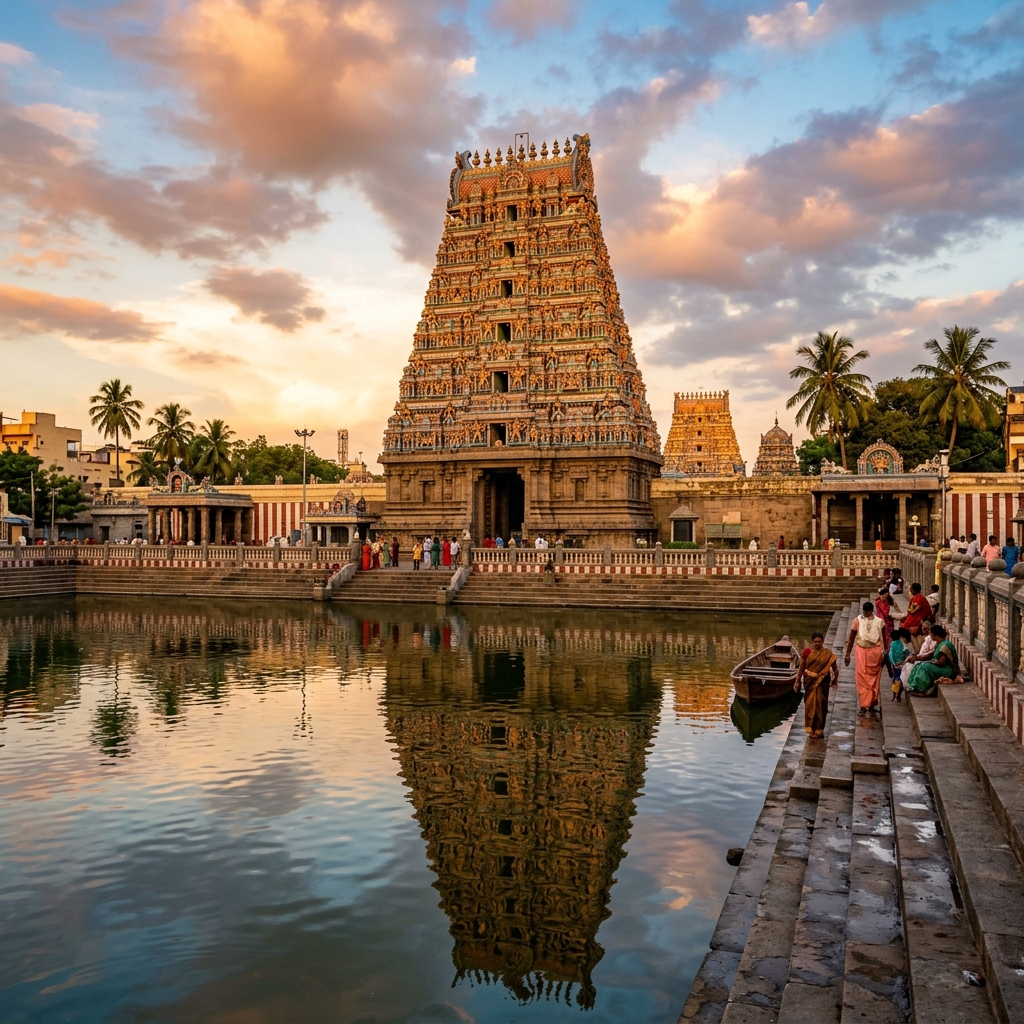
Cheyyar Arulmigu Vedapureeswarar Temple, historically known as Thiruvothur or Thiruvettipuram, is one of the celebrated 276 Paadal Petra Sthalams—the supreme sacred Shaivite sanctuaries immortalized in the 7th-century Tamil Tevaram hymns composed by Saint Thirugnanasambandar. Located on the northern banks of the holy Cheyyaru River in Tiruvannamalai District, Tamil Nadu, this ancient temple is famous throughout South India as the sacred site where Lord Shiva imparted the secret esoteric wisdom of the four Vedas to the divine Saptarishis and the personified Vedas themselves.

Spanning an expansive granite complex adorned with a majestic 5-tiered Rajagopuram, pillared assembly halls (Mandapams), five aligned Shiva Lingams representing the five manifestations (Pancha Brahmam) of Shiva, and the miraculous male Palmyra Palm Tree (Aan Panai Maram), Thiruvothur stands as an outstanding testament to Dravidian temple architecture and Shaivite devotional folklore. For over 1300 years, pilgrims have journeyed here to seek liberation from intellectual ignorance, success in Vedic and modern education, and divine healing.

Sthala Puranam & Authentic Legends

Divine Manifestation & Primary Origin Narrative (Teaching of the Vedas)

According to the ancient Sthala Puranam, the four Vedas (Rig, Yajur, Sama, and Atharva) personified themselves and performed intense penance on the banks of the Cheyyaru River to comprehend the ultimate esoteric truth behind their mantras. Moved by their sincere devotion, Lord Shiva manifested as a radiant Swayambhu Lingam beneath a Palmyra Palm tree (Panai Maram) and taught (Othuthal in Tamil) the inner core of divine knowledge to the Vedas. Because the Lord imparted Vedic wisdom here, the presiding deity assumed the sacred name Sri Vedapureeswarar ("The Lord of the Abode of Vedas"), and the surrounding town came to be known as Thiruvothur (derived from Othuthal, meaning the place of sacred teaching).

Saint Thirugnanasambandar's Male Palmyra Palm Miracle (Aan Panai Miracle)

The most celebrated miracle recorded in the annals of Shaivism occurred at Thiruvothur during the 7th century CE. A devout Shaivite follower named Thondar planted numerous Palmyra palm trees (Panai Maram) around the temple to supply palm leaves and palm oil for sacred temple rituals and daily lamps. However, to the dismay of the local townspeople and the taunts of rival sects, every single planted palm tree grew into a male Palmyra tree (Aan Panai), which naturally yields no fruit. The opponents mocked the devotee, declaring that his God Shiva was powerless to yield fruit from male trees.

Deeply distressed, the devotee appealed to Saint Thirugnanasambandar during his pilgrimage to Thiruvothur. Sambandar stood before the sanctum, looked upon the row of barren male palm trees, and composed his immortal Tevaram decad beginning with the verse "Poompugaluru". As he sang the 10th verse, a divine miracle occurred before the eyes of thousands: all the male Palmyra palm trees instantly transformed into fruit-bearing female palm trees (Penn Panai), loaded with ripe, sweet palm fruit (Nongu). This legendary miracle proved the omnipresent power of Lord Shiva and converted many to the Shaivite fold. To this day, a preserved male Palmyra palm tree (Aan Panai Maram) stands inside the temple prakaram as a living memorial of Sambandar's miracle.

Creation of Cheyyaru River by Lord Murugan

Another profound legend links the temple to Lord Murugan (Cey). When Lord Murugan needed holy water to perform daily Abhishekam for His father Lord Vedapureeswarar, He struck the earth with His divine spear (Vel). A surging holy river sprang forth from the strike, which came to be known as Cheyyaru (the river created by Cey / Murugan). The riverbank remains a revered site for ancestral rites and ceremonial holy dips.
Classical Literary Canon & Sacred Hymns

This temple is enshrined in the 1st Thirumurai of the Tevaram canon by Saint Thirugnanasambandar (54th Decad, Poompugaluru).

  • Tevaram Hymn by Saint Thirugnanasambandar:

> "பூம்புகலூர் மேவிய புண்ணியனே என்று என்று > ஆம்பரிசால் அடியார் ஏத்த அருள்செய்பவன் > ஓங்கு மதில் சூழ் திருவோத்தூர் மேவிய > பூங்கழல் அடியே போற்றுதும் யாமே." > > Translation: "O Holy One residing in Thiruvothur surrounded by towering stone walls! You grant divine grace to all devotees who chant Your glory. We bow down to Your lotus feet at Thiruvothur where the male palm trees yielded ripe fruits by Your supreme grace."

The temple is also glorified in Sekkizhar's 12th-century epic Periya Puranam under the Thirugnanasambandar Nayanar Puranam and in Saint Arunagirinathar's Tiruppugazh.

Epigraphical & Historical Events

  • Chola Inscriptions: Epigraphical surveys by the Archaeological Survey of India (ASI) record over 25 stone inscriptions carved on the Garbhagriha and outer mandapam granite walls. Inscriptions dating to Rajaraja Chola I (985–1014 CE) and Kulothunga Chola I (1070–1120 CE) document extensive land donations (Devadana), gold coins for burning perpetual ghee lamps (Nanda Deepam), and provisions for Vedic reciters.
  • Vijayanagara & Nayaka Patronage: Inscriptions belonging to Emperor Devaraya II of the Vijayanagara Empire document the construction of the outer 5-tiered Rajagopuram and the stone Simha Mandapam in the 15th century.

Archaeo-Engineering & Scientific Marvels

Ancient metallurgical marvels, Siddha alchemical sciences, archaeo-engineering, and GI-tagged heritage:

  • Botanical Anomaly (Aan Panai Maram): The temple maintains the unique tradition of nurturing male Palmyra palm trees (Aan Panai) that produce female fruit clusters, directly referencing the botanical miracle performed by Saint Thirugnanasambandar in 650 CE.
  • Pancha Lingam Alignment: The temple houses five distinct Shiva Lingams arranged in a straight axis within the inner prakaram, representing the five divine faces of Shiva: Sadyojata, Vamadeva, Aghora, Tatpurusha, and Ishana.

Signature Rituals, Anomalies & Special Sevas

Authentic daily pooja timelines, spatika-lingam darshan hours, special sevas, and sacred temple anomalies:

  • Six Daily Kala Poojas: Conducted according to Kamika Agama rites: Ushathkalam (6:30 AM), Kalasanthi (8:00 AM), Uchikalam (12:00 PM), Sayarakshai (5:30 PM), Irandam Kalam (7:00 PM), and Ardha Jamam (8:30 PM).
  • Aan Panai Maatru Vizha: A unique annual ritual during the Panguni Uthiram festival where priests reenact Saint Thirugnanasambandar's male-to-female palm tree miracle with special recitations of the 54th Tevaram Decad.
  • Veda Parayanam: Daily chanting of the four Vedas by traditional Oodhuvars and Vedic scholars near the sanctum to honor Lord Vedapureeswarar's identity as the Teacher of the Vedas.

What to See in the Temple (Visual Highlights)

🛕

Main Sanctum (Garbhagriha)

Houses the ancient Swayambhu Lingam of Sri Vedapureeswarar, adorned with vilva leaves and silver kavacham.

🛕

Goddess Ilanmulai Nayaki (Balagujambal) Shrine

A separate south-facing shrine housing the graceful 4-foot standing icon of Goddess Parvati, representing divine motherly affection.

🛕

Aan Panai Maram Shrine

The sacred Palmyra palm tree site inside the inner prakaram commemorating Thirugnanasambandar's miracle.

🛕

Pancha Lingam Corridor

Sculpted granite corridor housing five Lingams in a row.

🛕

Rajagopuram

Towering 5-tiered granite and stucco entrance gopuram on the northern side.

Practical Visitor Logistics & Dress Code

Temple Opening Timings & Daily Hours

Morning: 6:00 AM – 12:00 PM; Evening: 4:30 PM – 8:30 PM

Darshan & Special Entry Tickets

Free general entry queue; Special Darshan Ticket: ₹20; Quick Darshan Ticket: ₹50

Dress Code & Special Rules

Traditional Indian attire mandatory. Men: Dhoti, Shirt, or Kurta; Women: Saree, Half-Saree, or Salwar Kameez. Male upper cloth removal required during inner sanctum darshan

Accessibility & Senior Citizens

Ground-level access throughout outer prakaram; assistance ramps installed near the main mandapam step entry

Car Parking & Footwear Cloakroom

Dedicated vehicle parking available near the North Rajagopuram entrance along Cheyyar Town Main Road; shoe counter near main gopuram entrance

Best Time to Visit & Festival Calendar

Seasonal weather guide, peaceful darshan timings, and annual Brahmotsavam festival dates:

  • Best Months: October to March (cooler winter months ideal for pilgrimage and Cheyyaru river dips)
  • Major Festivals:
  • Thai Brahmotsavam (January–February): 10-day annual festival featuring grand chariot procession (Rathotsavam).
  • Panguni Uthiram & Aan Panai Vizha (March–April): Commemorating the Palm Tree Miracle.
  • Maha Shivaratri (February–March): Four-kala night long abhishekam and Veda chanting.

Transit, Accommodations & Prasadam Dining

How to Reach & Connectivity

  • Nearest Railway Station: Kanchipuram Railway Station (CJ) - 30 km; Kanchipuram Junction (28 km); Melmaruvathur Railway Station (35 km)
  • Nearest Airport: Chennai International Airport (MAA) - 95 km
  • Last-Mile Local Transport: Direct Tamil Nadu State Transport (TNSTC) buses operate every 15 minutes from Kanchipuram Bus Stand (30 km), Arani (30 km), and Tiruvannamalai (85 km) to Cheyyar Bus Stand. Auto-rickshaws and local taxis available at Cheyyar Bus Stand (1 km from temple)

Free Annadhanam & Local Veg Dining

  • Temple Prasadam: Sweet Palm Fruit Prasadam (Nongu) during festival season, Kovil Puliyodarai (Tamarind Rice), Sakkarai Pongal, and Panchamirtham served at the temple counter. Free daily Annadhanam served at 12:15 PM
  • Specific Pure-Veg Dining Spots: Hotel Sri Saravana Bhavan (Cheyyar Town Main Road - 0.5 km); Hotel Annapoorna Pure Veg (Cheyyar Bus Stand Road - 0.8 km)

Accommodations & Lodging Hubs

  • Temple / Devasthanam Stays: Arulmigu Vedapureeswarar Temple Yatri Nivas / Chouldry (Cheyyar Town)
  • Private Stays in Cheyyar: Hotel Sri Murugan Lodge (Cheyyar Main Road - 0.8 km); Hotel Raja Boarding & Lodging (Cheyyar - 1 km)
  • Nearby Luxury Stays (Kanchipuram - 30 km): Hotel GRT Regency Kanchipuram (30 km); Hotel Regency Kanchipuram (29 km)

Nearby Heritage Spots (5–30 km Radius)

Combine your yatra with surrounding UNESCO heritage sites, Paadal Petra Sthalams & Divya Desams:

Kanchipuram Silk & Temple City

30 km
Sacred & Heritage Spot

North; Famous ancient capital of Pallavas housing Ekambareswarar, Kailasanathar, and Varadaraja Perumal temples

Vandavasi Historic Fort

25 km
South

East; 18th-century battleground fort of the Carnatic Wars

Tiruvannamalai Annamalaiyar Temple

85 km
South

West; Supreme Pancha Bhoota Agni Sthalam

Verified References & Source Bibliography

  • Tevaram Thirumurai Canon (1st Thirumurai, Decad 54 by Saint Thirugnanasambandar)
  • Periya Puranam by Sekkizhar (Thirugnanasambandar Nayanar Puranam)
  • ASI South Indian Inscriptions (Vol. VII, Inscriptions of Thiruvothur / Cheyyar)
  • HR&CE Devasthanam Historical Archives, Arulmigu Vedapureeswarar Temple, Cheyyar

Community Photo Gallery (0)

No community photos uploaded yet.

Pilgrim Reflections (0)

No reflections logged for this destination yet.