
Explore Calendar Community THADAM+ My Thadam
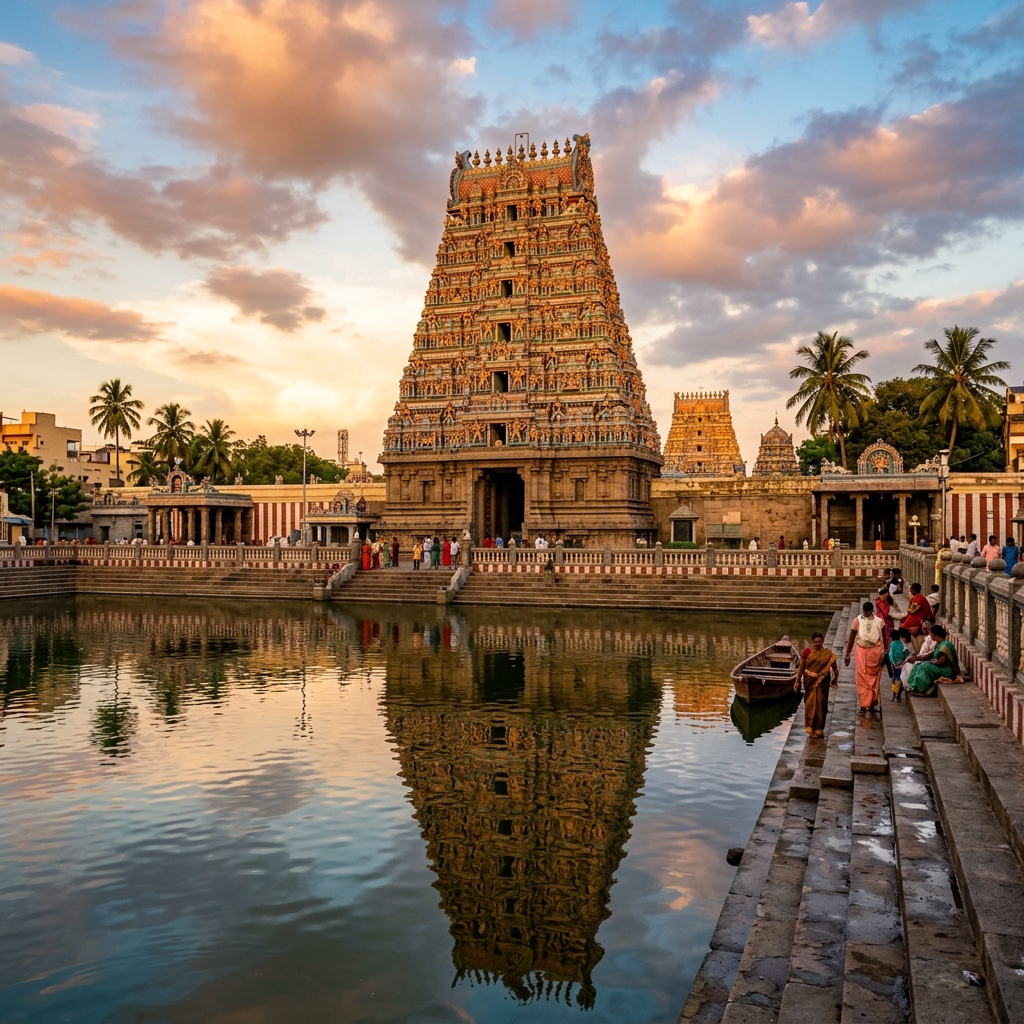
Elumiyankottur Sri Arambeshwara Swamy Temple
Paadal Petra Sthalams

Elumiyankottur Sri Arambeshwara Swamy Temple

Elumiyankottur Sri Arambeshwara Swamy Temple

Deiva Nayakar, Chandrasekharar and the Ambal Kodendu Mulaiyammai • Tiruvarur, Thondai Naadu Temples

Open in Maps My Thadam Check in

About the Sacred Destination

Presiding Deity
Deiva Nayakar, Chandrasekharar and the Ambal Kodendu Mulaiyammai
Consort & Sub-Shrines
Sri Arambeshwarar (Deiva Nayakeswarar / Chandrasekharar) & Goddess Kodendu Mulaiyammai / Kanagambigai
Era & Dynasty
Early Chola origins (9th–10th C CE) with structural renovations by Vijayanagara & Nayaka Kings
Sacred Status & Classification
Paadal Petra Sthalam (Thondai Nadu Shrine #13 / Shrine #276 of 276 Shaivite Shrines)

Elumiyankottur Arulmigu Arambeshwarar Temple, historically revered in Tamil literature as Ilambayan Kottur, is one of the celebrated 276 Paadal Petra Sthalams glorified in the 7th-century Tevaram hymns composed by Saint Thirugnanasambandar. Tucked away in a tranquil rural setting near Sriperumbudur and Kadambathur in Tiruvallur District, Tamil Nadu, this ancient shrine is famous for the divine legend of celestial nymph Rambha receiving redemption from a curse.

Featuring a serene granite sanctum, sculpted Chola pilasters, an ancient jasmine grove (Mullai Vana), and sacred water bodies (Mallika Theertham), Elumiyankottur offers a deeply peaceful spiritual atmosphere. Devotees visit this sacred sanctuary to pray for the removal of curses, restoration of health and beauty, and marital harmony.

Sthala Puranam & Authentic Legends

Apsara Rambha's Redemption & Name Origin

According to the Sthala Puranam, the celestial dancer Apsara Rambha incurred a divine curse that tarnished her physical form and celestial beauty. Seeking divine forgiveness, Sage Narada advised her to travel to the sacred jasmine forest (Mullai Vanam) near the Cooum River. Rambha fashioned a self-born Shiva Lingam out of sand and holy clay, offering sweet-scented jasmine flowers daily. Moved by her sincere penance, Lord Shiva manifested before her, restored her radiance, and freed her from the curse. Because Rambha worshipped Lord Shiva here, the deity assumed the title Arambeshwarar (Rambheshwarar), and the village came to be known as Rambhayankottur, which over centuries evolved phonetically into Ilambayan Kottur and Elumiyankottur.

Lord Shiva's Hunter Manifestation for Saint Sambandar

When Saint Thirugnanasambandar journeyed through the dense jasmine wilderness of Thondai Nadu searching for the hidden shrine of Ilambayan Kottur, he lost his way. Lord Shiva disguised Himself as a young hunter (Veduvan) carrying a bow and arrow, guided the saint through the dense forest, and pointed toward the holy sanctum. Upon realizing the hunter was none other than Lord Shiva, Sambandar broke into tears of joy and composed a Tevaram decad extolling the Lord as Deiva Nayakan ("The Supreme Master of Celestial Beings").

Classical Literary Canon & Sacred Hymns

This sacred shrine is enshrined in the 1st Thirumurai of the Tevaram by Saint Thirugnanasambandar.

  • Tevaram Hymn by Saint Thirugnanasambandar:

> "படாமுலை பங்கினன் பாய்புலித் தோலினன் > இடம்படு கொன்றையினான் இளம்பையங்கோட்டூர் > அடம்பமரும் சடையான் அடிபோற்றுவார் > உடம்பமரும் வினைகளுறு நோய் இலரே." > > Translation: "The Lord who grants half His form to the Divine Mother and wears the tiger skin resides at Ilambayan Kottur! Devotees who worship His lotus feet shall be liberated from all bodily ailments and past karmas."

The temple is also extolled in Sekkizhar's Periya Puranam.

Epigraphical & Historical Events

  • Chola Inscriptions: Epigraphical surveys by the Archaeological Survey of India (ASI) record stone inscriptions carved into the inner granite sanctum walls. Inscriptions belonging to Rajendra Chola I (1012–1044 CE) document land grants for daily jasmine flower garlands (Mullai Malai) and ghee lamp offerings.
  • Renovations by Local Chieftains: Inscriptions record 16th-century Vijayanagara grants by local chieftains of Sriperumbudur for temple festival rites.

Archaeo-Engineering & Scientific Marvels

Ancient metallurgical marvels, Siddha alchemical sciences, archaeo-engineering, and GI-tagged heritage:

  • Sand-Made Swayambhu Lingam (Prithvi Manifestation): The primary Lingam in the sanctum is believed to have been sculpted out of sand by Rambha, due to which water Abhishekam is performed only over the pedestal (Avudaiyar) and not directly on the Lingam body.
  • Acoustic Sanctuary: The compact Chola sanctum architecture creates rich acoustic resonance during Vedic chanting.

Signature Rituals, Anomalies & Special Sevas

Authentic daily pooja timelines, spatika-lingam darshan hours, special sevas, and sacred temple anomalies:

  • Four Daily Kala Poojas: Conducted as per Shaiva Agamic rites: Kalasanthi (8:00 AM), Uchikalam (11:30 AM), Sayarakshai (5:00 PM), and Ardha Jamam (7:30 PM).
  • Mullai Floral Archana: Special worship offering using fresh white jasmine flowers (Mullai) performed on Fridays for Goddess Kodendu Mulaiyammai.
  • Kavacham Abhishekam: Since the Lingam is made of soft sand, a brass/silver cover (Kavacham) is used during ritual bathing.

What to See in the Temple (Visual Highlights)

🛕

Main Sanctum (Garbhagriha)

Enshrines the sacred sand Swayambhu Lingam of Sri Arambeshwarar.

🛕

Goddess Kodendu Mulaiyammai Shrine

Separate shrine dedicated to Goddess Kanagambigai.

🛕

Veduvan Murugan Shrine

Sub-shrine commemorating Lord Shiva's hunter manifestation.

🛕

Mallika Theertham

Serene temple water tank situated near the entrance.

🛕

Granite Vimanam

Early Chola single-tiered stone vimanam with carved Nandi sculptures on corners.

Practical Visitor Logistics & Dress Code

Temple Opening Timings & Daily Hours

Morning: 6:30 AM – 11:30 AM; Evening: 4:30 PM – 7:30 PM

Darshan & Special Entry Tickets

Free general entry queue available

Dress Code & Special Rules

Traditional Indian attire mandatory (Dhoti/Shirt for men; Saree/Salwar Kameez for women)

Accessibility & Senior Citizens

Single-floor ground level layout suitable for elderly pilgrims

Car Parking & Footwear Cloakroom

Parking space available in front of the temple gate along Elumiyankottur Road; footwear counter near entrance

Best Time to Visit & Festival Calendar

Seasonal weather guide, peaceful darshan timings, and annual Brahmotsavam festival dates:

  • Best Months: October to March (cooler winter months ideal for visiting village temples)
  • Major Festivals:
  • Maha Shivaratri (Feb–March): Night-long four-kala poojas and jasmine floral worship.
  • Margazhi Arudra Darshan (Dec–Jan): Abhishekam and procession.
  • Panguni Uthiram (March–April): Annual temple festival.

Transit, Accommodations & Prasadam Dining

How to Reach & Connectivity

  • Nearest Railway Station: Kadambathur Railway Station (KBT) - 7 km; Tiruvallur Railway Station (TRL) - 14 km
  • Nearest Airport: Chennai International Airport (MAA) - 50 km
  • Last-Mile Local Transport: Local buses operate from Sriperumbudur Bus Stand (14 km) and Tiruvallur Bus Stand (14 km) to Elumiyankottur. Auto-rickshaws and taxis available at Kadambathur Railway Station (7 km from temple)

Free Annadhanam & Local Veg Dining

  • Temple Prasadam: Kovil Puliyodarai, Sakkarai Pongal, and Jasmine Flowers Prasadam available at temple counter
  • Specific Pure-Veg Dining Spots: Hotel Sri Saravana Bhavan (Sriperumbudur Main Road - 14 km); Hotel Vasantha Bhavan (Tiruvallur - 14 km)

Accommodations & Lodging Hubs

  • Hotels in Sriperumbudur (14–15 km): Hotel Mercure Sriperumbudur (15 km); Hotel Highway Grand (14 km)
  • Hotels in Tiruvallur (14 km): Hotel Vasantham Boarding & Lodging (Tiruvallur - 14 km)

Nearby Heritage Spots (5–30 km Radius)

Combine your yatra with surrounding UNESCO heritage sites, Paadal Petra Sthalams & Divya Desams:

Thakkolam Jalanadheswarar Temple

10 km
Sacred & Heritage Spot

West; Ancient Paadal Petra Sthalam with subterranean spring water

Koovam Tripuranathar Temple

8 km
North

West; Historic Shaivite shrine associated with Tripurasamharam

Sriperumbudur Sri Ramanujar Birthplace Temple

14 km
Sacred & Heritage Spot

East; Famous Vaishnavite temple & birthplace of Saint Ramanuja

Verified References & Source Bibliography

  • Tevaram Thirumurai Canon (1st Thirumurai by Saint Thirugnanasambandar)
  • Periya Puranam by Sekkizhar
  • ASI South Indian Inscriptions (Inscriptions of Thondai Nadu Temples)
  • HR&CE Devasthanam Archives, Arulmigu Arambeshwarar Temple, Elumiyankottur

Community Photo Gallery (0)

No community photos uploaded yet.

Pilgrim Reflections (0)

No reflections logged for this destination yet.