Explore Calendar Community THADAM+ My Thadam
Kanchipuram Arulmigu Kachi Anegathangavatham Eswarar Temple
Paadal Petra Sthalams

Kanchipuram Arulmigu Kachi Anegathangavatham Eswarar Temple

Kanchipuram-Kachi Anegathangavatham Siva Temple

Sri Anegathangabhadheswarar (Swayambhu Lingam) • Kanchipuram, Thondai Nadu

Open in Maps My Thadam Check in

About the Sacred Destination

Presiding Deity
Sri Anegathangabhadheswarar (Swayambhu Lingam)
Consort & Sub-Shrines
Goddess Manonmani Amman / Soundaranayaki
Era & Dynasty
Pallava Dynasty (Rajasimha Pallava Era, 7th-8th C)
Sacred Status & Classification
Paadal Petra Sthalam (Thondai Nadu #4 / #267 of 276)

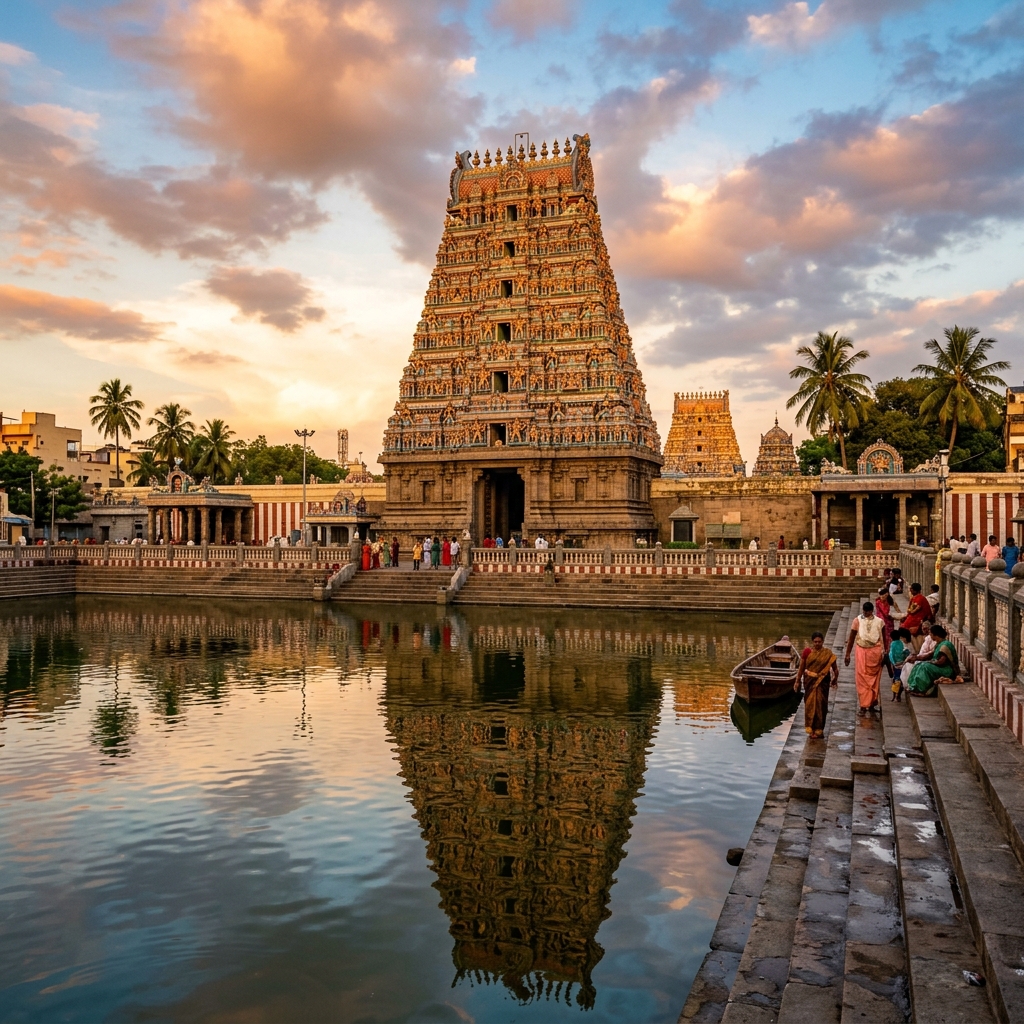
Kanchipuram Arulmigu Kachi Anegathangavatham Eswarar Temple is an ancient Paadal Petra Sthalam (Thondai Nadu Shrine #4) immortalized in the 8th-century Tevaram hymns of Saint Sundaramurthy Nayanar. Located near the world-famous Kailasanathar Temple in western Kanchipuram, the shrine stands as a tranquil sanctuary of early Pallava stone heritage.

The temple complex features a stone Vimanam, an inner sanctum housing a self-manifested (Swayambhu) Shiva Lingam, the sacred Anegathangavatham Theertham (Ganesha Theertham), and a dedicated shrine for Goddess Manonmani Amman. The temple is celebrated for the legend of Lord Vinayagar (Ganesha) establishing and worshipping Lord Shiva in a grove of celestial elephants (Anegam = Many, Thangavatham = Dwelling place of Elephants) to become the supreme Vighneswara (Remover of Obstacles).

Sthala Puranam & Authentic Legends

Lord Ganesha's Elephant Grove Worship Legend

According to the Kanchi Puranam, before assuming His divine duty as the leader of the Ganas (Ganapathi) and the remover of obstacles (Vighneswara), Lord Vinayagar arrived at Kanchipuram. He selected a serene dense forest populated by celestial elephants (Anegam = Many Elephants, Thangavatham = Habitat/Shelter).

Lord Vinayagar dug a sacred bathing tank (Ganesha Theertham), established a Shiva Lingam, and performed intense penance. Impressed by Ganesha's unwavering devotion, Lord Shiva manifested from the Lingam, blessed Ganesha with supreme wisdom, and bestowed upon Him the boon that any obstacle faced by devas or mortals would be dispelled upon worshipping Ganesha. Since Lord Shiva was worshipped by Ganesha in the elephant grove, the presiding deity was named Sri Anegathangabhadheswarar (or Anegathangavathamudaiyar).

Saint Sundarar's Vision of the Serpent & Turtle Shiva

When Saint Sundaramurthy Nayanar visited Kachi Anegathangavatham during his pilgrimage across Thondai Nadu, he was spellbound by the tranquil forest atmosphere of the shrine. Sundarar composed his famous Tevaram decad starting with "Pambodu Amai" (பாம்போடு ஆமை).

In this decad, Sundarar sang of Lord Shiva's paradoxical divine nature: He who wears deadly serpents (Pambu) and turtle shells (Amai), who rides the sacred bull Nandi as a divine madman (Pithan), yet bestows supreme grace upon those who worship Him in the quiet elephant grove of Kanchipuram.

Kubera's Wealth Blessing

Kubera, the treasurer of the Devas, performed penance to Lord Anegathangabhadheswarar at this shrine to regain his celestial treasures (Nava Nidhis) after they were seized by demons. Lord Shiva restored Kubera's wealth and guardian status.

Classical Literary Canon & Sacred Hymns

Kachi Anegathangavatham is enshrined in the 7th Thirumurai of the Shaivite Tevaram canon composed by Saint Sundaramurthy Nayanar.

> Tevaram Verse (Sundarar - 7th Thirumurai, Decad 47, Verse 1): > "பாம்போடு ஆமை விடைமேல் பித்தனென்று > நாம்பா டியாடும் கச்சி அனேகதங்காவதத்து > ஆம்பால் அடியார் தொழுதேத்த அருள்செய்யும் > நம்பானை நம்பித் தொழுவார்க்கில்லை அல்லலே."

Translation: "Oh Lord who wears serpents and turtle shells, who rides the sacred bull! The supreme Lord of Kachi Anegathangavatham who bestows divine grace upon His worshipping devotees! Those who place their trust in Him shall never know distress."

The shrine's history is also recorded in Sekkizhar's 12th-century Periya Puranam.

Epigraphical & Historical Events

  • Pallava Stone Inscriptions (7th–8th Century CE): Inscriptions carved into the sandstone base record endowments by Pallava King Narasimhavarman II (Rajasimha) for supplying pure oil for perpetual lamps (Nanda Deepam).
  • Chola Inscriptions (11th Century CE): Inscriptions from the reign of Kulothunga Chola I document land grants in Anegathangavatham village for conducting daily Ushathkalam abhishekams.

Archaeo-Engineering & Scientific Marvels

Ancient metallurgical marvels, Siddha alchemical sciences, archaeo-engineering, and GI-tagged heritage:

  • Pallava Gajaprashta Vimanam: The central sanctum features an early Pallava Gajaprashta (elephant-back) stone roof architecture, commemorating the elephant-forest sthala puranam.
  • Anegathangavatham Hydro-System: Ancient step-well fed by natural underground spring channels linked to the Kampa riverbed.

Signature Rituals, Anomalies & Special Sevas

Authentic daily pooja timelines, spatika-lingam darshan hours, special sevas, and sacred temple anomalies:

  • Vinayagar Chaturthi Special Pooja: Grand Ganesha and Shiva abhishekam performed on Vinayagar Chaturthi in the month of Avani (August–September).
  • Kala Ashtami & Pradosham: Special holy bathing with milk, curd, honey, and sandalwood paste performed to Lord Anegathangabhadheswarar during Pradosham.

What to See in the Temple (Visual Highlights)

🛕

Main Sanctum (Sri Anegathangabhadheswarar)

Housing the self-manifested (Swayambhu) Lingam facing East inside the Gajaprashta sanctum.

🛕

Goddess Manonmani Amman Shrine

Dedicated sub-shrine housing the standing idol of Ambal.

🛕

Vinayagar Sanctum

Iconographic shrine commemorating Ganesha's original penance.

🛕

Anegathangavatham Theertham

Sacred temple water tank in front of the shrine.

Practical Visitor Logistics & Dress Code

Temple Opening Timings & Daily Hours

Morning: 06:00 AM – 11:30 AM; Evening: 04:30 PM – 08:00 PM

Darshan & Special Entry Tickets

Free General Queue; Special Entry Ticket: ₹10

Dress Code & Special Rules

Traditional Indian attire required (Dhoti/Veshti for men; Saree/Salwar for women). Male upper cloth removal required in inner sanctum line.

Accessibility & Senior Citizens

Entire temple complex is at ground level with flat stone flooring, fully wheelchair accessible.

Car Parking & Footwear Cloakroom

Vehicle parking space available near the temple gate on Kailasanathar Kovil Road. Footwear counter located at entrance.

Best Time to Visit & Festival Calendar

Seasonal weather guide, peaceful darshan timings, and annual Brahmotsavam festival dates:

  • Best Months: October to March (pleasant climate for Kanchipuram temple exploration).
  • Major Festivals:
  • Maha Shivaratri (February–March)
  • Vinayagar Chaturthi (August–September)
  • Margazhi Arudra Darshan (December–January)

Transit, Accommodations & Prasadam Dining

How to Reach & Connectivity

  • Nearest Railway Station: Kanchipuram Railway Station (CJ/RDNG) (2.5 km)
  • Nearest Airport: Chennai International Airport (MAA) (65 km via NH48)
  • Last-Mile Local Transport: Auto-rickshaws and local town buses from Kanchipuram New Bus Stand (2 km) running towards Kailasanathar Kovil road.

Free Annadhanam & Local Veg Dining

  • Temple Prasadam: Sakkarai Pongal, Puliyodarai, Modagam & Vibhooti Prasadam.
  • Nearby Dining: Sri Rama Cafe (1.5 km), Saravana Bhavan Kanchipuram (2 km).

Accommodations & Lodging Hubs

  • Hotel Tamil Nadu (TTDC Kanchipuram) - 2 km from temple.
  • GRT Regency Kanchipuram (3 km)
  • Hotel MM Legacy (3.5 km)

Nearby Heritage Spots (5–30 km Radius)

Combine your yatra with surrounding UNESCO heritage sites, Paadal Petra Sthalams & Divya Desams:

Kanchipuram Kailasanathar Temple

0.8 km
Oldest 7th

century Pallava structural sandstone temple in Kanchipuram.

Kanchipuram Onakkandhan Thali Temple

0.6 km
Sacred & Heritage Spot

Paadal Petra Sthalam #3 of Thondai Nadu.

Kanchipuram Ekambareswarar Temple

1.5 km
Sacred & Heritage Spot

Prithvi Sthalam / Paadal Petra Sthalam #1.

Verified References & Source Bibliography

  • Tevaram 7th Thirumurai by Saint Sundaramurthy Nayanar.
  • Periya Puranam by Sekkizhar (Sundara Moorthy Nayanar Puranam).
  • Pallava Architecture by A.H. Longhurst (ASI Memoir No. 17).

Community Photo Gallery (0)

No community photos uploaded yet.

Pilgrim Reflections (0)

No reflections logged for this destination yet.