Explore Calendar Community THADAM+ My Thadam
Kanchipuram Arulmigu Thiru Metrali Nathar Temple
Paadal Petra Sthalams

Kanchipuram Arulmigu Thiru Metrali Nathar Temple

Kanchipuram-Thiru Metrali Nathar Koil

Sri Metrali Nathar / Odha Ethi Eeswarar (Swayambhu Lingam) • Kanchipuram, Thondai Nadu

Open in Maps My Thadam Check in

About the Sacred Destination

Presiding Deity
Sri Metrali Nathar / Odha Ethi Eeswarar (Swayambhu Lingam)
Consort & Sub-Shrines
Goddess Soundaranayaki / Odha Ethi Ambal
Era & Dynasty
Pallava Dynasty (Rajasimha Pallava Era, 7th-8th C)
Sacred Status & Classification
Paadal Petra Sthalam (Thondai Nadu #2 / #265 of 276)

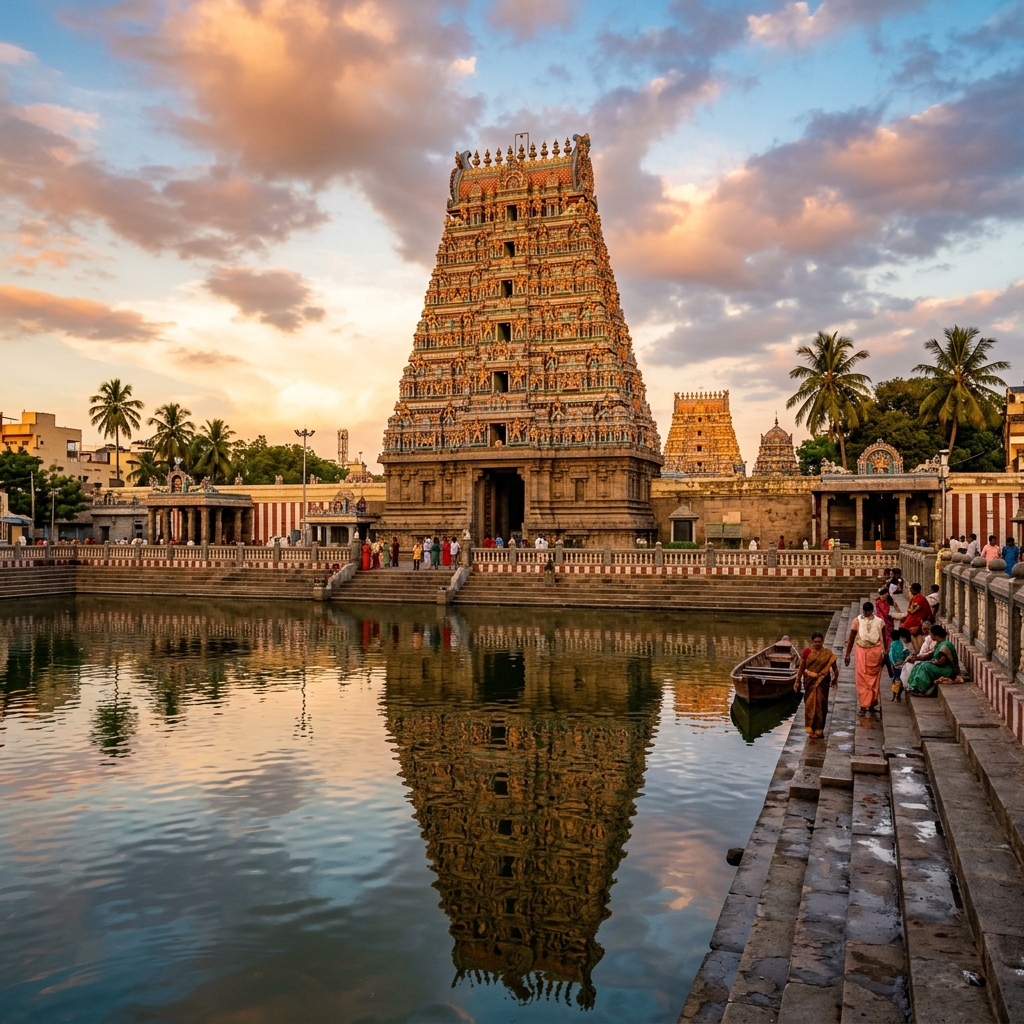
Kanchipuram Arulmigu Thiru Metrali Nathar Temple is a historic Paadal Petra Sthalam (Thondai Nadu Shrine #2) glorified in the Tevaram hymns of Saints Thirunavukkarasar (Appar) and Sundaramurthy Nayanar. Located in the weaver colony of Pillaiyarpalayam on the western side (Mel-Thali) of the ancient temple city of Kanchipuram, the temple represents 1,300 years of Pallava and Chola architectural heritage.

The temple complex features a 3-tiered gopuram, a spacious outer prakaram housing the sacred Odha Ethi Theertham, and an inner sanctum housing a self-manifested (Swayambhu) Shiva Lingam. The shrine is celebrated for two legendary events: Lord Vishnu performing penance to Shiva to regain His male form after the Mohini avatar, and Lord Shiva bestowing gold coins upon Saint Sundarar out of grace even without explicit prayers (Odha Ethiyappar).

Sthala Puranam & Authentic Legends

Lord Vishnu's Penance & Mel-Thali Origin Legend

According to the Kanchi Puranam, Lord Vishnu assumed the form of Mohini (the divine enchantress) during the cosmic distribution of Amritham (nectar of immortality) to deceive the Asuras. After the task was completed, Lord Vishnu desired to shed the Mohini form and regain His original masculine form (Purusha Roopam).

Lord Vishnu travelled to Kanchipuram, selected a peaceful spot on the western side of the town (Mel-Thali), dug the sacred Vishnu Theertham (Odha Ethi Theertham), and established a Shiva Lingam. He performed intense penance worshipping Lord Shiva. Pleased by Vishnu's sincere prayers, Lord Shiva manifested from the Lingam, restored Vishnu to His original divine form, and granted Him eternal peace. Since the temple was established on the western side (Mel = West, Thali = Temple), it came to be known as Thiru Metrali, and the presiding deity was named Sri Metrali Nathar.

Saint Sundarar's Gold Coin Miracle (Odha Ethiyappar)

When Saint Thirunavukkarasar (Appar) visited Thiru Metrali during his pilgrimage, he offered intense devotional service, sweeping the temple corridors and singing Tevaram hymns without asking for any material boons (Odhadhe Ethiadhar = Those who worship without reciting petitions). Later, when Saint Sundarar visited Thiru Metrali, he sang Tevaram verses describing Appar's selfless devotion.

Lord Shiva was so pleased by Sundarar's tribute to Appar that He miraculously granted bagfuls of gold coins (Pon) to Sundarar to support his pilgrimage and feeds for devotees. Because Lord Shiva granted boons to Appar and Sundarar even without them asking for material rewards, the deity earned the divine name Odha Ethi Eeswarar ("The Lord who bestows grace without being asked").

Classical Literary Canon & Sacred Hymns

Thiru Metrali is enshrined in the 6th Thirumurai by Saint Appar and the 7th Thirumurai by Saint Sundarar.

> Tevaram Verse (Appar - 6th Thirumurai, Decad 22, Verse 1): > "கச்சி மேற்றளி மேவிய காளத்தியை > நச்சி மேற்றளி நாதனை நாடொறும் > வைச்சு மேற்றளி வாழ்த்தும் மனத்தவர் > அச்ச மேற்றளி அல்லல் அறுப்பரே."

Translation: "Those who daily contemplate Lord Metrali Nathar of Kanchipuram with pure love and praise Him in their hearts shall have all fear dispelled and all suffering severed forever."

The temple's history is also recorded in Sekkizhar's Periya Puranam in the chapter describing Saint Thirunavukkarasa Swamigal Puranam.

Epigraphical & Historical Events

  • Pallava Inscriptions (7th–8th Century CE): Inscriptions dating to Pallava King Narasimhavarman II (Rajasimha) and Nandivarman II document the construction of the stone sanctum and donations of gold for burning daily ghee lamps (Nanda Deepam).
  • Chola Inscriptions (10th–11th Century CE): Charters from the reign of Rajaraja Chola I and Rajendra Chola I record land grants in Pillaiyarpalayam village for conducting special abhishekams during Pradosham.

Archaeo-Engineering & Scientific Marvels

Ancient metallurgical marvels, Siddha alchemical sciences, archaeo-engineering, and GI-tagged heritage:

  • Pallava Architecture: The Garbhagriha structure displays classic Pallava architectural traits, including Gajaprashta (elephant-back shaped) shrine contours and carved sandstone pillars.
  • Odha Ethi Hydro-Purity: The temple's sacred tank is fed by ancient underground channels linked to the Vegavathi river basin.

Signature Rituals, Anomalies & Special Sevas

Authentic daily pooja timelines, spatika-lingam darshan hours, special sevas, and sacred temple anomalies:

  • Odha Ethi Gold Coin Pooja: Special lamp lighting and bilva archana performed on Mondays for devotees seeking financial stability and freedom from debts.
  • Pradosham Pooja: Evening holy bathing with milk, curd, honey, and sandalwood paste performed to Lord Metrali Nathar during Pradosham.

What to See in the Temple (Visual Highlights)

🛕

Main Sanctum (Sri Metrali Nathar)

Housing the self-manifested (Swayambhu) Lingam facing East.

🛕

Goddess Soundaranayaki Shrine

Dedicated sanctum showcasing graceful Pallava-style stone sculptures of Amman.

🛕

Odha Ethi Theertham

Sacred temple tank where Lord Vishnu performed penance.

🛕

Appar & Sundarar Shrine

Sculpted icons of Saints Appar and Sundarar in prayer posture.

Practical Visitor Logistics & Dress Code

Temple Opening Timings & Daily Hours

Morning: 06:00 AM – 11:30 AM; Evening: 04:30 PM – 08:00 PM

Darshan & Special Entry Tickets

Free General Queue; Special Darshan Ticket: ₹10

Dress Code & Special Rules

Traditional Indian attire required (Dhoti/Shirt for men; Saree/Salwar for women). Male upper cloth removal required in inner sanctum line.

Accessibility & Senior Citizens

Entire temple complex is at ground level with flat stone flooring, fully wheelchair accessible.

Car Parking & Footwear Cloakroom

Open vehicle parking available in front of the temple gopuram in Pillaiyarpalayam. Footwear counter near main gate.

Best Time to Visit & Festival Calendar

Seasonal weather guide, peaceful darshan timings, and annual Brahmotsavam festival dates:

  • Best Months: October to March (mild, pleasant weather for Kanchipuram temple visits).
  • Major Festivals:
  • Maha Shivaratri (February–March)
  • Margazhi Arudra Darshan (December–January)
  • Appar Guru Pooja (Chithirai / April–May)

Transit, Accommodations & Prasadam Dining

How to Reach & Connectivity

  • Nearest Railway Station: Kanchipuram Railway Station (CJ/RDNG) (3 km)
  • Nearest Airport: Chennai International Airport (MAA) (65 km via NH48)
  • Last-Mile Local Transport: Auto-rickshaws and local town buses from Kanchipuram New Bus Stand (2 km) running directly to Pillaiyarpalayam bus stop.

Free Annadhanam & Local Veg Dining

  • Temple Prasadam: Sweet Pongal, Kovil Puliyodarai & Vibhooti Prasadam.
  • Nearby Dining: Sri Rama Cafe (1.5 km), Saravana Bhavan Kanchipuram (2 km).

Accommodations & Lodging Hubs

  • Hotel Tamil Nadu (TTDC Kanchipuram) - 2 km from temple.
  • GRT Regency Kanchipuram (3 km)
  • Hotel MM Legacy (3.5 km)

Nearby Heritage Spots (5–30 km Radius)

Combine your yatra with surrounding UNESCO heritage sites, Paadal Petra Sthalams & Divya Desams:

Kanchipuram Ekambareswarar Temple

1.5 km
Sacred & Heritage Spot

Largest temple in Kanchipuram, Prithvi Sthalam.

Kanchi Kamakshi Amman Temple

2 km
Sacred & Heritage Spot

Famous Shakti Peetham temple.

Kanchipuram Kailasanathar Temple

1.8 km
Oldest 7th

century Pallava structural sandstone temple in Kanchipuram.

Verified References & Source Bibliography

  • Tevaram 6th & 7th Thirumurai by Saints Appar and Sundarar.
  • Periya Puranam by Sekkizhar (Thirunavukkarasa Swamigal Puranam).
  • Pallava Architecture by A.H. Longhurst (ASI Memoir No. 17).

Community Photo Gallery (0)

No community photos uploaded yet.

Pilgrim Reflections (0)

No reflections logged for this destination yet.