
Explore Calendar Community THADAM+ My Thadam
Koovam Shiva Temple - Thirurvirkolam Tripuranathar
Paadal Petra Sthalams

Koovam Shiva Temple - Thirurvirkolam Tripuranathar

Koovam Shiva Temple - Thirurvirkolam Tripuranathar

Tripurantaka and the Ambal Tripurantaki The Theertham is Virkola Theertham Sambandar composed the Pathigam • Tamil Nadu, Thondai Naadu Temples

Open in Maps My Thadam Check in

About the Sacred Destination

Presiding Deity
Tripurantaka and the Ambal Tripurantaki The Theertham is Virkola Theertham Sambandar composed the Pathigam
Consort & Sub-Shrines
Sri Tripuranthakeswarar (Thiruvirkolam Nathar) & Goddess Thirupurasundari / Vardhamani
Era & Dynasty
Pallava origins (8th C CE) with major stone constructions by Chola Kings Kulothunga I, Vikrama Chola, and Vijayanagara Nayakas
Sacred Status & Classification
Paadal Petra Sthalam (Thondai Nadu Shrine #14 / Shrine #277 of 276 Shaivite Shrines)

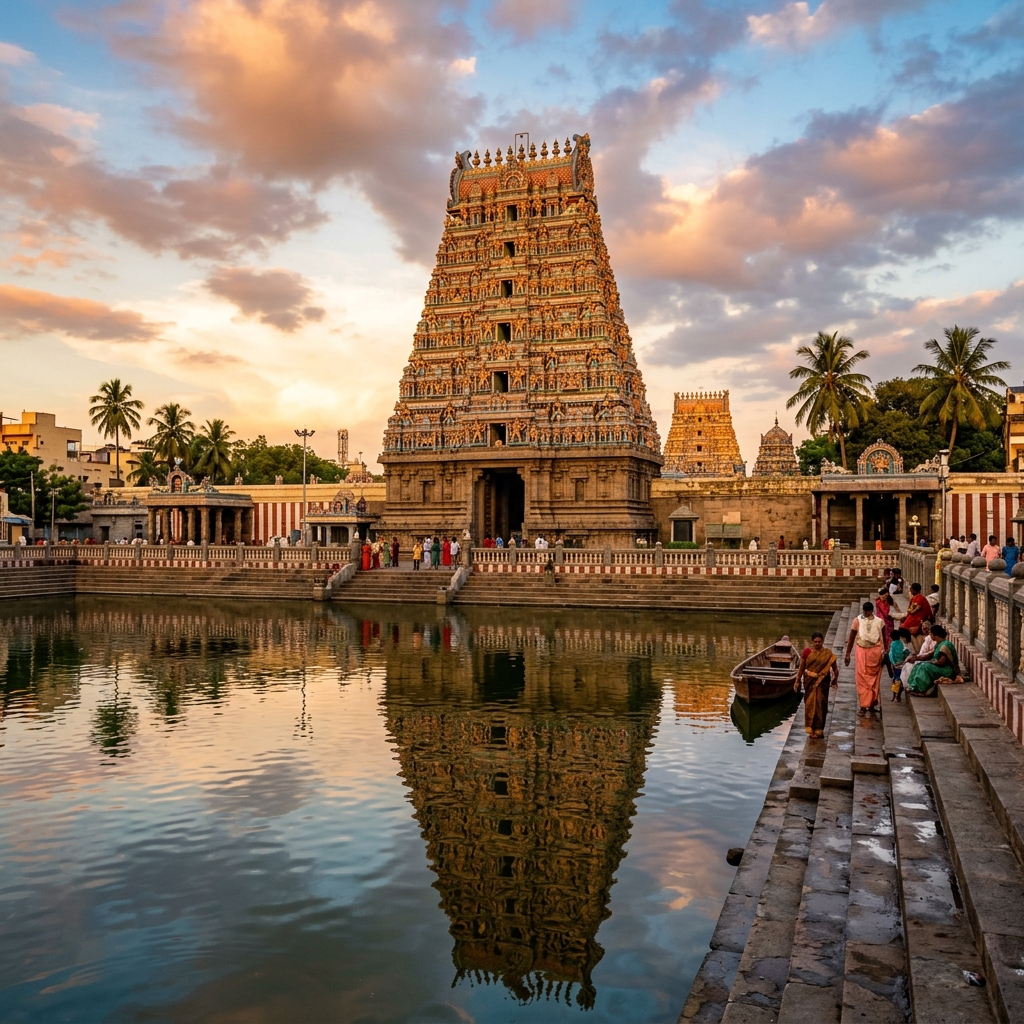
Koovam Arulmigu Tripuranthakeswarar Temple, anciently known as Thiruvirkolam, is one of the 276 celebrated Paadal Petra Sthalams immortalized in the 7th-century Tevaram hymns composed by Saint Thirugnanasambandar. Situated near the origin of the historic Cooum River in Tiruvallur District, Tamil Nadu, this holy shrine is famous throughout South India as the sacred site where Lord Shiva rested holding His divine cosmic bow (Vil) during the cosmic destruction of the three demonic cities (Tripuram).

Spanning an expansive granite complex housing a 5-tiered Rajagopuram, fine Chola relief pillars, a sacred lotus tank (Virkola Theertham), and an untouched Theenda Thirumeni Swayambhu Lingam that naturally changes color to forecast rainfall, Koovam stands as a unique blend of mythological lore and natural phenomenon. Devotees visit this sacred sanctuary to pray for the removal of obstacles, rain prosperity, and divine protection.

Sthala Puranam & Authentic Legends

Tripurasamharam & The Cosmic Bow Legend (Thiruvirkolam)

The core sthala puranam of Koovam is rooted in the legend of Tripurasamharam. When the three demon brothers (Tarakaksha, Kamalaksha, and Vidyunmali) built three invincible flying cities of gold, silver, and iron, Lord Shiva set out on a celestial chariot made of the Earth, with the Sun and Moon as wheels, to destroy them. However, the Devas grew arrogant, believing Lord Shiva could not succeed without their help. To teach them humility, Lord Shiva caused the chariot's axle to snap as He reached this holy site. Realizing their mistake, the Devas prayed to Lord Ganesha to clear the obstacle. Lord Shiva stood gracefully at this spot resting upon His divine bow (Vil-Kolam in Tamil). Because the Lord appeared holding His bow in divine posture here, the shrine assumed the sacred name Thiruvirkolam, which evolved into Koovam.

The Miracle of Rain Forecasting (Color-Changing Lingam)

The primary Swayambhu Lingam at Koovam is classified as an untouched deity (Theenda Thirumeni), sculpted out of soft natural clay. According to centuries of local observation, the Lingam's surface shade changes naturally before monsoon events: it turns a distinct Red hue prior to heavy torrential rain and shifts to White during dry spell periods. Because of this divine meteorological phenomenon, local farmers have revered Sri Tripuranthakeswarar as the divine guardian of agricultural prosperity. Priests do not touch the main Lingam directly; all ritual Abhishekam is offered over the copper pedestal (Avudaiyar).

Classical Literary Canon & Sacred Hymns

This sacred shrine is enshrined in the 1st Thirumurai of the Tevaram by Saint Thirugnanasambandar.

  • Tevaram Hymn by Saint Thirugnanasambandar:

> "திருவிற்கோலத்து ஈசனைச் சிந்தியாது இரிபவர் > உருவிற்கோலத்து உறுநோய் அடைவர் உணரார் > கருவிற்கோலத்து உயிரளிக்கும் எந்தை திருவிற்கோலத்து > அருளடையும் தன்மையரே ஆவரே." > > Translation: "Those who do not contemplate the Supreme Lord of Thiruvirkolam shall suffer from ignorance and affliction. But those who bow before the Lord who granted life to all beings shall be crowned with His eternal divine grace!"

The temple is also extolled in Sekkizhar's 12th-century Periya Puranam.

Epigraphical & Historical Events

  • Kulothunga Chola I Inscriptions: Over 20 stone inscriptions carved into the inner sanctum walls document royal grants by Kulothunga Chola I (1070–1120 CE) allocating agricultural lands for maintaining perpetual ghee lamps and feeding pilgrims.
  • Vikrama Chola Grants: Inscriptions of Vikrama Chola record structural renovations of the main granite Vimanam and the Goddess Thirupurasundari shrine in the 12th century.

Archaeo-Engineering & Scientific Marvels

Ancient metallurgical marvels, Siddha alchemical sciences, archaeo-engineering, and GI-tagged heritage:

  • Natural Soil Moisture Indicator: Geological observations of the clay Lingam indicate subtle mineral moisture absorption properties that react to atmospheric humidity shifts before monsoon rains, causing the visual color variation.
  • Untouched Deity Tradition (Theenda Thirumeni): Strict Agamic preservation protocol where no human hands touch the primary Lingam icon.

Signature Rituals, Anomalies & Special Sevas

Authentic daily pooja timelines, spatika-lingam darshan hours, special sevas, and sacred temple anomalies:

  • Four Daily Kala Poojas: Conducted as per Shaiva Agamic rites: Kalasanthi (8:00 AM), Uchikalam (12:00 PM), Sayarakshai (5:30 PM), and Ardha Jamam (8:00 PM).
  • Copper Avudaiyar Abhishekam: Sacred bathing rituals (milk, curd, honey, sandal paste) performed exclusively over the copper pedestal armor (Kavacham) preserving the untouched clay Lingam.
  • Tripura Dahanam Festival: Annual festival reenactment of the destruction of the three demonic cities during Kartikai Deepam.

What to See in the Temple (Visual Highlights)

🛕

Main Sanctum (Garbhagriha)

Enshrines the sacred color-changing Swayambhu Lingam of Sri Tripuranthakeswarar.

🛕

Goddess Thirupurasundari Shrine

Separate south-facing shrine dedicated to Goddess Vardhamani.

🛕

Virkola Theertham

Sacred temple tank situated on the southern side of the complex.

🛕

Ganesha Obstacle-Removal Shrine

Sub-shrine commemorating Lord Ganesha fixing the chariot axle.

🛕

Rajagopuram

Towering 5-tiered granite and mortar entrance gopuram.

Practical Visitor Logistics & Dress Code

Temple Opening Timings & Daily Hours

Morning: 6:00 AM – 12:00 PM; Evening: 4:30 PM – 8:00 PM

Darshan & Special Entry Tickets

Free general entry queue available

Dress Code & Special Rules

Traditional Indian attire mandatory (Dhoti/Shirt for men; Saree/Salwar Kameez for women)

Accessibility & Senior Citizens

Ground-level layout throughout outer prakaram suitable for elderly visitors

Car Parking & Footwear Cloakroom

Parking space available in front of the East Rajagopuram entrance along Koovam Village Road; footwear counter near entrance

Best Time to Visit & Festival Calendar

Seasonal weather guide, peaceful darshan timings, and annual Brahmotsavam festival dates:

  • Best Months: October to March (mild winter months ideal for visiting village heritage temples)
  • Major Festivals:
  • Kartikai Deepam & Tripura Dahanam (Nov–Dec): Reenactment of the Tripurasamharam miracle.
  • Maha Shivaratri (Feb–March): Four-kala night long abhishekam and Veda parayanam.
  • Panguni Uthiram (March–April): Annual Brahmotsavam festival.

Transit, Accommodations & Prasadam Dining

How to Reach & Connectivity

  • Nearest Railway Station: Kadambathur Railway Station (KBT) - 9 km; Tiruvallur Railway Station (TRL) - 16 km; Arakkonam Junction (AJJ) - 20 km
  • Nearest Airport: Chennai International Airport (MAA) - 52 km
  • Last-Mile Local Transport: Direct local buses run from Tiruvallur Bus Stand (16 km) and Kadambathur to Koovam Village Stop. Auto-rickshaws available at Kadambathur Railway Station (9 km from temple)

Free Annadhanam & Local Veg Dining

  • Temple Prasadam: Kovil Puliyodarai, Sakkarai Pongal, Sundal, and Vibhooti Prasadam served at temple counter
  • Specific Pure-Veg Dining Spots: Hotel Vasantha Bhavan (Tiruvallur - 16 km); Hotel Sri Saravana Bhavan (Sriperumbudur - 18 km)

Accommodations & Lodging Hubs

  • Hotels in Tiruvallur (16 km): Hotel Vasantham Boarding & Lodging (Tiruvallur - 16 km)
  • Hotels in Sriperumbudur (18 km): Hotel Mercure Sriperumbudur (18 km); Hotel Highway Grand (17 km)

Nearby Heritage Spots (5–30 km Radius)

Combine your yatra with surrounding UNESCO heritage sites, Paadal Petra Sthalams & Divya Desams:

Elumiyankottur Arambeshwarar Temple

8 km
South

East; Paadal Petra Sthalam associated with Apsara Rambha's redemption

Thakkolam Jalanadheswarar Temple

16 km
Sacred & Heritage Spot

West; Ancient Shaivite shrine with subterranean spring water

Tiruvallur Sri Veeraraghavaswamy Temple

16 km
Sacred & Heritage Spot

North; Famous 108 Divya Desam Vaishnavite temple

Verified References & Source Bibliography

  • Tevaram Thirumurai Canon (1st Thirumurai by Saint Thirugnanasambandar)
  • Periya Puranam by Sekkizhar
  • ASI South Indian Inscriptions (Inscriptions of Koovam / Thiruvirkolam)
  • HR&CE Devasthanam Archives, Arulmigu Tripuranthakeswarar Temple, Koovam

Community Photo Gallery (0)

No community photos uploaded yet.

Pilgrim Reflections (0)

No reflections logged for this destination yet.