Explore Calendar Community THADAM+ My Thadam
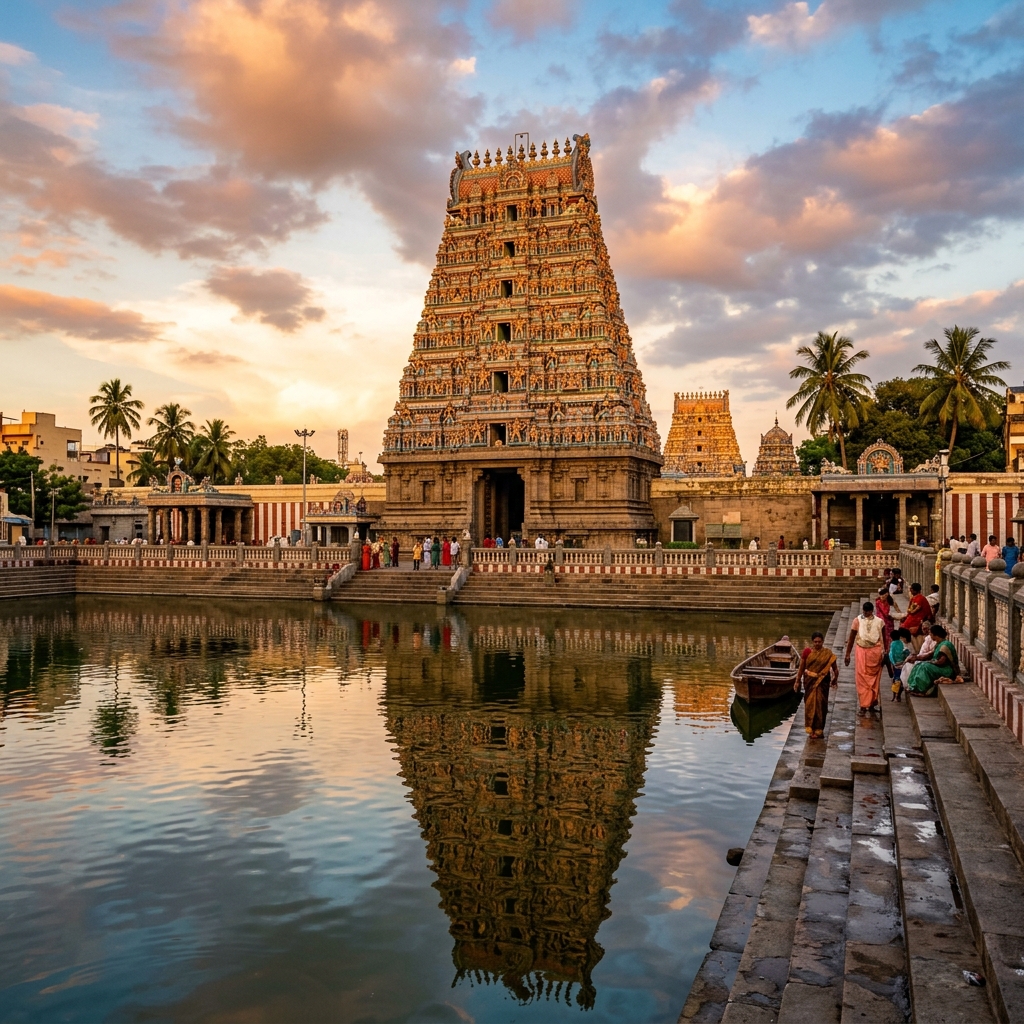
Nageshwara Temple, Kumbakonam
Paadal Petra Sthalams

Nageshwara Temple, Kumbakonam

குடந்தை கீழ்க்கோட்டம் நாகேஸ்வரசுவாமி திருக்கோயில்

Lord Nageshwara (Swayambhu Shiva Lingam) & Goddess Periyanayaki Amman • Thanjavur, Kumbakonam (Kaveri Thenkarai Sthalam #127)

Open in Maps My Thadam Check in

About the Sacred Destination

Presiding Deity
Lord Nageshwara (Swayambhu Shiva Lingam) & Goddess Periyanayaki Amman
Consort & Sub-Shrines
Goddess Periyanayaki (Brihannayaki) Amman
Era & Dynasty
Early Chola Dynasty (Aditya Chola I reign, c. 886–907 CE)
Sacred Status & Classification
Paadal Petra Sthalam (Kaveri Thenkarai #127), ASI Heritage Monument, Early Chola Art Masterpiece

Arulmigu Nageshwara Temple (also known as Kudanthai Keezh Kottam) is an ancient architectural jewel situated in the heart of Kumbakonam, Tamil Nadu. Renowned globally among art historians, epigraphists, and archaeologists, this temple represents one of the finest and most intact surviving examples of Early Chola stone architecture and relief sculpture in South Asia.

Spanning over 3 acres near the core of Kumbakonam town, the shrine is dedicated to Lord Shiva as Nageshwara (the Lord of the Serpent King) and His divine consort Goddess Periyanayaki Amman. Unlike later medieval temples expanded with massive sprawling enclosures, Nageshwara Temple retains its original late 9th-century Chola layout: a square Garbhagriha, an exquisite Ardhamandapa, an ornate horse-drawn stone chariot Nataraja Sabha, and a tranquil sacred tank known as the Surya Pushkarani.

Sthala Puranam & Authentic Legends

Divine Origin & Adisesha's Penance (Sthala Puranam)

The primary sthala puranam of Nageshwara Temple is intimately linked with Adisesha, the thousand-headed serpent king who serves as the cosmic couch of Lord Vishnu. According to ancient Shaivite lore, Adisesha suffered from unbearable bodily heat, venomous exhaustion, and physical strain caused by holding the immense mass of the universe upon his hoods.

Seeking divine relief, Adisesha descended to the sacred Vilva forest of Kumbakonam and performed rigorous tapas towards Lord Shiva. Moved by his unyielding devotion, Lord Shiva emerged from a self-manifested (Swayambhu) Lingam beneath the Vilva tree. The Lord cooled Adisesha's scorching venom, restored his cosmic vigor, and granted a boon that anyone suffering from serpent-related planetary afflictions (Rahu-Kethu Doshas) would find instant peace upon worshipping at this shrine. Henceforth, the deity assumed the sacred name Nageshwara ("Lord of the Serpent King").

Kudanthai Keezh Kottam & The Amrita Kalasam Legend

In the Tevaram hymns, the temple is designated as Kudanthai Keezh Kottam ("The Eastern Temple Shrine of Kumbakonam"). Puranic tradition narrates that during the great cosmic deluge (Pralaya), Lord Brahma placed the seeds of creation and the elixir of immortality inside a sacred pot (Amrita Kalasam) atop Mount Meru. As the deluge waters swept the pot southward to Kumbakonam, Lord Shiva in the form of a hunter (Kirata) shot an arrow to break the pot.

The neck of the pot fell at Mahamaham tank, while a sacred Vilva leaf attached to the pot floated to this eastern precinct, giving birth to the Sthala Vriksham and the Swayambhu Lingam of Nageshwara Temple.

The Chithirai Surya Pooja Miracle

A captivating astronomical and spiritual anomaly takes place annually during the Tamil month of Chithirai (April 11–13). For three consecutive mornings at sunrise, the natural rays of the Sun (Surya Bhagavan) pass precisely through the eastern gopuram gateway, traverse the outer mandapam halls, and directly illuminate the face of the Swayambhu Shiva Lingam in the innermost sanctum, performing a natural solar Surya Abhishekam.

Classical Literary Canon & Sacred Hymns

Nageshwara Temple holds an exalted place in 7th-century Shaivite devotional literature.

Saint Thirunavukkarasar (Appar) composed a dedicated Pathigam in the 6th Thirumurai praising the Lord of Keezh Kottam: > "கீழ்க்கோட்டம் மேயானைக் கேடிலியை... என் நெஞ்சினுள்ளே வைப்பேன்" > ("I shall enshrine within my heart the indestructible Supreme Lord who abides at Kudanthai Keezh Kottam...")

Saint Thirugnanasambandar also glorified the deity in his Tevaram hymns, celebrating the lush gardens and holy waters surrounding the shrine. The temple is further chronicled in Sekkizhar's 12th-century magnum opus Periya Puranam and Saint Arunagirinathar's 15th-century Thiruppugazh.

Epigraphical & Historical Events

The stone walls of the Garbhagriha contain priceless royal inscriptions dating to the reign of King Aditya Chola I (871–907 CE) and Parantaka Chola I (907–955 CE).

Inscriptions record royal land grants, endowments of gold coins (Kasu) for maintaining perpetual oil lamps (Nanda Deepam), and ritual donations by Chola royal queens. Celebrated art historians (C. Sivaramamurti, Douglas Barrett, K.A. Nilakanta Sastri, and S.R. Balasubrahmanyam) highlight Nageshwara Temple as the definitive benchmark of Early Chola portrait sculpture, noting that the life-sized stone figures of Chola princesses carved on the outer sanctum walls are unrivaled in South Asian art history.

Archaeo-Engineering & Scientific Marvels

Ancient metallurgical marvels, Siddha alchemical sciences, archaeo-engineering, and GI-tagged heritage:

  • Architectural Solar Alignment: Precision engineering of the gopuram, outer hall, and inner sanctum axes enables sunlight to travel over 100 meters unhindered to strike the Lingam during Chithirai 11-13.
  • Mastery of Early Chola Relief Sculptures: The exterior walls of the Garbhagriha feature 3-foot-high portrait statues of royal maidens and rishis displaying anatomical perfection, delicate draped garments, and expressive facial postures unmatched by later periods.
  • ASI Protected Heritage Monument: Recognized and maintained by the Archaeological Survey of India (ASI) as a protected monument of national importance.

Signature Rituals, Anomalies & Special Sevas

Authentic daily pooja timelines, spatika-lingam darshan hours, special sevas, and sacred temple anomalies:

  • Chithirai Surya Pooja: Annual 3-day solar worship ritual held in mid-April where special abhishekam is performed as sun rays illuminate the deity.
  • Rahu Kaalam Milk Abhishekam: Special Sunday Rahu Kaalam (4:30 PM – 6:00 PM) worship offered to Lord Nageshwara and Adisesha for relief from serpent doshas.
  • 6-Kalam Agamic Poojas: Daily worship conducted under strict Shaiva Agama rites: Ushathkalam (6:30 AM), Kalasanthi (8:00 AM), Uchikalam (12:00 PM), Sayarakshai (5:30 PM), Irandam Kalam (7:30 PM), and Ardha Jamam (8:30 PM).

What to See in the Temple (Visual Highlights)

🛕

Early Chola Portrait Sculptures

Life-sized stone reliefs of Chola royal women, princesses, and sages on the outer sanctum walls.

🛕

Nataraja Ratha Mandapam

Nataraja shrine constructed in the shape of a stone horse-drawn chariot with carved wheels.

🛕

Garbhagriha & Swayambhu Lingam

Inner sanctum housing the ancient Swayambhu Lingam of Lord Nageshwara.

🛕

Goddess Periyanayaki Amman Shrine

Separate south-facing shrine dedicated to Goddess Brihannayaki.

🛕

Surya Pushkarani

Sacred temple water tank located near the eastern entrance.

Practical Visitor Logistics & Dress Code

Temple Opening Timings & Daily Hours

Morning: 6:00 AM – 12:30 PM; Evening: 4:30 PM – 9:00 PM (Extended till 9:30 PM on Sundays for Rahu Kaalam)

Darshan & Special Entry Tickets

Free general Darshan line available; Special Darshan Ticket: ₹10 / ₹50

Dress Code & Special Rules

Men: Dhoti / Kurta / Trousers (Shirt removal mandatory in inner sanctum line); Women: Saree / Salwar Kameez

Accessibility & Senior Citizens

Wheelchair ramp available at main East entrance

Car Parking & Footwear Cloakroom

Vehicle parking along Nageswaran Thirumanjana Veedhi near East Gopuram; footwear counter located at East entrance

Best Time to Visit & Festival Calendar

Seasonal weather guide, peaceful darshan timings, and annual Brahmotsavam festival dates:

  • Best Months: October to March (pleasant climate); mid-April for Chithirai Surya Pooja
  • Major Festivals: Chithirai Surya Pooja (April), Maha Shivaratri (February–March), Margazhi Arudra Darshan (December–January), Masi Magam (February–March)

Transit, Accommodations & Prasadam Dining

How to Reach & Connectivity

• Nearest Railway Station: Kumbakonam Railway Station (KMU) - 1.5 km • Nearest Airport: Tiruchirappalli International Airport (TRZ) - 91 km / Chennai International Airport (MAA) - 275 km • Last-Mile Local Transport: Town buses, auto-rickshaws (₹50-₹80 fixed fare from station), and local taxis readily available

Free Annadhanam & Local Veg Dining

  • Temple Prasadam: Sakkarai Pongal, Kovil Puliyodarai, Sundal, Vibhooti Prasadam
  • Nearby Pure-Vegetarian Restaurants: Sri Mangalambiga Vilas (famous traditional South Indian hotel - 0.4 km), Hotel Venkatramana (0.5 km), Murali's Degree Coffee (0.3 km)

Accommodations & Lodging Hubs

  • Hotel Raya's Kumbakonam (0.5 km) - Nageswaran North Veedhi
  • Hotel Le Temple Kumbakonam (0.8 km) - Near Railway Station Road
  • TTDC Hotel Tamil Nadu Kumbakonam (1.2 km) - Court Road

Nearby Heritage Spots (5–30 km Radius)

Combine your yatra with surrounding UNESCO heritage sites, Paadal Petra Sthalams & Divya Desams:

Sarangapani Temple, Kumbakonam

0.6 km
Major Divya Desam Vaishnava shrine with horse

drawn stone chariot architecture

Ramaswamy Temple, Kumbakonam

0.4 km
Sacred & Heritage Spot

Famed for Ramayana mural paintings and 62 carved pillars

Airavatesvara Temple, Darasuram

4.5 km
Sacred & Heritage Spot

UNESCO World Heritage Great Living Chola Temple built by Rajaraja Chola II

Verified References & Source Bibliography

  • Early Chola Temples (850–980 A.D.) by S.R. Balasubrahmanyam (Orient Longman, 1971)
  • South Indian Inscriptions, Vol. XIX (Inscriptions of the Chola Dynasty)
  • Archaeological Survey of India (ASI) Reports on Kumbakonam Heritage Monuments
  • Tamil Nadu HR&CE Devasthanam Records for Arulmigu Nageswaraswamy Temple

Community Photo Gallery (0)

No community photos uploaded yet.

Pilgrim Reflections (0)

No reflections logged for this destination yet.