
Explore Calendar Community THADAM+ My Thadam
Neivanai - Swarnakateshwarar Temple
Paadal Petra Sthalams

Neivanai - Swarnakateshwarar Temple

Neivanai - Swarnakateshwarar Temple

Venneiyappar, Swarnaghateswarar and the Ambal Neelamalarkkanni • Tamil Nadu, Nadu Naadu

Open in Maps My Thadam Check in

About the Sacred Destination

Presiding Deity
Venneiyappar, Swarnaghateswarar and the Ambal Neelamalarkkanni
Consort & Sub-Shrines
Lord Swarnakateshwarar (Swarnagiriswarar - Swayambhu Lingam) & Goddess Neelamalarkkanni (Neelambigai / Soundaranayaki)
Era & Dynasty
Ancient Chola stone construction (10th–12th Century CE - Parantaka I & Rajaraja I).
Sacred Status & Classification
Paadal Petra Sthalam (#10 in Nadu Naadu / 276 Shaivite Shrines); Glorified in Tevaram by Thirugnanasambandar.

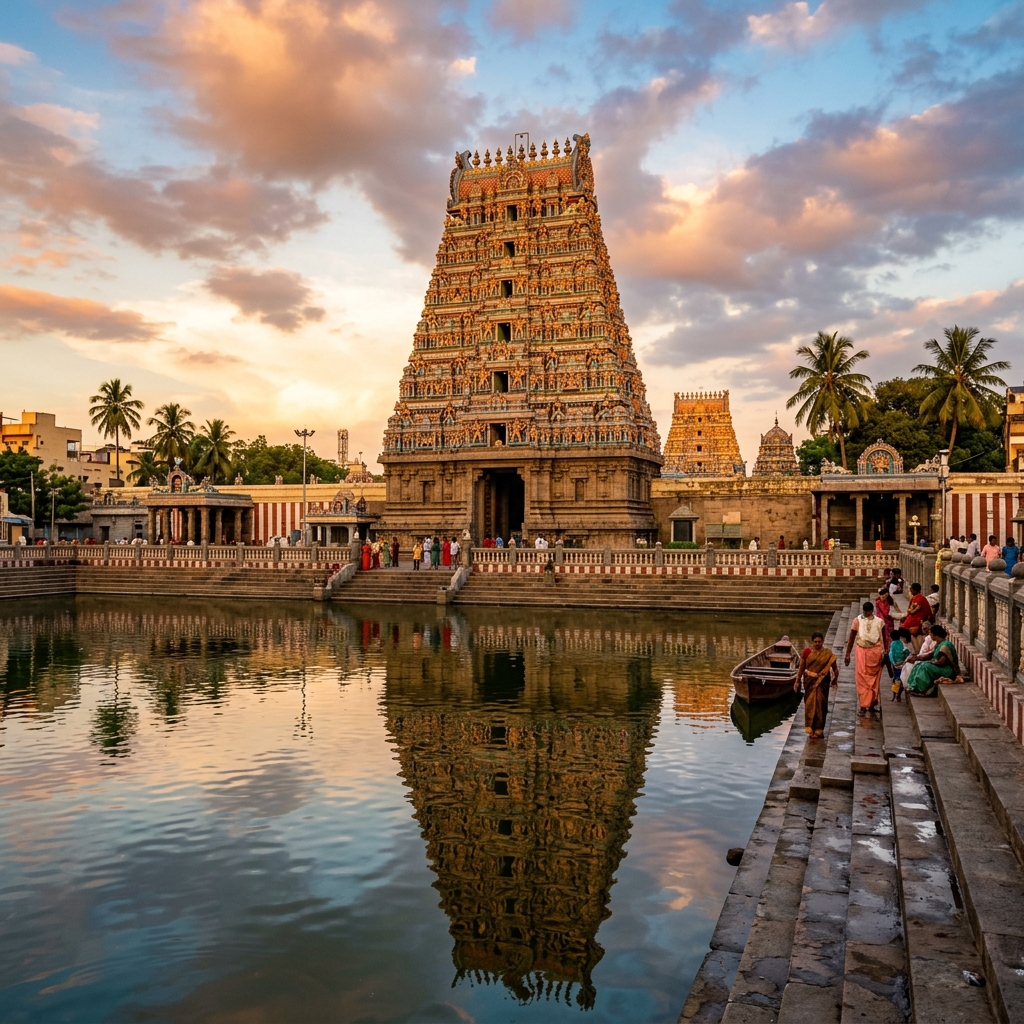
Neivanai Arulmigu Swarnakateshwarar Temple (historically known as Thiru Nelvennai) is an ancient 10th-century Chola granite sanctuary and the 10th holy Paadal Petra Sthalam in the historic Nadu Naadu region of Tamil Nadu. Tucked away in a tranquil rural setting near Ulundurpet in Kallakurichi district, this sacred shrine derives its unique name Nel-Vennei (Butter from Paddy) from the divine miracle where fragrant butter oozed out of wild paddy grains to supply ghee for Sage Sharabhanga's daily abhishekam.

Enshrined in the 7th-century Tamil Tevaram hymns composed by child-saint Thirugnanasambandar, the temple is celebrated for bestowing golden prosperity (Swarnam). The temple complex features a classic Dravidian Rajagopuram, an inner sanctum housing the Swayambhu Lingam of Swarnakateshwarar, a dedicated shrine for Goddess Neelamalarkkanni, the sacred Bamboo tree (Moongil Sthala Vriksham), and the holy Swarna Theertham. Pilgrims visit Neivanai to seek financial prosperity, removal of debt, agricultural abundance, and freedom from astrological hurdles.

Sthala Puranam & Authentic Legends

The Miracle of Paddy-Butter (Nel-Vennei)

According to the Sthala Puranam, during ancient times, Sage Sharabhanga performed intense penance at this location. Lacking dairy cows in the wilderness to perform daily milk and ghee abhishekam to the self-born Shiva Lingam, the sage prayed to Lord Shiva with tearful devotion.

Lord Shiva appeared in a dream and instructed the sage: "Gather the grains of wild paddy (Nel) growing around My shrine and press them with your hands." Miraculously, when Sage Sharabhanga squeezed the paddy grains, rich, sweet butter (Vennei) oozed forth from the husk! The sage churned this divine paddy-butter into pure ghee and performed holy abhishekam to the Lord. In commemoration of this agricultural miracle, the town was hailed as Thiru Nelvennai (now corrupted to Neivanai).

The Golden Pot (Swarnakateshwarar) Legend

Puranic lore records that Lord Indra and Lord Brahma worshipped Lord Shiva here with golden lotus flowers to seek forgiveness for spiritual errors. Grateful for their intense devotion, Lord Shiva manifested from a golden pot (Swarna Kalasam) and blessed them with eternal celestial wealth. Hence, the deity assumed the divine names Swarnakateshwarar (The Lord of the Golden Pot) and Swarnagiriswarar (The Lord of the Golden Mountain).

Classical Literary Canon & Sacred Hymns

  • Tevaram (1st Thirumurai): Glorified by Thirugnanasambandar in 11 pathigams beginning with "Nelvennai neelanidhi paada... " (நெல்வெண்ணெய் நீலநிதி பாடி).
  • Periya Puranam: Sekkizhar commemorates Sambandar's pilgrimage to Thiru Nelvennai in the 12th-century Shaivite chronicle.

Epigraphical & Historical Events

  • Parantaka Chola I Inscriptions (10th Century CE): Inscriptions carved on the outer sanctum wall record royal donations of paddy fields and arable land for maintaining daily morning ghee lamps (Nanda Deepam).
  • Rajaraja Chola I Grants: Epigraphs document endowments for maintaining the temple water tank (Swarna Theertham) and celebrating the annual Panguni festival.

Archaeo-Engineering & Scientific Marvels

Ancient metallurgical marvels, Siddha alchemical sciences, archaeo-engineering, and GI-tagged heritage:

  • Agricultural & Botanical Heritage: The temple grounds preserve wild indigenous rice varieties (Nel) in surrounding fields, linking back to the 1st-millennium paddy-butter legend.
  • Granite Molded Base (Adhisthana): Features early 10th-century Chola granite moldings decorated with elephant and lion reliefs.

Signature Rituals, Anomalies & Special Sevas

Authentic daily pooja timelines, spatika-lingam darshan hours, special sevas, and sacred temple anomalies:

  • Swarna Kalasa Ghee Abhishekam: Special abhishekam performed with pure cow ghee and milk for Lord Swarnakateshwarar on Mondays and Pradosham days to seek financial relief and debt removal.
  • Four Daily Kala Poojas: Morning Kalasanthi, Midday Uchikalam, Evening Sayarakshai, and Night Ardha Jamam.
  • Paddy Offering Ritual: Farmers offer the first harvest of paddy crops to Lord Swarnakateshwarar during the Tamil month of Thai (January).

What to See in the Temple (Visual Highlights)

🛕

Main Sanctum (Garbhagriha)

Housing the sacred Swayambhu Lingam of Lord Swarnakateshwarar.

🛕

Goddess Neelamalarkkanni Shrine

Dedicated south-facing shrine for Goddess Parvati as Soundaranayaki.

🛕

Sage Sharabhanga Relief

Sculpted relief depicting Sage Sharabhanga squeezing paddy grains before the Lingam.

🛕

Sthala Vriksham (Bamboo Grove)

Sacred bamboo tree inside the temple precinct.

🛕

Swarna Theertham

Ancient temple water tank located near the main entrance.

Practical Visitor Logistics & Dress Code

Temple Opening Timings & Daily Hours

Morning: 6:00 AM – 11:30 AM; Evening: 4:30 PM – 8:00 PM.

Darshan & Special Entry Tickets

Free general queue available; Special Darshan: ₹20.

Dress Code & Special Rules

Traditional Indian attire (Men: Dhoti / Pants; Women: Saree / Salwar Kameez).

Accessibility & Senior Citizens

Step-free ground-level access across outer mandapam.

Car Parking & Footwear Cloakroom

Open parking available near the temple main entrance; footwear counter at entrance gate.

Best Time to Visit & Festival Calendar

Seasonal weather guide, peaceful darshan timings, and annual Brahmotsavam festival dates:

  • Best Months: October to March (pleasant weather).
  • Major Festivals: Maha Shivaratri (Feb–March), Panguni Uthiram (March–April), Thai Pongal Harvest Festival (Jan), Monthly Pradosham.

Transit, Accommodations & Prasadam Dining

How to Reach & Connectivity

  • Nearest Railway Station: Ulundurpet Railway Station (ULP) - 12 km; Tirukoilur Railway Station (TRK) - 22 km; Villupuram Junction (VM) - 35 km.
  • Nearest Airport: Puducherry Airport (PNY) - 55 km; Tiruchirappalli International Airport (TRZ) - 130 km.
  • Last-Mile Local Transport: Local buses running between Ulundurpet and Elavanasur Kottai stop at Neivanai junction (1 km from temple). Auto-rickshaws available from Ulundurpet.

Free Annadhanam & Local Veg Dining

  • Temple Prasadam: Puliyodarai, Ven Pongal, Sundal, Vibhooti Prasadam.
  • Nearby Dining: Vegetarian restaurants available at Ulundurpet highway junction and Elavanasur Kottai.

Accommodations & Lodging Hubs

  • Named Hotels: Lodges and hotels in Ulundurpet town (12 km) and Tirukoilur town (22 km) such as Hotel Balaji and local pilgrim rest houses.

Nearby Heritage Spots (5–30 km Radius)

Combine your yatra with surrounding UNESCO heritage sites, Paadal Petra Sthalams & Divya Desams:

Thirunavalur Bhaktajaneswarar Temple

15 km
Sacred & Heritage Spot

distance, birthplace of Saint Sundaramurthy Nayanar.

Thirukoilur Veeratteswarar Temple

22 km
Sacred & Heritage Spot

distance, major Ashta Veerattam temple.

Arakandanallur Athulyanadheswarar Temple

25 km
Sacred & Heritage Spot

distance, historic hilltop Shiva temple.

Verified References & Source Bibliography

  • Tevaram Thirumurai Canon (1st Thirumurai, Thirugnanasambandar).
  • Periya Puranam by Sekkizhar (Sambandar Puranam).
  • ASI South Indian Inscriptions, Volume XIX (Inscriptions of Kallakurichi District).

Community Photo Gallery (0)

No community photos uploaded yet.

Pilgrim Reflections (0)

No reflections logged for this destination yet.