
Explore Calendar Community THADAM+ My Thadam
Pennadam - Pralayakaleshwar Temple
Paadal Petra Sthalams

Pennadam - Pralayakaleshwar Temple

Pennadam - Pralayakaleshwar Temple

Sudarkozhuntheesar, Pralayakaleswarar and the Ambal Gadantai Nayaki, Aamodanambikai The sthala Vriksham is Shanbaga Maram and the Theertham Kapila Theertham Sambandar and Appar composed the Pathigam Legend has it that Shiva is said to have been worshipped by Kamadenu, the celestial nymphs and the Airavatam • Tamil Nadu, Nadu Naadu

Open in Maps My Thadam Check in

About the Sacred Destination

Presiding Deity
Sudarkozhuntheesar, Pralayakaleswarar and the Ambal Gadantai Nayaki, Aamodanambikai The sthala Vriksham is Shanbaga Maram and the Theertham Kapila Theertham Sambandar and Appar composed the Pathigam Legend has it that Shiva is said to have been worshipped by Kamadenu, the celestial nymphs and the Airavatam
Consort & Sub-Shrines
Lord Pralayakaleswarar (Sudarkozhundeeswarar / Sudarkozhundunathar - Swayambhu Lingam) & Goddess Kadandhai Nayaki (Aamodanambigai / Soundaranayaki)
Era & Dynasty
Ancient Chola stone temple with Gajaprishta (Elephant-back / *Thoonganai Maadam*) Vimanam built during early Chola period (9th–11th Century CE - Parantaka I & Rajaraja I).
Sacred Status & Classification
Paadal Petra Sthalam (#2 in Nadu Naadu / 276 Shaivite Shrines); Glorified in Tevaram by Thirugnanasambandar and Thirunavukkarasar (Appar). Birthplace of **Kalikamba Nayanar** and **Meykandar**.

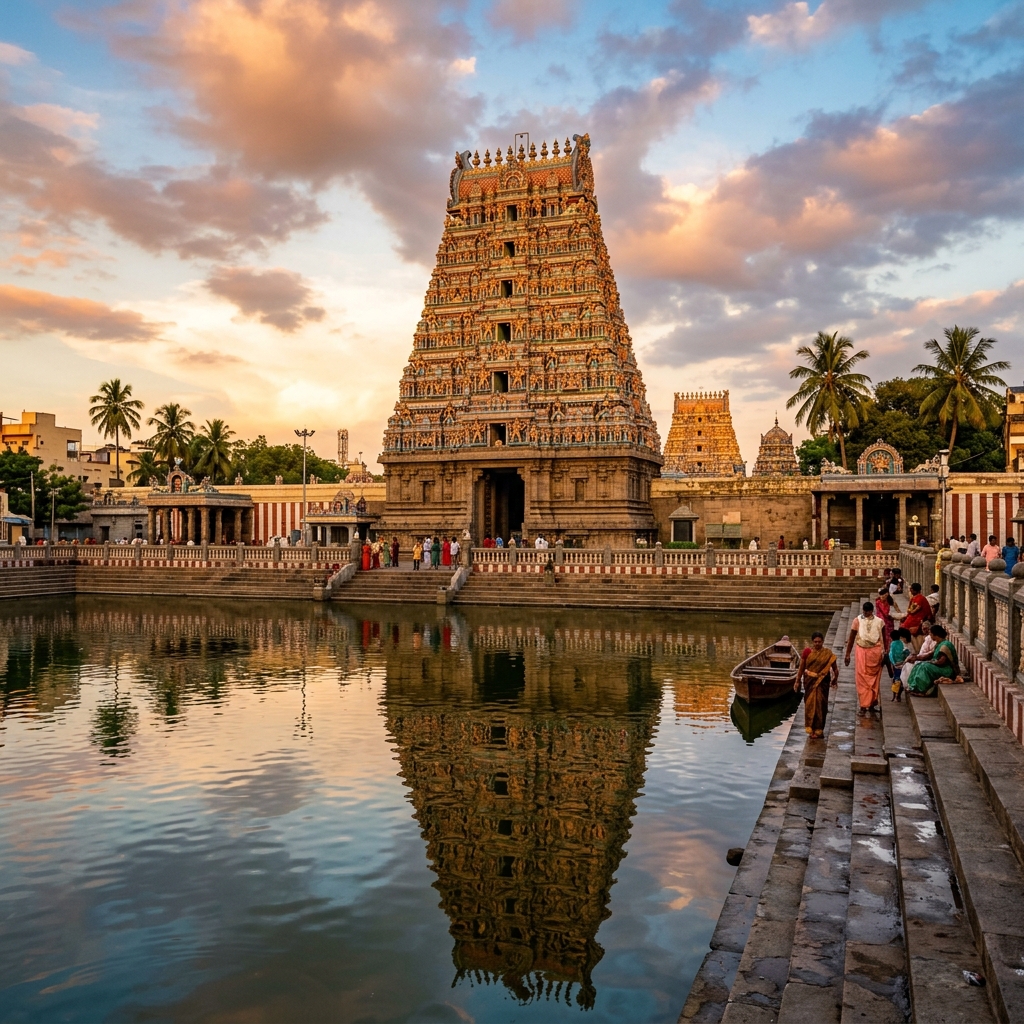
Pennadam Arulmigu Pralayakaleshwarar Temple (historically known as Thiru Pennagadam / Kadandhai) is one of the grandest Paadal Petra Sthalams in the historic Nadu Naadu region of Tamil Nadu. Located in the bustling temple town of Pennadam in Cuddalore district, this ancient shrine is celebrated across Tamil history for its unique Gajaprishta (elephant-backed curved structural vimanam) architecture and its extraordinary legend of Nandi facing East away from the sanctum to swallow cosmic floodwaters.

Enshrined in the 7th-century Tamil Tevaram hymns by child-saint Thirugnanasambandar and Saint Thirunavukkarasar (Appar), Pennadam holds immense philosophical significance as the birthplace of Meykandar (the founder-saint of Tamil Shaiva Siddhanta philosophy and author of Sivagnana Bodham) and Saint Kalikamba Nayanar (one of the 63 revered Nayanmar saints). The temple complex features a five-tiered Rajagopuram, an inner sanctum housing the radiant Swayambhu Lingam of Sudarkozhundeeswarar, a dedicated shrine for Goddess Kadandhai Nayaki, the sacred Shanbaga tree (Sthala Vriksham), and the holy Kapila Theertham.

Sthala Puranam & Authentic Legends

Origin of the Name 'Pennagadam' & Divine Devotees

According to the Sthala Puranam, the ancient name of this sacred town, Pennagadam (now corrupted to Pennadam), is derived from three celestial beings who worshipped Lord Shiva at this holy spot: 1. Pen (Pennai): The celestial damsels / Deva Kannis who offered fragrant Shenbagam flowers. 2. Na (Nagarajar): The Serpent King Vasuki who offered precious jewels from the underworld. 3. Adam (Airavatam): The divine white elephant of Lord Indra who brought holy river water for daily abhishekam. Combining these three words—Pen + Na + Adam—the town came to be known as Pennagadam (the place blessed by celestial maidens, serpents, and the divine elephant).

The Miracle of Nandi Swallowing the Cosmic Deluge (Pralayam)

During an ancient cosmic cycle, a catastrophic deluge (Pralayam) burst forth to submerge the Earth. As roaring floodwaters surged towards Pennagadam, the distressed inhabitants fell at Lord Shiva's feet. Responding to their prayers, Lord Shiva commanded His divine mount, Nandi, to turn around facing East towards the entrance gate and open his mouth wide.

Nandi turned away from the sanctum facing East and drank every drop of the incoming floodwaters, saving Pennadam town from total destruction. To commemorate this miraculous intervention, the main Nandi idol in the temple praharam stands facing East towards the entrance tower, rather than facing the inner Shiva Lingam, making Pennadam one of the rare temples in India with a Reversed Nandi (Vakra Nandi).

Appar's Sacred Branding Miracle (Idaba Thrisoolam)

When Saint Thirunavukkarasar (Appar) arrived at Pennadam after renouncing Jainism, he desired a tangible sign of Lord Shiva's eternal protection. Appar sang a soulful Tevaram hymn at Pennadam pleading: "O Lord of Pennagadam! Brand my shoulders with Your sacred Bull (Idaba) and Trident (Thrisoolam) marks so that the world knows I am Your humble servant forever." Gratified by his intense devotion, Lord Shiva dispatched a divine celestial messenger who used heated golden seals to brand the Bull and Trident emblems upon Appar's shoulders at Pennadam.

Classical Literary Canon & Sacred Hymns

  • Tevaram (1st Thirumurai): Glorified by Thirugnanasambandar in 11 verses beginning with "Pattar perugi nintru ethum Kadandhai... " (பட்டர் பெருகி நின்று ஏத்தும் கடந்தை).
  • Tevaram (6th Thirumurai): Saint Appar composed 10 sublime verses beginning with "Ponnaram marbil anindhu... " (பொன்னார் மார்பில் அணிந்து) begging for the sacred trident brand.
  • Sivagnana Bodham: Authored at Pennadam by Saint Meykandar in the 13th century CE, forming the philosophical cornerstone of Tamil Shaiva Siddhanta literature.
  • Periya Puranam: Sekkizhar details the lives of Kalikamba Nayanar and Appar's branding miracle at Pennagadam.

Epigraphical & Historical Events

  • Chola Gajaprishta Architecture (9th–10th Century CE): Inscriptions of Parantaka Chola I detail the construction of the curved Thoonganai Maadam (Gajaprishta) sanctum over the main shrine.
  • Rajaraja Chola I & Rajendra Chola I Inscriptions: Record imperial grants of agricultural lands for maintaining daily pooja services, feeding ascetics (Sathiram), and conducting the annual Brahmotsavam.

Archaeo-Engineering & Scientific Marvels

Ancient metallurgical marvels, Siddha alchemical sciences, archaeo-engineering, and GI-tagged heritage:

  • Gajaprishta Structural Engineering: The main sanctum (Garbhagriha) vimanam is built in the rare Gajaprishta (Elephant's rump) apsidal shape, engineered from solid granite blocks to withstand seismic forces and heavy monsoon flooding.
  • Reversed Nandi Alignment: The main Nandi statue is positioned facing East toward the gopuram entrance, aligning with the ancient flood preservation legend.

Signature Rituals, Anomalies & Special Sevas

Authentic daily pooja timelines, spatika-lingam darshan hours, special sevas, and sacred temple anomalies:

  • Appar Idaba Thrisoolam Mudra Festival: Celebrated annually in the Tamil month of Chithirai, commemorating the divine mudra branding of Saint Appar with grand street processions.
  • Four Daily Kala Poojas: Morning Kalasanthi, Midday Uchikalam, Evening Sayarakshai, and Night Ardha Jamam.
  • Special Nandi Abhishekam: Special holy bathing performed for the East-facing Nandi statue during Pradosham hours with milk, honey, and sacred ash (Vibhooti).

What to See in the Temple (Visual Highlights)

🛕

Main Sanctum (Gajaprishta Vimanam)

Housing the sacred Swayambhu Lingam of Lord Pralayakaleswarar (Sudarkozhundeeswarar) beneath the apsidal granite roof.

🛕

Goddess Kadandhai Nayaki Shrine

Dedicated south-facing shrine for Goddess Parvati as Aamodanambigai.

🛕

East-Facing Nandi Statue

The famous reversed Nandi facing the main entrance gate.

🛕

Kalikamba Nayanar & Meykandar Shrines

Dedicated memorial shrines celebrating the two local Shaivite saints.

🛕

Sthala Vriksham (Shanbaga Tree)

Ancient sacred Shenbagam tree located inside the temple courtyard.

🛕

Kapila Theertham

Ancient temple water tank located near the main entrance.

Practical Visitor Logistics & Dress Code

Temple Opening Timings & Daily Hours

Morning: 6:00 AM – 12:00 PM; Evening: 4:00 PM – 8:30 PM.

Darshan & Special Entry Tickets

Free general queue available; Special Darshan: ₹20.

Dress Code & Special Rules

Traditional Indian attire (Men: Dhoti / Pants; Women: Saree / Salwar Kameez).

Accessibility & Senior Citizens

Step-free access across main outer mandapam corridors.

Car Parking & Footwear Cloakroom

Dedicated parking area available near the North Gopuram entrance; footwear counter at the front entrance gate.

Best Time to Visit & Festival Calendar

Seasonal weather guide, peaceful darshan timings, and annual Brahmotsavam festival dates:

  • Best Months: October to March (pleasant weather for temple visits).
  • Major Festivals: Chithirai Appar Mudra Festival (April–May), Maha Shivaratri (Feb–March), Margazhi Arudra Darshan (Dec–Jan), Monthly Pradosham.

Transit, Accommodations & Prasadam Dining

How to Reach & Connectivity

  • Nearest Railway Station: Pennadam Railway Station (PND) - 2 km; Vriddhachalam Junction (VRI) - 20 km.
  • Nearest Airport: Tiruchirappalli International Airport (TRZ) - 95 km; Puducherry Airport (PNY) - 90 km.
  • Last-Mile Local Transport: Frequent TNSTC buses running between Vriddhachalam, Chidambaram, and Tittagudi stop at Pennadam bus stand (1 km from temple). Auto-rickshaws available 24/7.

Free Annadhanam & Local Veg Dining

  • Temple Prasadam: Puliyodarai, Ven Pongal, Sundal, Vibhooti Prasadam.
  • Nearby Dining: Pure vegetarian restaurants located at Pennadam bus stand and Vriddhachalam main road.

Accommodations & Lodging Hubs

  • Named Hotels: Lodges in Pennadam town and major hotels in Vriddhachalam town (20 km) such as Hotel Tamil Nadu Vriddhachalam and Hotel Woodlands.

Nearby Heritage Spots (5–30 km Radius)

Combine your yatra with surrounding UNESCO heritage sites, Paadal Petra Sthalams & Divya Desams:

Thirunelvayil Arathurai Theerthapureeswarar Temple

5 km
Sacred & Heritage Spot

distance, famous Paadal Petra Sthalam associated with Sambandar's Pearl Palanquin.

Vriddhachalam Vriddhagiriswarar Temple

20 km
Sacred & Heritage Spot

distance, celebrated Chola temple complex dedicated to Lord Vriddhagiriswarar.

Srimushnam Bhuvaraha Swamy Temple

25 km
Sacred & Heritage Spot

distance, famous Swayambhu Vishnu temple.

Verified References & Source Bibliography

  • Tevaram Thirumurai Canon (1st Thirumurai Sambandar & 6th Thirumurai Appar).
  • Periya Puranam by Sekkizhar (Kalikamba Nayanar Puranam & Appar Puranam).
  • Sivagnana Bodham by Saint Meykandar (13th Century CE).
  • ASI South Indian Inscriptions, Volume XIX (Inscriptions of Pennagadam).

Community Photo Gallery (0)

No community photos uploaded yet.

Pilgrim Reflections (0)

No reflections logged for this destination yet.