
Explore Calendar Community THADAM+ My Thadam
Thakkolam-Jalanadheswarar Temple
Paadal Petra Sthalams

Thakkolam-Jalanadheswarar Temple

Thakkolam-Jalanadheswarar Temple

Tiruvooral Mahadevar, Jalanatheswarar and the Ambal Giriraja Kanyaka Sambandar compsed the Pathigam • Tamil Nadu, Thondai Naadu Temples

Open in Maps My Thadam Check in

About the Sacred Destination

Presiding Deity
Tiruvooral Mahadevar, Jalanatheswarar and the Ambal Giriraja Kanyaka Sambandar compsed the Pathigam
Consort & Sub-Shrines
Sri Jalanadheswarar (Thiruvooral Mahadevar) & Goddess Giriraja Kanyaka / Mohanambal
Era & Dynasty
Early Chola origins (8th–9th C CE) with major additions by Chola Kings Aditya I, Parantaka I, and Rajaraja I
Sacred Status & Classification
Paadal Petra Sthalam (Thondai Nadu Shrine #12 / Shrine #275 of 276 Shaivite Shrines)

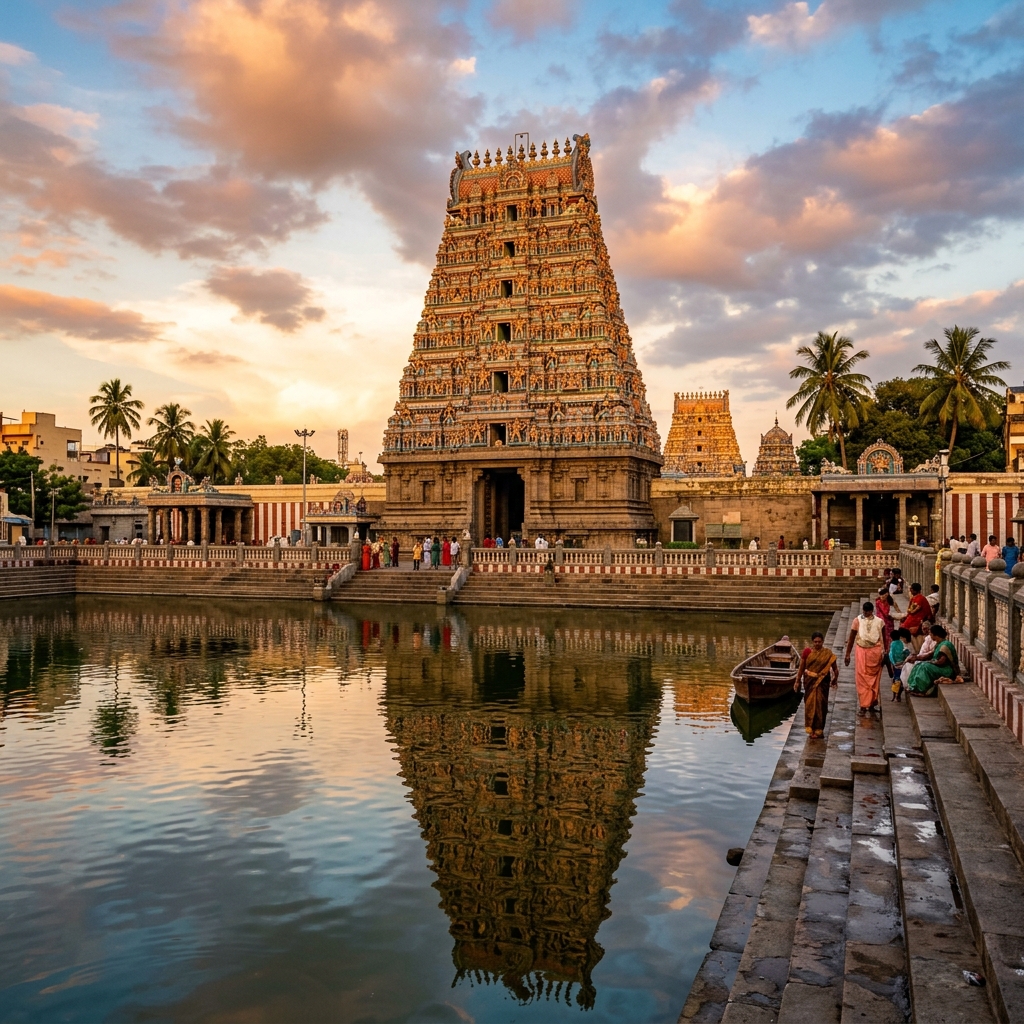
Thakkolam Arulmigu Jalanadheswarar Temple, anciently known as Thiruvooral, is one of the celebrated 276 Paadal Petra Sthalams immortalized in the 7th-century Tevaram hymns composed by Saint Thirugnanasambandar. Situated on the banks of the Kusasthalai River near Arakkonam in Tamil Nadu, this historic shrine is renowned both for its spiritual origin—a continuous natural spring of holy water bubbling beneath the sanctum Lingam—and for its monumental historical significance as the battlefield site of the famous 949 CE Battle of Takkolam.

Spanning an impressive granite complex adorned with a 5-tiered Rajagopuram, fine Chola relief sculptures, and the world-famous Utkutika Asana Dakshinamurthy statue, Thakkolam stands as a crown jewel of Shaivite heritage. Devotees visit this sacred sanctuary to pray for wisdom, relief from ancestral afflictions, and divine spiritual grace.

Sthala Puranam & Authentic Legends

Natural Spring of Holy Water (Thiruvooral Legend)

According to the Sthala Puranam, Kamadhenu, the divine celestial cow, performed penance at this holy forest to seek liberation from a curse. Every morning, Kamadhenu poured her divine milk over a self-born Swayambhu Lingam concealed under a Vilva tree. Pleased by her devotion, Lord Shiva manifested before her. When Kamadhenu dug the earth with her hoof to offer holy water for Abhishekam, a continuous natural spring of holy water (Vooral in Tamil) bubbled forth from beneath the Lingam. Because holy water springs continuously from beneath the sanctum floor, the deity received the names Thiruvooral Mahadevar ("The Lord of the Sacred Spring") and Jalanadheswarar ("The Lord of Holy Waters").

The Historic Battle of Takkolam (949 CE)

Thakkolam holds a monumental place in Indian epigraphical history. In 949 CE, the historic Battle of Takkolam took place near this temple between the Rashtrakuta Crown Prince Krishna III (assisted by Ganga King Butuga II) and the Chola Crown Prince Rajaditya (eldest son of Chola Emperor Parantaka I). Prince Rajaditya was killed while riding his war elephant by an arrow fired by King Butuga II, earning him the posthumous title Yanaimel Thunjina Devar ("The King who died atop an Elephant"). Inscriptions carved into the temple's outer walls record grants given in memory of fallen warriors and royal consecrations following the battle.

Unique Utkutika Asana Dakshinamurthy

The temple is world-famous among art historians for its exquisite stone statue of Lord Dakshinamurthy carved in the Utkutika Asana posture (sitting with one leg crossed and bound by a Yoga-patta sash). It is considered one of the finest 10th-century Chola sculptures in existence.

Classical Literary Canon & Sacred Hymns

This sacred shrine is enshrined in the 1st Thirumurai of the Tevaram by Saint Thirugnanasambandar.

  • Tevaram Hymn by Saint Thirugnanasambandar:

> "ஊராடை உவப்ப உகந்தபிரான் > சீராடும் திருவூரல் மேவியவன் > பாராரு புகழால் அடிபரவ > நீராரும் சடையான் நினைபவர்க்கே." > > Translation: "The Lord who loves the simplicity of holy mendicants resides at the glorious shrine of Thiruvooral! All who meditate upon Him with water-flowing braided locks shall be crowned with eternal divine grace."

The temple is also described in Sekkizhar's Periya Puranam.

Epigraphical & Historical Events

  • Battle of Takkolam Inscriptions: Over 35 stone inscriptions carved on the outer prakaram granite walls record donations made during the reign of Rashtrakuta King Krishna III and Chola Emperors Parantaka I and Rajaraja I.
  • Grants by Chola Queens: Inscriptions of Chola Queen Sembiyan Mahadevi record the renovation of the inner Garbhagriha into granite stone (Kattrali) in the 10th century.

Archaeo-Engineering & Scientific Marvels

Ancient metallurgical marvels, Siddha alchemical sciences, archaeo-engineering, and GI-tagged heritage:

  • Subterranean Water Spring: The inner sanctum floor features an active subterranean spring channel beneath the Lingam pedestal, keeping the sanctum floor perpetually moist with holy water.
  • Masterpiece Chola Sculpture: The Utkutika Asana Dakshinamurthy sculpture at Thakkolam is documented in Archaeological Survey of India (ASI) monographs as a benchmark of early Chola stone art.

Signature Rituals, Anomalies & Special Sevas

Authentic daily pooja timelines, spatika-lingam darshan hours, special sevas, and sacred temple anomalies:

  • Four Daily Kala Poojas: Conducted as per Kamika Agama rites: Kalasanthi (8:00 AM), Uchikalam (12:00 PM), Sayarakshai (5:30 PM), and Ardha Jamam (8:00 PM).
  • Guru Viyazhan Special Abhishekam: Special weekly Thursday Abhishekam for Lord Dakshinamurthy with yellow clothes, chana dhal, and jasmine garlands.
  • Thiruvooral Spring Water Abhishekam: Sacred bathing of the Swayambhu Lingam using the natural spring water bubbling within the sanctum.

What to See in the Temple (Visual Highlights)

🛕

Main Sanctum (Garbhagriha)

Houses the self-manifested Swayambhu Lingam of Sri Jalanadheswarar with the subterranean water spring.

🛕

Goddess Giriraja Kanyaka Shrine

South-facing shrine housing Goddess Mohanambal.

🛕

Utkutika Asana Dakshinamurthy

World-renowned stone icon of Lord Dakshinamurthy in yoga posture.

🛕

Kusasthalai Riverbank

Serene riverbank adjacent to the northern temple wall.

🛕

Rajagopuram

5-tiered granite and mortar entrance gopuram facing East.

Practical Visitor Logistics & Dress Code

Temple Opening Timings & Daily Hours

Morning: 6:00 AM – 12:00 PM; Evening: 4:30 PM – 8:30 PM

Darshan & Special Entry Tickets

Free general entry queue; Special Darshan Ticket: ₹20

Dress Code & Special Rules

Traditional Indian attire mandatory (Dhoti/Shirt for men; Saree/Salwar Kameez for women)

Accessibility & Senior Citizens

Ground-level layout throughout outer prakaram; step ramps provided at inner entrance

Car Parking & Footwear Cloakroom

Vehicle parking available along Arakkonam–Thakkolam Main Road near the East Gopuram; footwear counter near entrance

Best Time to Visit & Festival Calendar

Seasonal weather guide, peaceful darshan timings, and annual Brahmotsavam festival dates:

  • Best Months: October to March (mild winter months ideal for pilgrimage and river visits)
  • Major Festivals:
  • Maha Shivaratri (Feb–March): Four-kala night long abhishekam and Veda parayanam.
  • Guru Peyarchi Festival: Special festival during Jupiter transit honoring Lord Dakshinamurthy.
  • Panguni Uthiram (March–April): Annual Brahmotsavam festival.

Transit, Accommodations & Prasadam Dining

How to Reach & Connectivity

  • Nearest Railway Station: Thakkolam Railway Station (TKO) - 2 km; Arakkonam Junction (AJJ) - 12 km; Kanchipuram Railway Station (CJ) - 26 km
  • Nearest Airport: Chennai International Airport (MAA) - 65 km
  • Last-Mile Local Transport: Direct local buses run every 15 minutes from Arakkonam Bus Stand (12 km) and Kanchipuram Bus Stand (26 km) to Thakkolam Bus Stop. Auto-rickshaws available at Thakkolam Railway Station (2 km from temple)

Free Annadhanam & Local Veg Dining

  • Temple Prasadam: Kovil Puliyodarai, Sakkarai Pongal, Sundal, and Holy Spring Water (Theertham) served at temple counter. Free daily Annadhanam served at 12:15 PM
  • Specific Pure-Veg Dining Spots: Hotel Annapoorna Veg (Arakkonam Station Road - 12 km); Hotel Sri Saravana Bhavan (Kanchipuram - 26 km)

Accommodations & Lodging Hubs

  • Temple / Town Stays: Arulmigu Jalanadheswarar Temple Yatri Nivas (Thakkolam)
  • Hotels in Arakkonam (12 km): Hotel Annapoorna Boarding & Lodging (Arakkonam - 12 km)
  • Hotels in Kanchipuram (26 km): Hotel GRT Regency Kanchipuram (26 km); Hotel Regency Kanchipuram (25 km)

Nearby Heritage Spots (5–30 km Radius)

Combine your yatra with surrounding UNESCO heritage sites, Paadal Petra Sthalams & Divya Desams:

Thirumalpur Manikanteswarar Temple

14 km
South

West; Ancient Paadal Petra Sthalam where Lord Vishnu offered His eye

Nemili Sri Bala Peetam

10 km
North

East; Siddha temple dedicated to Goddess Bala Tripurasundari

Arakkonam Railway & Heritage Junction

12 km
North

West; Historic railway junction town

Verified References & Source Bibliography

  • Tevaram Thirumurai Canon (1st Thirumurai by Saint Thirugnanasambandar)
  • Periya Puranam by Sekkizhar
  • ASI South Indian Inscriptions (Vol. XIII, Inscriptions of Thakkolam)
  • Epigraphia Indica (Vol. XIX, Epigraphical Account of the Battle of Takkolam 949 CE)
  • HR&CE Devasthanam Archives, Arulmigu Jalanadheswarar Temple, Thakkolam

Community Photo Gallery (0)

No community photos uploaded yet.

Pilgrim Reflections (0)

No reflections logged for this destination yet.