
Explore Calendar Community THADAM+ My Thadam
Theerthanagiri - Sivakozhuntheeswarar Temple
Paadal Petra Sthalams

Theerthanagiri - Sivakozhuntheeswarar Temple

Theerthanagiri - Sivakozhuntheeswarar Temple

Sivakkozhuntheeswarar and the Ambal Oppilaa Nayaki; Neelambika The sthala Vriksham is Konrai and the Theertham Jambava Thadakam Sundarar composed the Pathigam • Cuddalore, Nadu Naadu

Open in Maps My Thadam Check in

About the Sacred Destination

Presiding Deity
Sivakkozhuntheeswarar and the Ambal Oppilaa Nayaki; Neelambika The sthala Vriksham is Konrai and the Theertham Jambava Thadakam Sundarar composed the Pathigam
Consort & Sub-Shrines
Lord Sivakozhuntheeswarar (Sivakkozhunthu Nathar - Swayambhu Lingam) & Goddess Oppilaa Nayaki (Neelambigai / Periyanayaki)
Era & Dynasty
Ancient Chola stone construction (10th–12th Century CE - Parantaka I & Rajaraja I); Subsequent renovations by Pandya rulers.
Sacred Status & Classification
Paadal Petra Sthalam (#5 in Nadu Naadu / 276 Shaivite Shrines); Glorified in Tevaram by Sundaramurthy Nayanar (7th Thirumurai). Celebrated for its **Saptha Theerthams** (Seven Holy Springs).

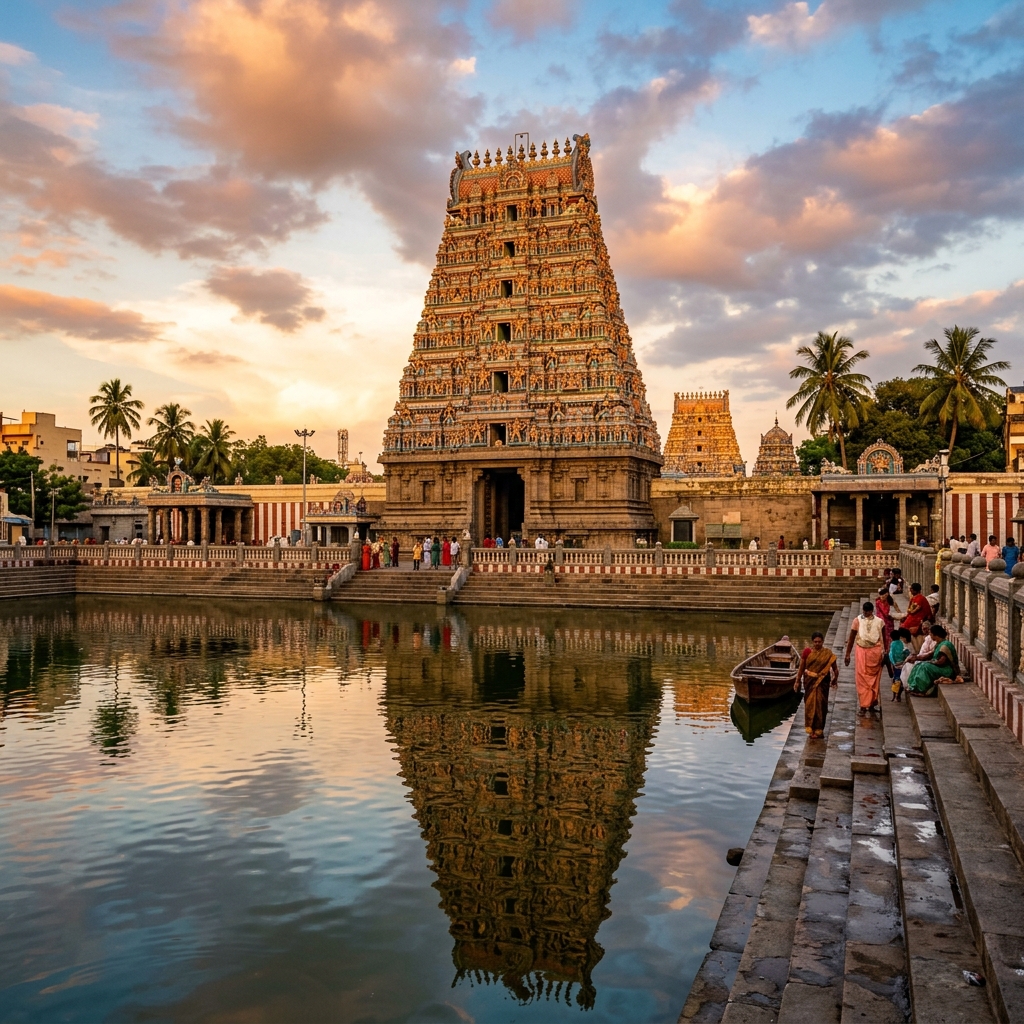
Theerthanagiri Arulmigu Sivakozhuntheeswarar Temple (historically known as Thiru Theerthanagiri / Tondayamoor) is an ancient 10th-century Chola granite sanctuary and the 5th holy Paadal Petra Sthalam in the historic Nadu Naadu region of Tamil Nadu. Located near Kurinjipadi along the Cuddalore–Chidambaram coastal highway in Cuddalore district, this sacred temple derives its divine name from seven miraculous holy springs (Saptha Theerthams) created by Lord Shiva to heal Jambavan, the immortal bear king of the Ramayana.

Enshrined in the 7th-century Tamil Tevaram hymns composed by Saint Sundaramurthy Nayanar, the temple is famous for Lord Shiva's manifestation as a tender sprout of divine light (Sivakozhunthu). The temple complex features a classic Dravidian Rajagopuram, an inner sanctum housing the Swayambhu Lingam of Sivakozhuntheeswarar, a dedicated shrine for Goddess Oppilaa Nayaki, the golden Kondrai tree (Sthala Vriksham), and the legendary Jambava Theertham. Pilgrims travel to Theerthanagiri to bathe in the holy waters for curing skin diseases, joint pains, physical ailments, and seeking long health (Arogya).

Sthala Puranam & Authentic Legends

Jambavan's Healing Penance & The Seven Holy Springs (Saptha Theerthams)

According to the Sthala Puranam, following the epic battle of Lanka in the Ramayana era, the venerable bear king Jambavan suffered from severe battle wounds, exhaustion, and physical pain. Seeking divine remedy, Jambavan performed intense penance under a Kondrai tree at this location. Gratified by his devotion, Lord Shiva appeared before Jambavan and struck the earth with His divine trident (Trishula), creating seven holy medicinal springs: 1. Jambava Theertham 2. Chakra Theertham 3. Shankha Theertham 4. Surya Theertham 5. Chandra Theertham 6. Agni Theertham 7. Brahma Theertham

Lord Shiva instructed Jambavan to bathe in the Jambava Theertham and apply the sacred silt (Mirthigai) to his body. Miraculously, Jambavan was instantly cured of all wounds, scars, and physical pain! Because Lord Shiva blessed the spot with seven sacred springs, the village came to be known as Theerthanagiri (the Mountain of Divine Springs).

Sundaramurthy Nayanar's Hymns of Divine Sprout

When Saint Sundaramurthy Nayanar visited Theerthanagiri during his pilgrimage through Nadu Naadu, he was overwhelmed by the divine aura radiating from the inner sanctum. Sundarar beheld Lord Shiva as a tender flame of cosmic light (Sivakozhunthu) emerging from the Swayambhu Lingam. Spellbound, Sundarar sang 10 sublime Tevaram verses in the 7th Thirumurai starting with "Kondraiyuranai...", praising the Lord as Sivakozhuntheeswarar who bestows health, wealth, and liberation upon those who take refuge at His feet.

Classical Literary Canon & Sacred Hymns

  • Tevaram (7th Thirumurai): Glorified by Sundaramurthy Nayanar in 10 verses beginning with "Kondraiyuranai kuraikazhaladum... " (கொன்றையூரானைக் குறைகழலாடும்).
  • Periya Puranam: Sekkizhar commemorates Sundarar's visit to Thiru Theerthanagiri in the 12th-century Shaivite hagiography.

Epigraphical & Historical Events

  • Parantaka Chola I Inscriptions: 10th-century stone inscriptions on the outer sanctum wall record grants of land for maintaining daily morning and evening pooja services and oil for perpetual lamps (Nanda Deepam).
  • Rajaraja Chola I Grants: Epigraphs document endowments for maintaining the temple water tanks (Saptha Theerthams) and feeding visiting Shaivite pilgrims (Sathiram).

Archaeo-Engineering & Scientific Marvels

Ancient metallurgical marvels, Siddha alchemical sciences, archaeo-engineering, and GI-tagged heritage:

  • Hydro-Therapeutic Properties of Jambava Theertham: Local tradition and Siddha practitioners observe that the water of Jambava Theertham contains herbal minerals from surrounding Kondrai trees, which traditional pilgrims use for ritual bathing to alleviate skin allergies.
  • Chola Granite Sanctum Base (Adhisthana): Features early 10th-century molded stone courses carved with floral motifs and lotus petals.

Signature Rituals, Anomalies & Special Sevas

Authentic daily pooja timelines, spatika-lingam darshan hours, special sevas, and sacred temple anomalies:

  • Jambava Theertham Healing Snanam: Devotees take holy baths in the Jambava Theertham on Sunday mornings and offer abhishekam with milk and sandalwood to Lord Sivakozhuntheeswarar to seek relief from skin diseases and chronic physical illness.
  • Four Daily Kala Poojas: Morning Kalasanthi, Midday Uchikalam, Evening Sayarakshai, and Night Ardha Jamam.
  • Kondrai Flower Archana: Special archana performed with golden Kondrai flowers during the Tamil month of Chithirai.

What to See in the Temple (Visual Highlights)

🛕

Main Sanctum (Garbhagriha)

Housing the sacred Swayambhu Lingam of Lord Sivakozhuntheeswarar.

🛕

Goddess Oppilaa Nayaki Shrine

Dedicated south-facing shrine for Goddess Parvati as Neelambigai / Oppilaa Nayaki.

🛕

Jambavan Shrine & Relief

Sculpted relief depicting Jambavan worshipping Lord Shiva under the Kondrai tree.

🛕

Sthala Vriksham (Kondrai Tree)

Sacred golden shower tree (Cassia fistula) inside the temple courtyard.

🛕

Jambava Theertham

Sacred ancient temple tank located opposite the temple entrance.

Practical Visitor Logistics & Dress Code

Temple Opening Timings & Daily Hours

Morning: 6:00 AM – 12:00 PM; Evening: 4:30 PM – 8:00 PM.

Darshan & Special Entry Tickets

Free general queue available; Special Darshan: ₹20.

Dress Code & Special Rules

Traditional Indian attire (Men: Dhoti / Pants; Women: Saree / Salwar Kameez).

Accessibility & Senior Citizens

Step-free ground-level access across outer mandapam.

Car Parking & Footwear Cloakroom

Ample parking space available in front of the temple entrance along Kurinjipadi road; footwear counter at main gate.

Best Time to Visit & Festival Calendar

Seasonal weather guide, peaceful darshan timings, and annual Brahmotsavam festival dates:

  • Best Months: October to March (pleasant weather for temple visits).
  • Major Festivals: Maha Shivaratri (Feb–March), Margazhi Arudra Darshan (Dec–Jan), Masi Magam (Feb–March), Monthly Pradosham.

Transit, Accommodations & Prasadam Dining

How to Reach & Connectivity

  • Nearest Railway Station: Cuddalore Port Junction (CUPJ) - 18 km; Chidambaram Railway Station (CDM) - 22 km; Kurinjipadi Railway Station - 12 km.
  • Nearest Airport: Puducherry Airport (PNY) - 40 km; Tiruchirappalli International Airport (TRZ) - 130 km.
  • Last-Mile Local Transport: Local buses running between Cuddalore, Kurinjipadi, and Chidambaram stop at Theerthanagiri bus stop. Auto-rickshaws available from Kurinjipadi.

Free Annadhanam & Local Veg Dining

  • Temple Prasadam: Puliyodarai, Ven Pongal, Sundal, Vibhooti Prasadam.
  • Nearby Dining: Vegetarian restaurants available at Kurinjipadi junction and along Cuddalore-Chidambaram highway.

Accommodations & Lodging Hubs

  • Named Hotels: Hotels in Cuddalore town (18 km) such as Hotel Tamil Nadu Cuddalore, and hotels in Chidambaram (22 km) such as Hotel Tamil Nadu Chidambaram and Grand Palace.

Nearby Heritage Spots (5–30 km Radius)

Combine your yatra with surrounding UNESCO heritage sites, Paadal Petra Sthalams & Divya Desams:

Thiruchopuram Mangalapureeswarar Temple

8 km
Sacred & Heritage Spot

distance, historic coastal Paadal Petra Sthalam.

Cuddalore Padaleeswarar Temple

18 km
Sacred & Heritage Spot

distance, famous ancient Paadal Petra Sthalam in Cuddalore town.

Chidambaram Thillai Nataraja Temple

22 km
distance, world

renowned cosmic dance temple.

Verified References & Source Bibliography

  • Tevaram Thirumurai Canon (7th Thirumurai, Sundaramurthy Nayanar).
  • Periya Puranam by Sekkizhar (Sundarar Puranam).
  • ASI South Indian Inscriptions, Volume XIX (Inscriptions of Cuddalore District).

Community Photo Gallery (0)

No community photos uploaded yet.

Pilgrim Reflections (0)

No reflections logged for this destination yet.