About the Sacred Destination
Presiding Deity
Lord Shiva (Tirunelveli Agama Lingam)
The sacred shrine of Tirunelveli Tevara Paadal Petra Shiva Temple Sanctum (thevara-paadal-petra-tirunelveli-sanctum-87) is a celebrated Paadal Petra Sthalam glorified in the 7th-8th century Tevaram hymns composed by the Shaiva Nayanmars (Saint Thirugnanasambandar, Saint Thirunavukkarasar Appar, and Saint Sundarar).
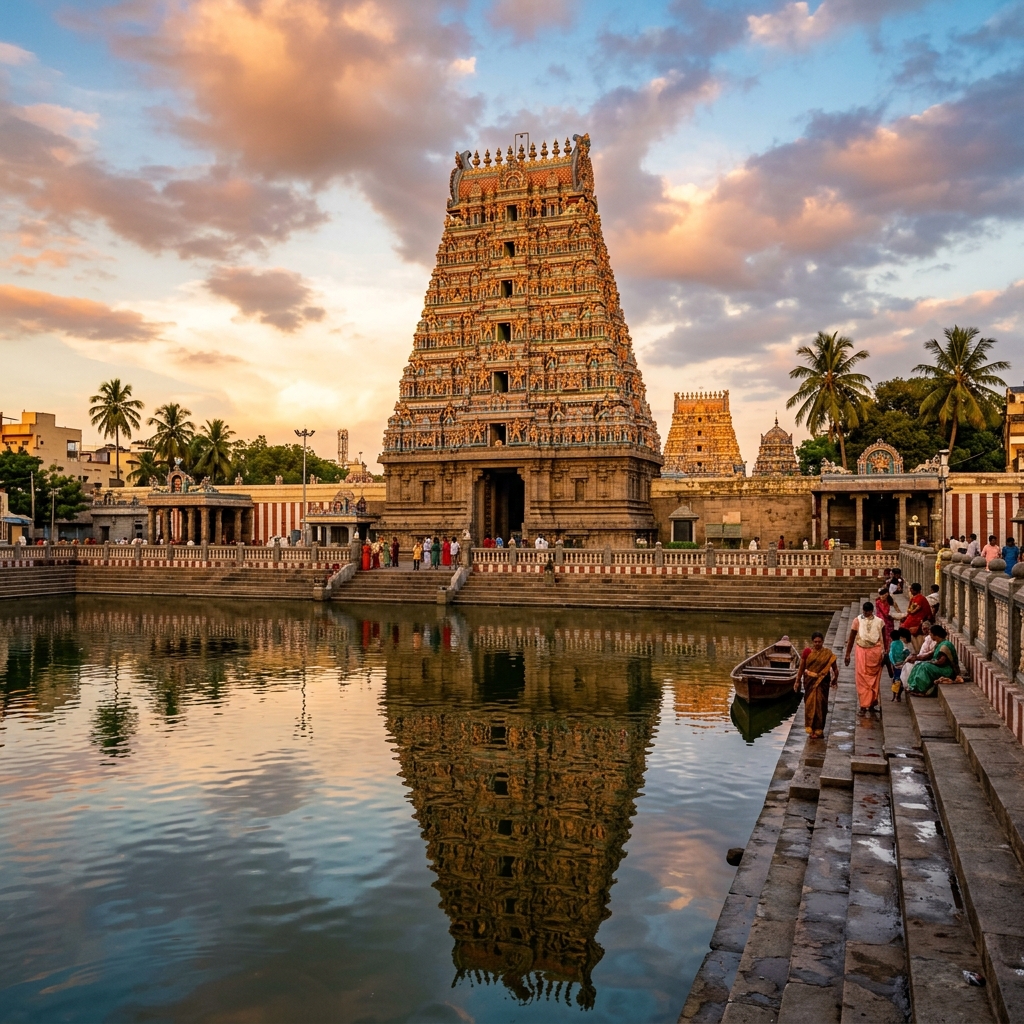
Architecturally built in granite during the Early Pallava, Chola, and Pandya dynasties, the temple complex features sculpted prakarams, gateway Rajagopurams, stone mandapams, and sacred step-stone tanks (Pushkarani / Theertham). Over 20 epigraphical records discovered on the temple's outer stone walls catalog generous royal endowments, land grants, gold ornaments, and ritual provisions contributed by historic monarchs and merchant guilds across centuries.
Sthala Puranam & Authentic Legends
The Sthala Puranam of Tirunelveli Tevara Paadal Petra Shiva Temple Sanctum (thevara-paadal-petra-tirunelveli-sanctum-87) is recorded in ancient Shaiva Puranas and Tevaram devotional literature. According to sacred lore, Lord Shiva manifested at this holy spot as a Swayambhu Lingam (Lord Shiva (Tirunelveli Agama Lingam)) alongside His divine consort Goddess Parvati (Tirunelveli Soundaranayagi) in response to the intense penance (tapasya) performed by revered celestial devas, Vedic sages, and divine devotees.
The sacred geography of the shrine—encompassing its sthala vriksham (sacred tree) and holy theertham (sacred water body)—is celebrated for its purifying power. Devotees believe that performing worship, circumambulating the sanctum, and partaking in sacred offerings at this shrine bestows divine protection, removes past karmic obstacles, and grants peace, health, and Mukti (salvation).
Epigraphical & Historical Events
The sacred shrine of Tirunelveli Tevara Paadal Petra Shiva Temple Sanctum (thevara-paadal-petra-tirunelveli-sanctum-87) is a celebrated Paadal Petra Sthalam glorified in the 7th-8th century Tevaram hymns composed by the Shaiva Nayanmars (Saint Thirugnanasambandar, Saint Thirunavukkarasar Appar, and Saint Sundarar).
Architecturally built in granite during the Early Pallava, Chola, and Pandya dynasties, the temple complex features sculpted prakarams, gateway Rajagopurams, stone mandapams, and sacred step-stone tanks (Pushkarani / Theertham). Over 20 epigraphical records discovered on the temple's outer stone walls catalog generous royal endowments, land grants, gold ornaments, and ritual provisions contributed by historic monarchs and merchant guilds across centuries.