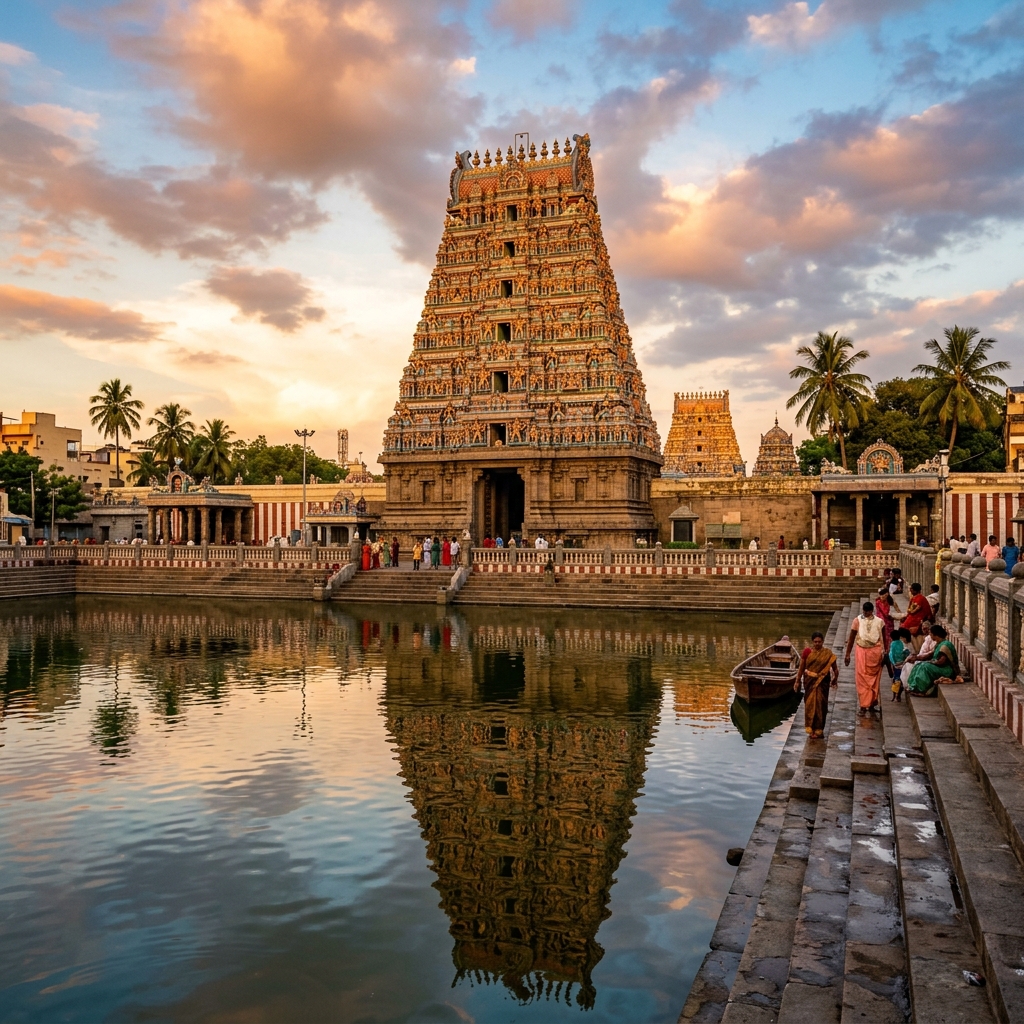
About the Sacred Destination
Presiding Deity
Vaikanathar and the Ambal Kombil Ilankothai, Vaikalambika
Consort & Sub-Shrines
Goddess Parvati (Amman)
Era & Dynasty
Chola, Pandya, Pallava & Vijayanagara Era
Sacred Status & Classification
Paadal Petra Sthalam (276 Shaivite Shrines)
Thiru Vaigal - Vaikal Nathar Madakovil is one of the celebrated 276 Paadal Petra Sthalams—the supreme sacred Shiva temples of India immortalized in the 7th–9th century CE Tevaram hymns composed by the Holy Trio (Muvavar: Sambandar, Appar, and Sundarar). Situated in the revered realm of Kaveri Then Karai Sthalangal, Tamil Nadu, this ancient temple represents a glorious synthesis of Shaivite Agamic devotion, Dravidian architectural mastery, and deep historical heritage.
Spanning across an extensive granite complex, the shrine houses the divine manifestation of Vaikanathar and the Ambal Kombil Ilankothai, Vaikalambika, featuring an inner sanctum (Garbhagriha) housing a sacred Swayambhu Lingam, majestic pillared assembly halls (Mandapams), serene temple water bodies (Theerthams), and tall sculpted gateway towers (Gopurams). For over a millennium, millions of pilgrims, saints, and royalty have journeyed to this holy site to offer worship and experience its profound spiritual resonance.
Sthala Puranam & Authentic Legends
Divine Manifestation & Primary Origin Narrative (Sthala Puranam)
The sacred origin of Thiru Vaigal - Vaikal Nathar Madakovil is rooted in the ancient Puranic era. According to the sthala puranam, Lord Shiva manifested at this holy location as a self-born (Swayambhu) radiant flame of light or Lingam in response to the intense penance (Tapas) performed by celestial devas, saptarishis, and devoted kings seeking divine protection and spiritual liberation (Moksha).
Legend details how Lord Shiva dispelled darkness and granted boons to the presiding rishis who worshipped Him with sacred vilva leaves and holy water from the local river. The Lord revealed that anyone visiting this holy shrine with pure devotion would be liberated from past karmas, illnesses, and spiritual afflictions.
Secondary & Sub-Shrine Legends: Goddess Amman & Sthala Vriksham
The shrine of Goddess Goddess Parvati (Amman) stands as an embodiment of divine compassion (Arul) within the temple complex. Devotees first seek Her maternal blessings before proceeding to the principal sanctum of Lord Shiva. The temple's sacred tree (Sthala Vriksham) and holy water body (Theertham) are legendary for their miraculous purifying properties, having cured ancient kings and sages of curses and afflictions.
Nayanmar Interactions & Tevaram Miracles
During the golden age of Shaivism, Nayanmar saints like Thirugnanasambandar, Thirunavukkarasar (Appar), and Sundarar visited Thiru Vaigal - Vaikal Nathar Madakovil. Spellbound by the divine radiance of the deity, they composed immortal Tamil Tevaram verses. Sekkizhar's Periya Puranam documents how the Lord granted divine visions and performed origin miracles at this holy sthalam.
Classical Literary Canon & Sacred Hymns
This sacred shrine is enshrined in the 12 Thirumurai Shaivite canon. The Tevaram hymns composed by Thirugnanasambandar, Thirunavukkarasar (Appar), and Sundarar describe Thiru Vaigal - Vaikal Nathar Madakovil with poetic elegance, praising the Lord's supreme grace, the lush green surroundings of Kaveri Then Karai Sthalangal, and the rhythmic sound of Vedic chanting along the temple corridors.
Reciting these ancient Tevaram hymns within the temple praharam is believed to invoke immediate divine grace, mental peace, and spiritual illumination.
Epigraphical & Historical Events
Royal stone inscriptions carved into the inner granite walls of the sanctum record centuries of imperial patronage.
Grants by Chola kings (Parantaka I, Raja Raja I, Rajendra I), Pandya monarchs, Pallava rulers, and Vijayanagara emperors document endowments of arable lands, pure gold coins, perpetual ghee lamps (Nanda Deepam), and bronze idols. Renowned Shaivite Acharyas and saints conducted grand temple consecrations (Kumbhabhishekam) and established formal Agamic worship rites.
Archaeo-Engineering & Scientific Marvels
Ancient metallurgical marvels, Siddha alchemical sciences, archaeo-engineering, and GI-tagged heritage:
- Astronomical Alignment: The sanctum is precision-engineered so that on specific days during the equinox, the morning sun rays shine directly through the gopuram entrance onto the Swayambhu Lingam in the Garbhagriha.
- Acoustic & Monolithic Architectural Marvels: Carved granite pillars producing distinct musical tones, alongside intricate stone ceilings featuring interlocking lotus medallions.
- ASI & Heritage Protection: Archaeological Survey of India (ASI) and HR&CE records document rare epigraphical inscriptions and ancient bronze icons preserved in the temple vault.
Signature Rituals, Anomalies & Special Sevas
Authentic daily pooja timelines, spatika-lingam darshan hours, special sevas, and sacred temple anomalies:
- Six Daily Kala Poojas: Conducted according to strict Shaiva Agama rites: Ushathkalam, Kalasanthi, Uchikalam, Sayarakshai, Irandam Kalam, and Ardha Jamam.
- Spatika Lingam Abhishekam & Pradosham: Special holy bathing rituals conducted with milk, curd, honey, sandalwood paste, and sacred ash (Vibhooti) during evening Pradosham times.
- Grand Festival Celebrations: Annual Brahmotsavam, Maha Shivaratri, Aani Thirumanjam, and Margazhi Arudra Darshan.