
Explore Calendar Community THADAM+ My Thadam
Thirukkandalam - Sivanadheswarar Temple
Paadal Petra Sthalams

Thirukkandalam - Sivanadheswarar Temple

Thirukkandalam - Sivanadheswarar Temple

Kalleeswarar, Sivanandeswarar and the Ambal Anandavalli The Theertham is Sivananda Theertham Sambandar composed the Pathigam • Tamil Nadu, Thondai Naadu Temples

Open in Maps My Thadam Check in

About the Sacred Destination

Presiding Deity
Kalleeswarar, Sivanandeswarar and the Ambal Anandavalli The Theertham is Sivananda Theertham Sambandar composed the Pathigam
Consort & Sub-Shrines
Sri Sivanadheswarar (Kalleeswarar) & Goddess Anandavalli / Kanagambigai
Era & Dynasty
Pallava origins (7th C CE) with Chola stone expansions by Rajaraja I and Kulothunga Chola I
Sacred Status & Classification
Paadal Petra Sthalam (Thondai Nadu Shrine #18 / Shrine #281 of 276 Shaivite Shrines)

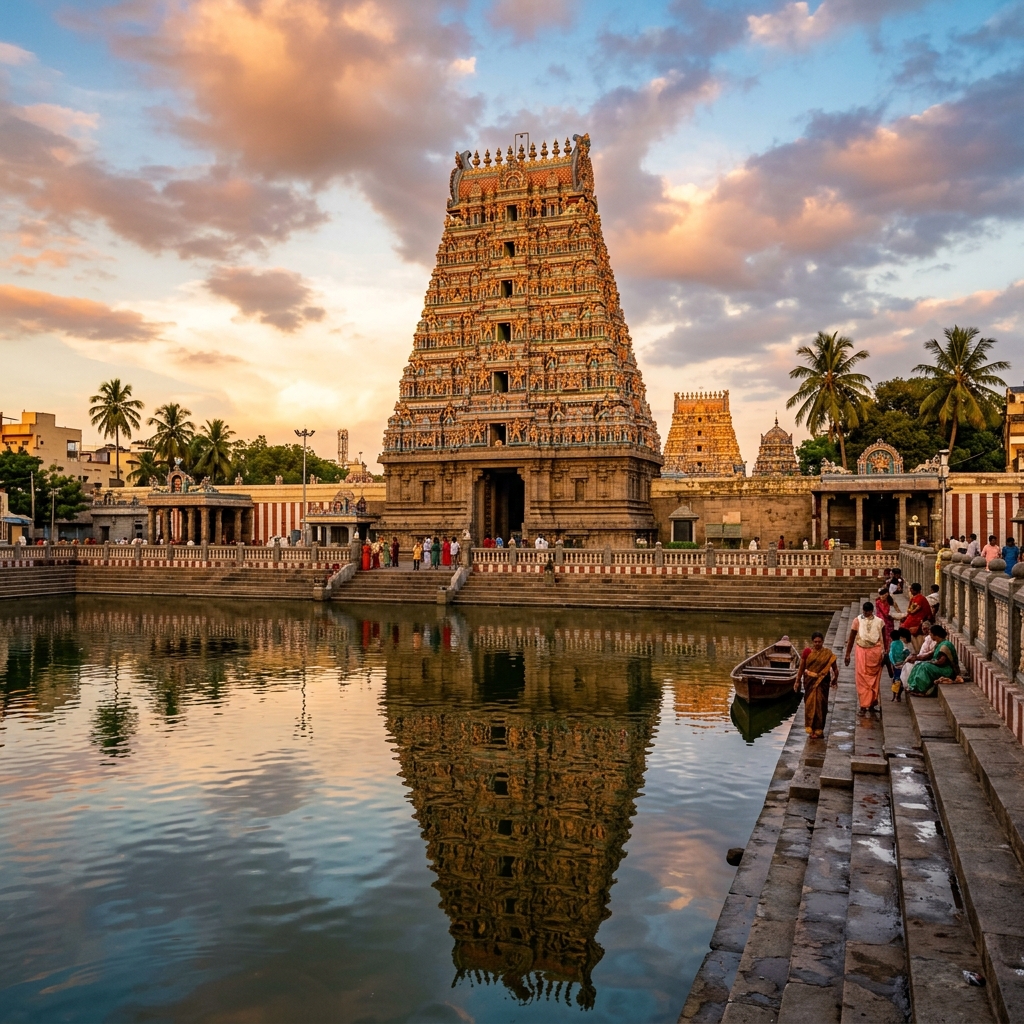
Thirukkandalam Arulmigu Sivanadheswarar Temple, historically known in Tamil devotional literature as Thirukallil, is one of the celebrated 276 Paadal Petra Sthalams immortalized in the 7th-century Tevaram hymns composed by Saint Thirugnanasambandar. Nestled along the Chennai–Periyapalayam highway in Tiruvallur District, Tamil Nadu, this ancient shrine is famous for its association with Lava and Kusa (sons of Lord Rama) and their worship of Lord Shiva.

Spanning a serene granite enclosure housing a 3-tiered Rajagopuram, fine Chola relief sculptures, an ancient Vilva grove, and the sacred Sivananda Theertham tank, Thirukkandalam offers an atmosphere of profound spiritual joy (Ananda). Devotees visit this sacred sanctuary to pray for family harmony, resolution of land disputes, and spiritual peace.

Sthala Puranam & Authentic Legends

Lava and Kusa's Worship & The Name Thirukallil

According to the ancient Sthala Puranam, Lava and Kusa, the sons of Lord Rama and Sita Devi, lived at Sage Valmiki's hermitage near the banks of the Kusasthalai River. When Lord Rama performed the Ashwamedha Yagna (Horse Sacrifice), the sacred sacrificial horse wandered into the forest. Unaware of its royal owner, Lava and Kusa captured (Kallil / Kallal in Tamil, meaning "to take in secret") the horse. When Lord Rama's brother Lakshmana and the royal army came to reclaim the horse, Lava and Kusa prayed to Lord Shiva at this stone forest (Kallil) to grant them strength to defend their cause. Impressed by the young princes' courage and devotion, Lord Shiva manifested before them, granted His divine protection, and blessed them. Because the divine horse was captured and Shiva was worshipped here, the town was named Thirukallil (now Thirukkandalam), and the deity was named Kalleeswarar and Sivanadheswarar ("The Lord who bestows Bliss").

Saint Sambandar's Ananda Vision

When Saint Thirugnanasambandar visited Thirukallil during his pilgrimage through Thondai Nadu, he experienced an overwhelming wave of divine bliss (Ananda) emanating from the sanctum. Sambandar composed his famous 109th Tevaram decad beginning with "Kallil Megu Thillai", extolling Lord Sivanadheswarar as the granter of supreme joy and spiritual wisdom.

Classical Literary Canon & Sacred Hymns

This sacred shrine is enshrined in the 1st Thirumurai of the Tevaram by Saint Thirugnanasambandar.

  • Tevaram Hymn by Saint Thirugnanasambandar:

> "கள்ளில் மேவிய காதலான் அடியை > உள்ளில் மேவிய அன்பினால் நினைவார் > விள்ளில் மேவிய நல்வினை உடையார் > தெள்ளில் மேவிய சிவனுலகம் அடைவாரே." > > Translation: "Those who meditate with unyielding love upon the lotus feet of the Lord residing at Thirukallil shall be blessed with pure spiritual merit and attain eternal residence in Shiva's realm!"

The temple is also extolled in Sekkizhar's 12th-century Periya Puranam.

Epigraphical & Historical Events

  • Chola Stone Inscriptions: Epigraphical surveys by the Archaeological Survey of India (ASI) record stone inscriptions carved into the inner Garbhagriha walls. Inscriptions belonging to Rajaraja Chola I (985–1014 CE) document land grants (Devadana) for daily rice offerings and oil for burning perpetual lamps (Nanda Deepam).
  • Kulothunga Chola I Grants: Inscriptions detail 11th-century grants for conducting the annual Brahmotsavam festival.

Archaeo-Engineering & Scientific Marvels

Ancient metallurgical marvels, Siddha alchemical sciences, archaeo-engineering, and GI-tagged heritage:

  • Monolithic Stone Lingam: The primary Swayambhu Lingam is carved out of dense dark granite stone (Kallu), directly reflecting the ancient name Kalleeswarar.
  • Solar Ray Illumination: During the Tamil month of Panguni (March–April), morning solar rays pass through the gopuram entrance to illuminate the Garbhagriha Lingam.

Signature Rituals, Anomalies & Special Sevas

Authentic daily pooja timelines, spatika-lingam darshan hours, special sevas, and sacred temple anomalies:

  • Four Daily Kala Poojas: Conducted as per Shaiva Agamic rites: Kalasanthi (8:00 AM), Uchikalam (12:00 PM), Sayarakshai (5:30 PM), and Ardha Jamam (8:00 PM).
  • Ananda Abhishekam: Special weekly Monday Abhishekam with milk, curd, honey, sandal paste, and vilva leaves for Sri Sivanadheswarar.
  • Navaratri Floral Alangaram: 9-day grand festival honoring Goddess Anandavalli with distinct silk saree and flower decorations.

What to See in the Temple (Visual Highlights)

🛕

Main Sanctum (Garbhagriha)

Enshrines the sacred stone Swayambhu Lingam of Sri Sivanadheswarar.

🛕

Goddess Anandavalli Shrine

South-facing shrine dedicated to Goddess Kanagambigai.

🛕

Lava-Kusa Worship Shrine

Sub-shrine commemorating Lava and Kusa's worship of Lord Shiva.

🛕

Sivananda Theertham

Sacred temple tank located on the northern side.

🛕

Rajagopuram

3-tiered granite and mortar entrance gopuram.

Practical Visitor Logistics & Dress Code

Temple Opening Timings & Daily Hours

Morning: 6:00 AM – 12:00 PM; Evening: 4:30 PM – 8:00 PM

Darshan & Special Entry Tickets

Free general entry queue available

Dress Code & Special Rules

Traditional Indian attire mandatory (Dhoti/Shirt for men; Saree/Salwar Kameez for women)

Accessibility & Senior Citizens

Ground-level layout throughout outer prakaram suitable for elderly visitors

Car Parking & Footwear Cloakroom

Parking space available in front of the East Rajagopuram entrance along Chennai–Periyapalayam Road; footwear counter near entrance

Best Time to Visit & Festival Calendar

Seasonal weather guide, peaceful darshan timings, and annual Brahmotsavam festival dates:

  • Best Months: October to March (mild winter season ideal for visiting Chennai-outskirts heritage shrines)
  • Major Festivals:
  • Maha Shivaratri (Feb–March): Four-kala night long abhishekam and Veda chanting.
  • Navaratri Festival (Sept–Oct): 9-day celebration at Goddess Anandavalli shrine.
  • Panguni Uthiram (March–April): Annual Brahmotsavam festival.

Transit, Accommodations & Prasadam Dining

How to Reach & Connectivity

  • Nearest Railway Station: Ponneri Railway Station (PON) - 18 km; Tiruvallur Railway Station (TRL) - 25 km; Chennai Central (MAS) - 32 km
  • Nearest Airport: Chennai International Airport (MAA) - 42 km
  • Last-Mile Local Transport: Direct Chennai MTC and TNSTC buses (Route 580 series, 592, 547) run every 15 minutes from Chennai Koyambedu / Red Hills to Periyapalayam via Thirukkandalam Stop. Local auto-rickshaws available at Red Hills (15 km from temple)

Free Annadhanam & Local Veg Dining

  • Temple Prasadam: Kovil Puliyodarai, Sakkarai Pongal, Sundal, and Vibhooti Prasadam served at temple counter
  • Specific Pure-Veg Dining Spots: Hotel Sri Saravana Bhavan (Red Hills GNT Road - 15 km); Local vegetarian dining in Periyapalayam (5 km)

Accommodations & Lodging Hubs

  • Hotels in Red Hills / Chennai Outskirts (15 km): Hotel Jaya Residency (Red Hills - 15 km); Lodges in Periyapalayam town (5 km)

Nearby Heritage Spots (5–30 km Radius)

Combine your yatra with surrounding UNESCO heritage sites, Paadal Petra Sthalams & Divya Desams:

Periyapalayam Arulmigu Bhavani Amman Temple

5 km
Sacred & Heritage Spot

North; Famous regional pilgrimage temple dedicated to Goddess Bhavani

Thirumullaivoyal Masilamaniswarar Temple

22 km
Sacred & Heritage Spot

South; Ancient Paadal Petra Sthalam

Red Hills Reservoir

Puzhal Lake
14 km South

East; Historic water reservoir serving Chennai city

Verified References & Source Bibliography

  • Tevaram Thirumurai Canon (1st Thirumurai by Saint Thirugnanasambandar)
  • Periya Puranam by Sekkizhar
  • ASI South Indian Inscriptions (Inscriptions of Thirukallil / Thirukkandalam)
  • HR&CE Devasthanam Archives, Arulmigu Sivanadheswarar Temple, Thirukkandalam

Community Photo Gallery (0)

No community photos uploaded yet.

Pilgrim Reflections (0)

No reflections logged for this destination yet.