
Explore Calendar Community THADAM+ My Thadam
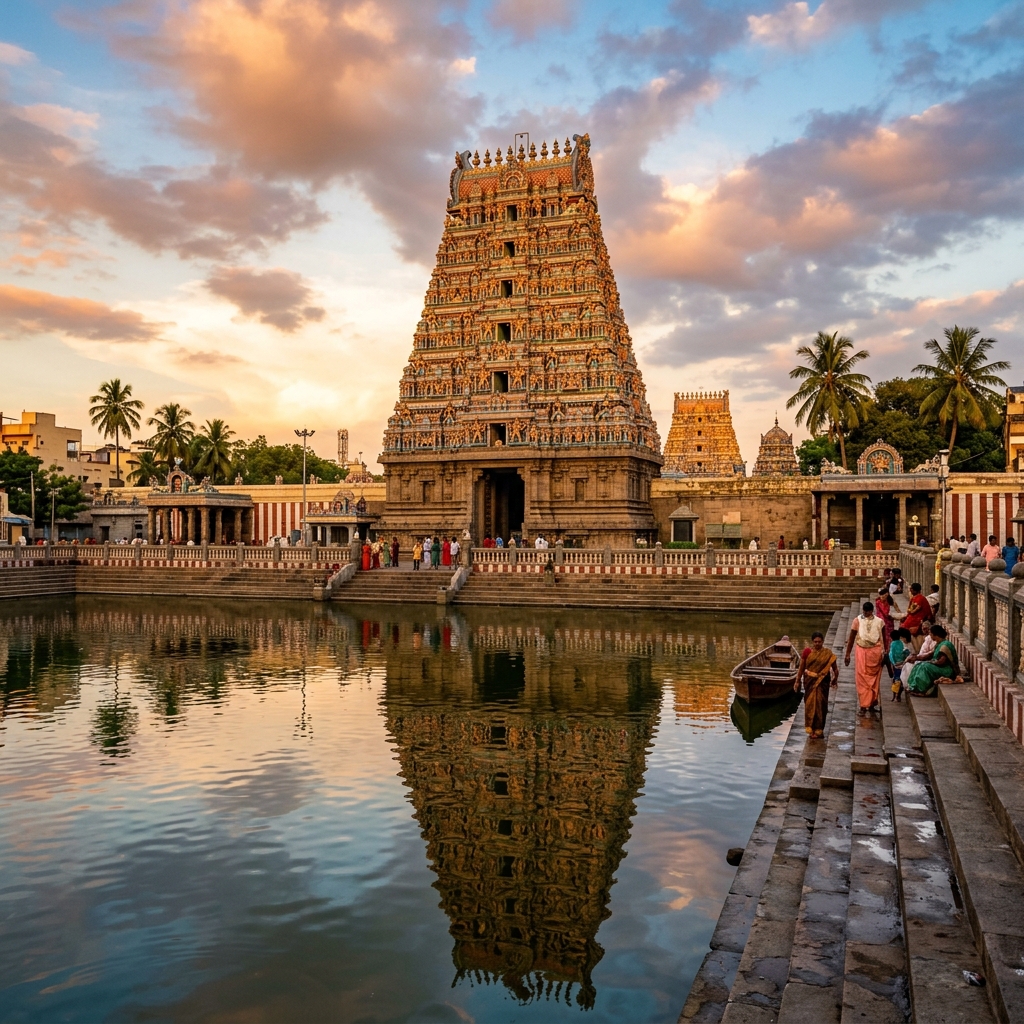
Thirukoilur - Veeratteswarar temple
Paadal Petra Sthalams

Thirukoilur - Veeratteswarar temple

Thirukoilur - Veeratteswarar temple

Veeratteswarar and the Ambal Sivanandavalli • Tamil Nadu, Nadu Naadu

Open in Maps My Thadam Check in

About the Sacred Destination

Presiding Deity
Veeratteswarar and the Ambal Sivanandavalli
Consort & Sub-Shrines
Lord Veeratteswarar (Andhakasura Samhara Moorthy - Swayambhu Lingam) & Goddess Periyanayaki (Shiromani Ambal / Soundaranayaki)
Era & Dynasty
Pallava & Early Chola Era (8th–10th Century CE - Nandivarman II, Parantaka I, Rajaraja I); Capital of Malayaman Dynasty.
Sacred Status & Classification
Paadal Petra Sthalam (#11 in Nadu Naadu / 276 Shaivite Shrines); One of the 8 **Ashta Veerattam** (Eight Heroic Shrines of Shiva). Royal seat of **King Meypporul Nayanar** and **Narasinga Munaiarayar**.

Thirukoilur Arulmigu Veeratteswarar Temple (historically known as Kilaiyur Veerattam) is one of the eight legendary Ashta Veerattam sanctuaries of Lord Shiva, located in the royal heritage town of Thirukoilur along the South Pennai riverbank in Kallakurichi district. Thirukoilur is immortalized in Puranic history as the holy spot where Lord Shiva vanquished the arrogant demon of darkness, Andhakasura, piercing him with His trident before reforming him into a divine gana commander.

Enshrined in the 7th-century Tamil Tevaram hymns composed by child-saint Thirugnanasambandar and Saint Thirunavukkarasar (Appar), Thirukoilur was the historical capital of the noble Malayaman dynasty, home to the saintly king Meypporul Nayanar and King Narasinga Munaiarayar (the foster father of Saint Sundarar). The expansive temple complex features a grand 5-tiered Rajagopuram, an inner sanctum housing the Swayambhu Lingam of Veeratteswarar, a dedicated bronze shrine depicting Andhakasura Samhara Moorthy, a separate shrine for Goddess Periyanayaki, and the holy Pennai River Ghat.

Sthala Puranam & Authentic Legends

Slaying of Demon Andhakasura (Andhakasura Samharam)

According to the Sthala Puranam, an atrocious blind demon named Andhakasura (born from the darkness of ignorance) obtained formidable boons and attacked the devas, attempting to capture Mount Kailash. Emboldened by arrogance, Andhakasura challenged Lord Shiva.

Lord Shiva confronted Andhakasura at Thirukoilur and pierced the demon through the chest with His divine trident (Trishula). As drops of blood fell to the earth, thousands of new Andhakasura demons sprang forth. Goddess Parvati assumed her fierce form as Goddess Kali and caught every drop of blood in a skull bowl before it could touch the soil. Lord Shiva held Andhakasura elevated on the tip of His trident until the demon's darkness of ignorance melted away. Overwhelmed by Lord Shiva's divine radiance, Andhakasura repented deeply, sang hymns of praise, and was elevated by the Lord to become the commander of His divine attendants (Bhringi Gana).

King Meypporul Nayanar's Supreme Sacrifice

Thirukoilur was ruled by the saintly monarch Meypporul Nayanar, one of the 63 Nayanmars. A rival king named Mutthanathan, unable to defeat Meypporul in battle, entered the palace disguised as a Shaivite ascetic bearing holy sacred ash and a hidden dagger. As Meypporul Nayanar bowed down in reverence to the holy ash, the assassin stabbed him in the back.

When the royal guard Dathan rushed to slay the assassin, King Meypporul Nayanar stopped him, declaring: "He wears the holy ash of my Lord Shiva; he is my brother!" The king ordered Dathan to escort the assassin safely out of the kingdom. Pleased by such unparalleled devotion to the sacred ash, Lord Shiva appeared before Meypporul Nayanar at the moment of his passing and granted him eternal mukti.

Classical Literary Canon & Sacred Hymns

  • Tevaram (2nd Thirumurai): Glorified by Thirugnanasambandar in 11 pathigams beginning with "Maimmuraivanthazhal paadumithanai... " (மைம்முறை வந்தழல் பாடுமிதனை).
  • Tevaram (4th Thirumurai): Saint Appar composed soulful pathigams extolling Lord Shiva's heroic victory over Andhakasura at Thirukoilur.
  • Periya Puranam: Sekkizhar dedicates an inspiring chapter to the life and sacrifice of King Meypporul Nayanar at Thirukoilur.

Epigraphical & Historical Events

  • Pallava & Chola Inscriptions (8th–10th Century CE): Inscriptions of Pallava King Nandivarman II and Chola King Parantaka I record endowments of arable lands, gold coins, and bronze idols to the temple.
  • Rajaraja Chola I Grants: Inscriptions record grants for maintaining Tevaram reciters (Oduvars) and supporting the annual Andhakasura Samharam festival.

Archaeo-Engineering & Scientific Marvels

Ancient metallurgical marvels, Siddha alchemical sciences, archaeo-engineering, and GI-tagged heritage:

  • Bronze Masterpiece of Andhakasura Samhara Moorthy: The temple vault preserves a rare 10th-century Chola bronze icon depicting Lord Shiva piercing Andhakasura with His trident, celebrated by art historians for its dynamic posture.
  • Riverbank Foundation Engineering: Built along the alluvial bank of the South Pennai River, the temple base incorporates deep granite block interlocking courses to resist flooding.

Signature Rituals, Anomalies & Special Sevas

Authentic daily pooja timelines, spatika-lingam darshan hours, special sevas, and sacred temple anomalies:

  • Andhakasura Samharam Festival: Celebrated annually in the Tamil month of Karthigai (Nov–Dec), re-enacting Lord Shiva's trident victory over Andhakasura with grand evening processions.
  • Meypporul Nayanar Guru Poojai: Special pooja celebrated on the birth star of King Meypporul Nayanar in the month of Karthigai.
  • Four Daily Kala Poojas: Morning Kalasanthi, Midday Uchikalam, Evening Sayarakshai, and Night Ardha Jamam.

What to See in the Temple (Visual Highlights)

🛕

Main Sanctum (Garbhagriha)

Housing the sacred Swayambhu Lingam of Lord Veeratteswarar (Kilaiyur Nathar).

🛕

Andhakasura Samhara Moorthy Shrine

Dedicated shrine displaying the fierce bronze idol of Lord Shiva holding the trident over Andhakasura.

🛕

Goddess Periyanayaki Shrine

Dedicated south-facing shrine for Goddess Parvati as Shiromani Ambal.

🛕

King Meypporul Nayanar Shrine

Shrine honoring the saintly king who sacrificed his life for the sacred ash.

🛕

South Pennai River Bathing Ghat

Historic riverbank located adjacent to the northern temple entrance.

Practical Visitor Logistics & Dress Code

Temple Opening Timings & Daily Hours

Morning: 6:00 AM – 12:00 PM; Evening: 4:30 PM – 8:30 PM.

Darshan & Special Entry Tickets

Free general queue available; Special Darshan: ₹20.

Dress Code & Special Rules

Traditional Indian attire (Men: Dhoti / Pants; Women: Saree / Salwar Kameez).

Accessibility & Senior Citizens

Step-free access across outer mandapam corridors.

Car Parking & Footwear Cloakroom

Parking available in front of the main Rajagopuram gate along Kilaiyur main road; footwear counter at entrance.

Best Time to Visit & Festival Calendar

Seasonal weather guide, peaceful darshan timings, and annual Brahmotsavam festival dates:

  • Best Months: October to March (pleasant weather).
  • Major Festivals: Karthigai Andhakasura Samharam (Nov–Dec), Meypporul Nayanar Poojai (Nov), Maha Shivaratri (Feb–March), Monthly Pradosham.

Transit, Accommodations & Prasadam Dining

How to Reach & Connectivity

  • Nearest Railway Station: Tirukoilur Railway Station (TRK) - 2 km; Villupuram Junction (VM) - 35 km; Tiruvannamalai Railway Station - 38 km.
  • Nearest Airport: Puducherry Airport (PNY) - 50 km; Tiruchirappalli International Airport (TRZ) - 135 km; Chennai Airport - 190 km.
  • Last-Mile Local Transport: City buses and auto-rickshaws available frequently from Tirukoilur bus stand (1.5 km) and Tirukoilur railway station.

Free Annadhanam & Local Veg Dining

  • Temple Prasadam: Puliyodarai, Ven Pongal, Sundal, Vibhooti Prasadam.
  • Nearby Dining: Vegetarian dining spots available near Thirukoilur bus stand and temple street.

Accommodations & Lodging Hubs

  • Named Hotels: Hotels in Thirukoilur town (2 km) such as Hotel Tamil Nadu Thirukoilur, and hotels in Villupuram (35 km) and Tiruvannamalai (38 km).

Nearby Heritage Spots (5–30 km Radius)

Combine your yatra with surrounding UNESCO heritage sites, Paadal Petra Sthalams & Divya Desams:

Arakandanallur Athulyanadheswarar Temple

3 km
Sacred & Heritage Spot

distance, historic hilltop Paadal Petra Sthalam visited by Ramana Maharshi.

Thirukoilur Ulagalantha Perumal Temple

2 km
Sacred & Heritage Spot

distance, major Divya Desam Vishnu temple.

Thiruvennainallur Kripapureeswarar Temple

20 km
Sacred & Heritage Spot

distance, famous Paadal Petra Sthalam where Shiva claimed Sundarar.

Verified References & Source Bibliography

  • Tevaram Thirumurai Canon (2nd & 4th Thirumurai).
  • Periya Puranam by Sekkizhar (Meypporul Nayanar Puranam).
  • ASI South Indian Inscriptions, Volume XIX (Inscriptions of Thirukoilur).

Community Photo Gallery (0)

No community photos uploaded yet.

Pilgrim Reflections (0)

No reflections logged for this destination yet.