
Explore Calendar Community THADAM+ My Thadam
Thirukoodalaiyatrur - Narthana Vallabheshwarar
Paadal Petra Sthalams

Thirukoodalaiyatrur - Narthana Vallabheshwarar

Thirukoodalaiyatrur - Narthana Vallabheshwarar

Nerikkattunayakar, Narthana Vallabheswarar andtheAmbal Purikuzhalambika, Para sakthi • Tamil Nadu, Nadu Naadu

Open in Maps My Thadam Check in

About the Sacred Destination

Presiding Deity
Nerikkattunayakar, Narthana Vallabheswarar andtheAmbal Purikuzhalambika, Para sakthi
Consort & Sub-Shrines
Lord Narthana Vallabheshwarar (Nerikkattu Nayakar - Swayambhu Lingam) & Goddess Parasakthi (Purikuzhalambikai / Gnanambigai)
Era & Dynasty
Ancient Chola stone construction (10th–12th Century CE - Parantaka I & Rajaraja I); Later Nayaka pillared mandapams.
Sacred Status & Classification
Paadal Petra Sthalam (#3 in Nadu Naadu / 276 Shaivite Shrines); Glorified in Tevaram by Sundaramurthy Nayanar (7th Thirumurai).

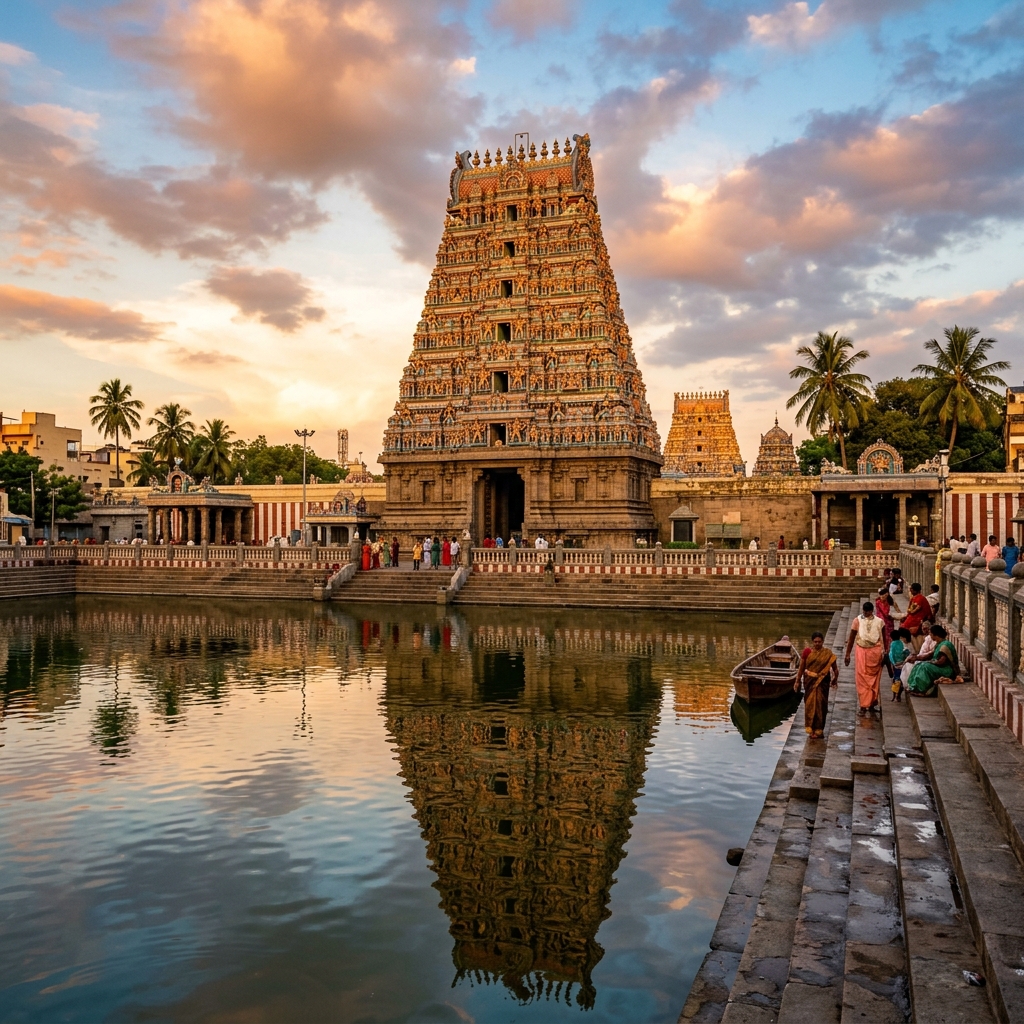
Thirukoodalaiyathur Arulmigu Narthana Vallabheshwarar Temple (historically known as Thiru Koodalaiyathur) is an ancient 10th-century Chola sanctuary and the 3rd holy Paadal Petra Sthalam in the historic Nadu Naadu region of Tamil Nadu. Situated at the sacred confluence (Koodal) of the Manimutharu and Vellar rivers near Sethiyathope in Cuddalore district, this revered temple is celebrated in Tamil hagiography as the holy spot where Lord Shiva assumed the form of an elderly Brahmin guide to lead Saint Sundaramurthy Nayanar along the correct path through the forest.

Immortalized in the 7th-century Tamil Tevaram hymns by Sundaramurthy Nayanar, the temple showcases classical Dravidian architecture featuring a three-tiered Rajagopuram, an inner sanctum housing the Swayambhu Lingam of Narthana Vallabheshwarar, a dedicated south-facing shrine for Goddess Parasakthi, the sacred Jackfruit tree (Sthala Vriksham), and the holy river confluence Sangama Theertham. Pilgrims visit Thirukoodalaiyathur to seek divine guidance in career choices, overcome life confusion, pray for dance and musical skills, and bathe in the holy river confluence.

Sthala Puranam & Authentic Legends

The Legend of 'Nerikkattu Nayakar' (The Lord Who Guided the Path)

According to the Sthala Puranam and Sekkizhar's Periya Puranam, when Saint Sundaramurthy Nayanar was journeying towards Thiruvadhigai Virattanam, he became disoriented in the dense riverine forest surrounding the river junction. Unsure of which path to cross, Sundarar prayed for divine assistance. Responding to His favorite companion, Lord Shiva disguised Himself as an venerable elderly Brahmin holding a bamboo walking stick.

The old man approached Sundarar with a welcoming smile, offering to guide him along the righteous path (Neri). Walking ahead of Sundarar with a light, dancing gait (Narthana), the old man led the saint safely to the riverbank of Thirukoodalaiyathur. When Sundarar entered the temple sanctum to offer thanks, the old man suddenly vanished into the luminous Swayambhu Lingam! Overwhelmed with emotion upon realizing that Lord Shiva Himself had been his personal guide, Sundarar sang his famous Tevaram pathigam "Dhanethanadha thanethanadha...", extolling the Lord as Nerikkattu Nayakar (The Guide of the Righteous Path) and Narthana Vallabheshwarar (The Master of Divine Dance).

Sacred River Confluence (Sangam)

The name Koodalaiyathur signifies the village located at the confluence (Koodal) of two holy rivers: the Vellar River and the Manimutharu River. Puranic lore declares that bathing at this river junction during New Moon days (Amavasai) and solar/lunar equinoxes cleanses ancestral karmas (Pithru Doshams) with efficacy equal to Triveni Sangam at Prayagraj.

Classical Literary Canon & Sacred Hymns

  • Tevaram (7th Thirumurai): Glorified by Sundaramurthy Nayanar in 10 verses beginning with "Dhanethanadha thanethanadha... " (தானே தனக்குச் சுற்றமுமாய்).
  • Periya Puranam: Sekkizhar commemorates Sundarar's pilgrimage and Lord Shiva's pathfinder miracle at Thirukoodalaiyathur.

Epigraphical & Historical Events

  • Parantaka Chola I Inscriptions: 10th-century stone inscriptions on the outer sanctum wall record royal donations of lands for maintaining daily morning and evening poojas.
  • Rajaraja Chola I Grants: Epigraphs document endowments of gold coins for lighting perpetual ghee lamps (Nanda Deepam) and celebrating the river confluence festival.

Archaeo-Engineering & Scientific Marvels

Ancient metallurgical marvels, Siddha alchemical sciences, archaeo-engineering, and GI-tagged heritage:

  • Riverine Hydro-Geology: Located at the natural deltaic bifurcation of Manimutharu and Vellar, the temple foundation is reinforced with deep granite courses designed to withstand seasonal river surges.
  • Iconography of Narthana Vallabheshwarar: The sanctum relief carvings depict Lord Shiva in a light dancing stance (Narthana), symbolizing cosmic harmony.

Signature Rituals, Anomalies & Special Sevas

Authentic daily pooja timelines, spatika-lingam darshan hours, special sevas, and sacred temple anomalies:

  • Nerikkattu Nayakar Guidance Pooja: Devotees offer special archana with Vilva leaves on Sundays to seek divine clarity for career choices, court litigation, and major life decisions.
  • Four Daily Kala Poojas: Morning Kalasanthi, Midday Uchikalam, Evening Sayarakshai, and Night Ardha Jamam.
  • Amavasai Sangam Snanam: Holy bathing ritual conducted at the river confluence during monthly New Moon days.

What to See in the Temple (Visual Highlights)

🛕

Main Sanctum (Garbhagriha)

Housing the sacred Swayambhu Lingam of Narthana Vallabheshwarar.

🛕

Goddess Parasakthi Shrine

Dedicated south-facing shrine for Goddess Parvati as Purikuzhalambikai.

🛕

Brahmin Guide Relief

Sculpted stone relief depicting Lord Shiva disguised as an old Brahmin guiding Saint Sundarar.

🛕

Sthala Vriksham (Jackfruit Tree & Vilvam)

Ancient sacred Jackfruit tree located inside the temple prakaram.

🛕

River Confluence Ghat

Serene bathing ghat at the junction of Vellar and Manimutharu rivers.

Practical Visitor Logistics & Dress Code

Temple Opening Timings & Daily Hours

Morning: 6:00 AM – 11:30 AM; Evening: 4:30 PM – 8:00 PM.

Darshan & Special Entry Tickets

Free entry for all devotees; no paid ticket queues.

Dress Code & Special Rules

Traditional Indian attire (Men: Dhoti / Pants; Women: Saree / Salwar Kameez).

Accessibility & Senior Citizens

Step-free ground layout across the main praharam.

Car Parking & Footwear Cloakroom

Parking available in front of the main temple entrance; footwear counter at entrance gate.

Best Time to Visit & Festival Calendar

Seasonal weather guide, peaceful darshan timings, and annual Brahmotsavam festival dates:

  • Best Months: October to March (pleasant weather for riverbank visits).
  • Major Festivals: Maha Shivaratri (Feb–March), Margazhi Arudra Darshan (Dec–Jan), Masi Magam River Festival (Feb–March), Monthly Pradosham.

Transit, Accommodations & Prasadam Dining

How to Reach & Connectivity

  • Nearest Railway Station: Vriddhachalam Junction (VRI) - 28 km; Chidambaram Railway Station (CDM) - 32 km.
  • Nearest Airport: Tiruchirappalli International Airport (TRZ) - 110 km; Puducherry Airport (PNY) - 95 km.
  • Last-Mile Local Transport: Local buses and auto-rickshaws available from Sethiyathope bus stand (12 km) and Srimushnam town (15 km).

Free Annadhanam & Local Veg Dining

  • Temple Prasadam: Puliyodarai, Ven Pongal, Sundal, Vibhooti Prasadam.
  • Nearby Dining: Pure vegetarian dining spots available at Sethiyathope junction and Srimushnam.

Accommodations & Lodging Hubs

  • Named Hotels: Hotels in Chidambaram town (32 km) such as Hotel Tamil Nadu Chidambaram, and lodges in Vriddhachalam town (28 km).

Nearby Heritage Spots (5–30 km Radius)

Combine your yatra with surrounding UNESCO heritage sites, Paadal Petra Sthalams & Divya Desams:

Srimushnam Bhuvaraha Swamy Temple

15 km
Sacred & Heritage Spot

distance, famous Swayambhu Vishnu temple.

Pennadam Pralayakaleshwarar Temple

22 km
Sacred & Heritage Spot

distance, historic Paadal Petra Sthalam with Gajaprishta vimanam.

Chidambaram Thillai Nataraja Temple

32 km
distance, world

famous cosmic dance temple.

Verified References & Source Bibliography

  • Tevaram Thirumurai Canon (7th Thirumurai, Sundaramurthy Nayanar).
  • Periya Puranam by Sekkizhar (Sundaravadam Puranam).
  • ASI South Indian Inscriptions, Volume XIX (Inscriptions of Cuddalore District).

Community Photo Gallery (0)

No community photos uploaded yet.

Pilgrim Reflections (0)

No reflections logged for this destination yet.