
Explore Calendar Community THADAM+ My Thadam
Thiruvadhigai - Veerattaneswarar Temple
Paadal Petra Sthalams

Thiruvadhigai - Veerattaneswarar Temple

Thiruvadhigai - Veerattaneswarar Temple

Veerateswarar and the Ambal Tirupurasundari The sthala Vriksham is Sarakkonrai and the Theertham Garuda Nadi Sambandar, Appar, Sundarar have composed the Pathigam • Tamil Nadu, Nadu Naadu

Open in Maps My Thadam Check in

About the Sacred Destination

Presiding Deity
Veerateswarar and the Ambal Tirupurasundari The sthala Vriksham is Sarakkonrai and the Theertham Garuda Nadi Sambandar, Appar, Sundarar have composed the Pathigam
Consort & Sub-Shrines
Lord Veerattaneswarar (Tripurantaka - Swayambhu Lingam) & Goddess Thiripurasundari (Periyanayaki)
Era & Dynasty
Pallava & Chola Era (7th–11th Century CE - Mahendravarman I, Narasimhavarman II Rajasimha, Parantaka I, Rajaraja I). Served as architectural prototype for Tanjore Brihadeeswarar Temple.
Sacred Status & Classification
Paadal Petra Sthalam (#7 in Nadu Naadu / 276 Shaivite Shrines); One of the 8 **Ashta Veerattam** (Eight Heroic Shrines of Shiva). Site of **Appar's First Tevaram Hymn & Shoolai Cure**.

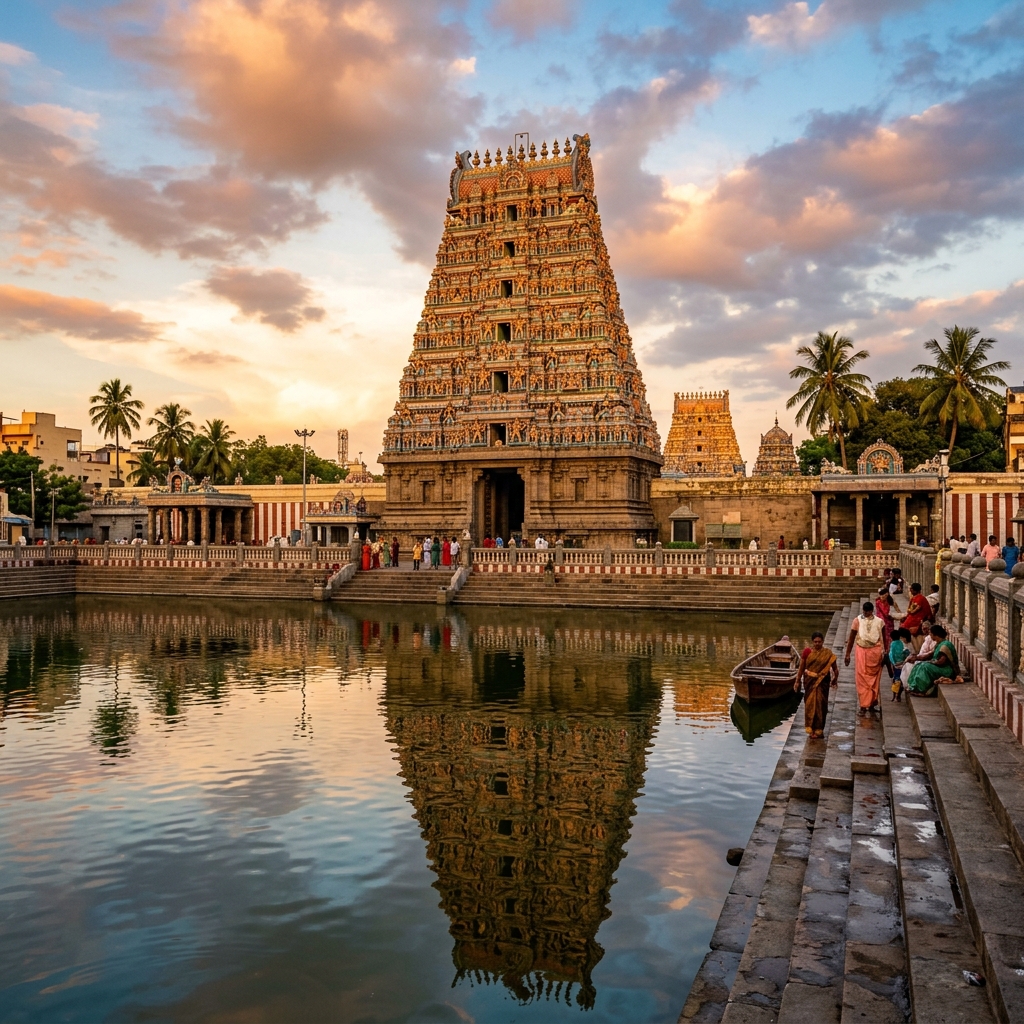
Thiruvadhigai Arulmigu Veerattaneswarar Temple (historically known as Athigai Veerattam) is one of the most celebrated and architecturally towering Paadal Petra Sthalams in India. Situated near Panruti along the Gadilam riverbank in Cuddalore district, Thiruvadhigai is renowned as the primary shrine among the eight Ashta Veerattam sites, commemorating Lord Shiva's cosmic destruction of the three flying demon fortresses (Tripurasamharam) with a divine smile.

Immortalized in Tamil Shaivite history, Thiruvadhigai is the sacred soil where Saint Thirunavukkarasar (Appar) was miraculously cured of his agonizing stomach ailment (Shoolai) through his sister Tilakavatiyar's devotion, prompting him to sing his first immortal Tevaram hymn "Kootruvayina Varu..." and return to Shaivism. The sprawling 7-acre temple complex features a majestic 7-tiered Rajagopuram, an imposing 16-sided Shodasa Lingam, a towering Chola granite Vimanam (which inspired Rajaraja Chola's Tanjore Big Temple), a dedicated shrine for Tilakavatiyar, and the holy Chakra Theertham.

Sthala Puranam & Authentic Legends

Destruction of the Three Flying Cities (Tripurasamharam)

According to the Sthala Puranam, three powerful demon brothers—Tarakaksha, Kamalakaksha, and Vidyunmali (Tripurasuras)—obtained iron, silver, and gold flying fortresses that moved freely through the skies. Emboldened by invincibility, they tormented devas and destroyed sacred ashrams. The devas fashioned a cosmic chariot from Earth, using the Sun and Moon as wheels, Lord Brahma as charioteer, Mount Meru as bow, and Serpent Vasuki as bowstring.

However, when the devas felt pride that Lord Shiva needed their help, the Lord simply looked at the three flying fortresses and smiled! Instantly, a cosmic beam of divine fire erupted from His smile, reducing all three flying cities of the Tripurasuras to ashes. At Thiruvadhigai, Lord Shiva revealed Himself as Tripurantaka / Veerattaneswarar, demonstrating that divine will transcends all weapons and cosmic machinery.

Saint Appar's Healing Miracle & First Tevaram Hymn

Saint Appar (originally named Marulneekiyar) had embraced Jainism under the monastic name Dharmasena. Overwhelmed by grief, his pious elder sister Tilakavatiyar resided at Thiruvadhigai, sweeping temple corridors and praying constantly for her brother's spiritual salvation. Responding to her prayers, Lord Shiva afflicted Dharmasena with an excruciating, incurable stomach colic (Shoolai).

Unable to find relief through Jain rites, Dharmasena secretly fled to Thiruvadhigai in the dead of night and fell at his sister's feet. Tilakavatiyar anointed his forehead with holy sacred ash (Vibhooti) and led him before Lord Veerattaneswarar. Overwhelmed by divine grace, Appar spontaneously composed his very first Tevaram hymn in the 4th Thirumurai starting with "Kootruvayina Varu Vilakkagileer...". Instantly, the severe pain vanished! Lord Shiva spoke from the sky, bestowing the title Thirunavukkarasar (King of Sacred Utterances) upon him.

Classical Literary Canon & Sacred Hymns

  • Tevaram (4th Thirumurai): Glorified by Thirunavukkarasar (Appar) in numerous pathigams starting with "Kootruvayina varu vilakkagileer... " (கூற்றுறவாயின விலக்ககிலீர்).
  • Tevaram (1st & 7th Thirumurai): Praised by Thirugnanasambandar and Sundaramurthy Nayanar.
  • Periya Puranam: Sekkizhar dedicates an extensive epic chapter detailing Tilakavatiyar's service and Appar's conversion at Thiruvadhigai.

Epigraphical & Historical Events

  • Pallava Mahendravarman I Inscriptions (7th Century CE): Inscriptions record that Pallava King Mahendravarman I converted from Jainism to Shaivism after witnessing Appar's miracle and constructed stone mandapams at Thiruvadhigai.
  • Chola Architectural Epigraphs: Inscriptions of Rajaraja I and Rajendra I detail endowments of gold for daily poojas and document that the 100-foot granite vimanam served as the structural blueprint for the Tanjore Brihadeeswarar Temple.

Archaeo-Engineering & Scientific Marvels

Ancient metallurgical marvels, Siddha alchemical sciences, archaeo-engineering, and GI-tagged heritage:

  • Architectural Prototype for Tanjore Big Temple: Structural engineers and ASI studies highlight that the pyramidal stone vimanam over the Thiruvadhigai sanctum provided the structural load-bearing design later scaled up by Rajaraja Chola at Tanjore.
  • 16-Sided Shodasa Lingam: The sanctum houses a rare 16-faceted monolithic black granite Lingam (Shodasa Lingam), displaying advanced ancient stone polishing techniques.

Signature Rituals, Anomalies & Special Sevas

Authentic daily pooja timelines, spatika-lingam darshan hours, special sevas, and sacred temple anomalies:

  • Appar Shoolai Cure & Vibhooti Prasadam: Devotees suffering from severe stomach ailments, ulcers, and chronic digestive disorders visit Thiruvadhigai to pray for 48 days and partake in the sacred ash (Vibhooti) prasadam given at Tilakavatiyar's shrine.
  • Chithirai Vasanthotsavam & Tripurasamharam Re-enactment: Annual 10-day festival featuring the grand street procession of Lord Tripurantaka on a massive wooden chariot.
  • Six Daily Kala Poojas: Conducted according to Shaiva Agama rites.

What to See in the Temple (Visual Highlights)

🛕

Main Sanctum (Shodasa Lingam)

16-sided Swayambhu Lingam of Lord Veerattaneswarar beneath the historic granite vimanam.

🛕

Goddess Thiripurasundari Sanctum

Separate shrine dedicated to the mother Goddess Periyanayaki.

🛕

Tilakavatiyar Shrine

Shrine honoring Saint Appar's elder sister holding a broom and sacred ash container.

🛕

Tripurantaka Chariot Reliefs

Intricate 7th-century Pallava and Chola stone reliefs depicting Lord Shiva's Tripurasamharam smile.

🛕

Chakra Theertham

Sacred temple water tank located near the main entrance.

Practical Visitor Logistics & Dress Code

Temple Opening Timings & Daily Hours

Morning: 6:00 AM – 12:00 PM; Evening: 4:00 PM – 8:30 PM.

Darshan & Special Entry Tickets

Free general queue available; Special Darshan: ₹20 / ₹50.

Dress Code & Special Rules

Traditional Indian attire (Men: Dhoti / Pants; Women: Saree / Salwar Kameez).

Accessibility & Senior Citizens

Step-free access provided across outer mandapam corridors.

Car Parking & Footwear Cloakroom

Dedicated parking lot available near the East Rajagopuram entrance; footwear counter at entrance gate.

Best Time to Visit & Festival Calendar

Seasonal weather guide, peaceful darshan timings, and annual Brahmotsavam festival dates:

  • Best Months: October to March (pleasant weather).
  • Major Festivals: Chithirai Brahmotsavam & Tripurasamharam (April–May), Appar Guru Poojai (May–June), Maha Shivaratri (Feb–March), Monthly Pradosham.

Transit, Accommodations & Prasadam Dining

How to Reach & Connectivity

  • Nearest Railway Station: Panruti Railway Station (PRT) - 2 km; Villupuram Junction (VM) - 25 km; Cuddalore Port Junction - 28 km.
  • Nearest Airport: Puducherry Airport (PNY) - 35 km; Tiruchirappalli International Airport (TRZ) - 140 km; Chennai Airport - 160 km.
  • Last-Mile Local Transport: City buses and auto-rickshaws available continuously from Panruti bus stand (2 km) and Panruti railway station.

Free Annadhanam & Local Veg Dining

  • Temple Prasadam: Vibhooti Prasadam, Puliyodarai, Ven Pongal, Sundal.
  • Nearby Dining: Pure vegetarian dining spots available near Panruti bus stand and temple street.

Accommodations & Lodging Hubs

  • Named Hotels: Hotels and lodges in Panruti town (2 km) such as Hotel Devi Panruti, and hotels in Villupuram (25 km) and Puducherry (35 km).

Nearby Heritage Spots (5–30 km Radius)

Combine your yatra with surrounding UNESCO heritage sites, Paadal Petra Sthalams & Divya Desams:

Thirunavalur Bhaktajaneswarar Temple

20 km
Sacred & Heritage Spot

distance, birthplace of Saint Sundaramurthy Nayanar.

Cuddalore Padaleeswarar Temple

28 km
Sacred & Heritage Spot

distance, ancient Paadal Petra Sthalam.

Puducherry Promenade & French Quarter

35 km
Sacred & Heritage Spot

distance, coastal French heritage town.

Verified References & Source Bibliography

  • Tevaram Thirumurai Canon (4th Thirumurai, Thirunavukkarasar Appar).
  • Periya Puranam by Sekkizhar (Thirunavukkarasa Nayanar Puranam).
  • ASI South Indian Inscriptions, Volume XII (Inscriptions of Pallavas and Cholas at Thiruvadhigai).

Community Photo Gallery (0)

No community photos uploaded yet.

Pilgrim Reflections (0)

No reflections logged for this destination yet.