Explore Calendar Community THADAM+ My Thadam
Thiruvalangadu - Sri Vadaranyeswarar Temple
Paadal Petra Sthalams

Thiruvalangadu - Sri Vadaranyeswarar Temple

Thiruvalangadu - Sri Vadaranyeswarar Temple

Aalankatteesar, Nataraja, Oordhvatandavamoorthy and the Ambal Vandaarkuzhaliammai • Tiruvallur, Thondai Naadu Temples

Open in Maps My Thadam Check in

About the Sacred Destination

Presiding Deity
Aalankatteesar, Nataraja, Oordhvatandavamoorthy and the Ambal Vandaarkuzhaliammai
Consort & Sub-Shrines
Sri Vadaranyeswarar (Aalankatteesar) & Goddess Vandarkuzhali Ammai
Era & Dynasty
Pallava origins (7th C CE) with grand Chola stone expansions by Rajaraja I, Rajendra I, and Vijayanagara Nayakas
Sacred Status & Classification
Paadal Petra Sthalam (Thondai Nadu Shrine #15 / Shrine #278 of 276 Shaivite Shrines); **Pancha Sabhai Sthalam #1** (The Ruby Hall / Ratna Sabha); Mukthi Sthalam of Saint Karaikal Ammaiyar

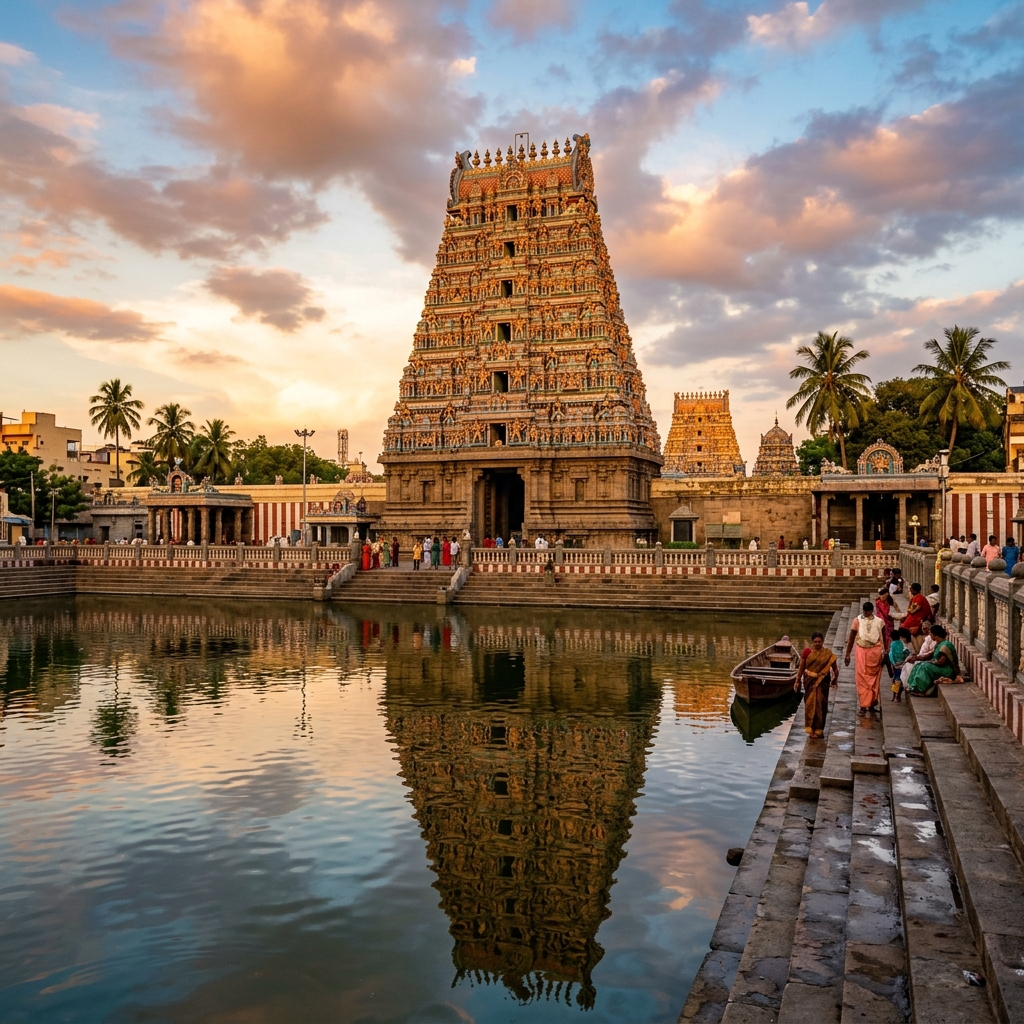
Thiruvalangadu Arulmigu Vadaranyeswarar Temple is one of the grandest and most revered sanctuaries in Shaivite Hinduism. Immortalized in the 7th-century Tevaram hymns by the Holy Trio (Sambandar, Appar, Sundarar) and in the 11th Thirumurai by Saint Karaikal Ammaiyar, this ancient temple is celebrated as Ratna Sabha (The Ruby Hall)—the first among the five cosmic dance halls (Pancha Sabhai) of Lord Nataraja.

Nestled amidst ancient Banyan groves (Vadaranyam) near Arakkonam in Tiruvallur District, Tamil Nadu, Thiruvalangadu is world-famous as the divine arena where Lord Shiva performed the supreme Oordhva Tandava dance in competition with Goddess Kali and where Saint Karaikal Ammaiyar attained eternal liberation (Mukthi). Spanning an immense granite complex with five enclosures (Prakarams), towering entrance towers, and the sacred Mukthi Theertham tank, Thiruvalangadu is a supreme pilgrimage site for art historians, saints, and devotees worldwide.

Sthala Puranam & Authentic Legends

The Ratna Sabha Cosmic Dance & Oordhva Tandava Competition

According to sacred Purana legends, after slaying the demons Sumbha and Nisumbha, Goddess Kali took up residence in the dense Banyan forest (Vadaranyam). Her fierce, unbridled energy filled the forest with wild power, disturbing cosmic order. Sages prayed to Lord Shiva to calm Her wrath. Lord Shiva descended to Vadaranyam and challenged Goddess Kali to a cosmic dance competition (Tandava). As the divine dance reached its crescendo, Lord Shiva's earring (Kundalam) fell to the ground. Without pausing the rhythm of His dance, Lord Shiva lifted His left leg high above His head to His ear (Oordhva Tandava) and restored the earring with His toe. Out of feminine modesty, Goddess Kali conceded victory to Lord Shiva. Moved by Her devotion, Lord Shiva granted Kali a sanctum near the entrance, declaring that devotees must first seek Her blessings before entering the main sanctum. Lord Shiva manifested as Sri Oordhva Tandava Nataraja in the Ratna Sabha (Ruby Hall).

Saint Karaikal Ammaiyar's Head-Walking & Mukthi

The profound female Shaivite saint Karaikal Ammaiyar (Peyar) surrendered her physical beauty and assumed a skeletal form out of pure devotion to Shiva. On her pilgrimage to Thiruvalangadu, she considered the ground so holy that she walked upside down on her head so as not to pollute the sacred earth with her feet. Overjoyed by her unyielding devotion, Lord Shiva addressed her affectionately as "Amma!" (Mother!) and granted her eternal residence beneath His dancing right foot in the Ratna Sabha. Karaikal Ammaiyar composed her famous Thiruvalangattu Mootha Thirupathigam hymns here. A dedicated shrine for Karaikal Ammaiyar stands inside the temple prakaram.

Discovery of the Thiruvalangadu Copper Plates (1018 CE)

In 1903, the Archaeological Survey of India discovered 31 massive bronze ring-bound copper plates in a subterranean vault at Thiruvalangadu. Issued by Chola Emperor Rajendra I in 1018 CE, these famous Thiruvalangadu Copper Plates contain 816 lines of Sanskrit and Tamil epigraphy, documenting the genealogy of the Imperial Cholas, Rajendra I's naval conquest of Sri Lanka and Gangetic North India, and immense land grants (Devadana) to Thiruvalangadu Vadaranyeswarar Temple.
Classical Literary Canon & Sacred Hymns

This temple is enshrined in the Tevaram (1st & 3rd Thirumurai by Sambandar, 5th Thirumurai by Appar, 7th Thirumurai by Sundarar) and 11th Thirumurai by Karaikal Ammaiyar.

  • Tevaram Hymn by Saint Thirugnanasambandar:

> "விண்ணுறு மாளிகை சூழ் திருவாலங்காட்டு > அண்ணலை அடியவர் ஆர்தொழ நின்றவனை > எண்ணுறு சிந்தை செய்கின்றவர் மேல்வினைகள் > நண்ணுறு துன்பம் இலர் நவிலுங்காலே." > > Translation: "The Supreme Lord who resides at Thiruvalangadu surrounded by cloud-touching mansions grants immediate relief from all past karmas and grief to those who meditate upon His lotus feet!"

  • Hymn by Saint Karaikal Ammaiyar (11th Thirumurai):

> "அறைகழல் ஆர்ப்ப எடுத்த அடிஅவன் > திருவாலங்காட்டு ஆடும் சேவடியே."

Epigraphical & Historical Events

  • Rajaraja I & Rajendra I Epigraphs: Over 50 stone inscriptions carved into the inner sanctum granite walls record royal grants by Rajaraja Chola I, Rajendra Chola I, and Queen Sembiyan Mahadevi.
  • Vijayanagara Royal Grants: Inscriptions of Emperor Krishnadevaraya record the construction of the outer 5-tiered Rajagopuram and the stone Ratna Sabha hall in the 16th century.

Archaeo-Engineering & Scientific Marvels

Ancient metallurgical marvels, Siddha alchemical sciences, archaeo-engineering, and GI-tagged heritage:

  • Monolithic Bronze Iconography: The copper-bronze idol of Oordhva Tandava Nataraja in the Ratna Sabha is celebrated globally as a masterpiece of South Indian bronze metallurgy.
  • The Thiruvalangadu Copper Plates: Preserved at the Government Museum Chennai, these plates represent one of the longest epigraphical charters in Indian history.

Signature Rituals, Anomalies & Special Sevas

Authentic daily pooja timelines, spatika-lingam darshan hours, special sevas, and sacred temple anomalies:

  • Six Daily Kala Poojas: Conducted as per Agamic rites: Ushathkalam (6:00 AM), Kalasanthi (8:00 AM), Uchikalam (12:00 PM), Sayarakshai (5:30 PM), Irandam Kalam (7:00 PM), and Ardha Jamam (8:30 PM).
  • Margazhi Arudra Darshan: The biggest festival of the year, featuring a night-long grand Abhishekam and procession of the bronze Oordhva Tandava Nataraja idol in the Ratna Sabha.
  • Karaikal Ammaiyar Guru Pooja: Celebrated during the month of Swati (Panguni) honoring the saint's mukthi.

What to See in the Temple (Visual Highlights)

🛕

Ratna Sabha (The Ruby Hall)

Enshrines the iconic bronze statue of Lord Oordhva Tandava Nataraja and Karaikal Ammaiyar.

🛕

Main Sanctum (Garbhagriha)

Houses the self-manifested Swayambhu Lingam of Sri Vadaranyeswarar.

🛕

Goddess Vandarkuzhali Ammai Shrine

Separate south-facing shrine dedicated to Goddess Vandar Kuzhali.

🛕

Goddess Kali Shrine

Outer entrance shrine dedicated to Goddess Kali.

🛕

Mukthi Theertham

Serene temple tank where Karaikal Ammaiyar attained divine grace.

Practical Visitor Logistics & Dress Code

Temple Opening Timings & Daily Hours

Morning: 6:00 AM – 12:00 PM; Evening: 4:30 PM – 8:30 PM

Darshan & Special Entry Tickets

Free general entry queue; Special Darshan Ticket: ₹20 / ₹50

Dress Code & Special Rules

Traditional Indian attire mandatory. Men: Dhoti/Shirt; Women: Saree/Salwar Kameez

Accessibility & Senior Citizens

Ramp access provided near main mandapam step entries

Car Parking & Footwear Cloakroom

Dedicated vehicle parking available near the North Rajagopuram entrance along Thiruvalangadu Road; shoe counter near entrance

Best Time to Visit & Festival Calendar

Seasonal weather guide, peaceful darshan timings, and annual Brahmotsavam festival dates:

  • Best Months: October to March (mild winter season ideal for pilgrimage)
  • Major Festivals:
  • Margazhi Arudra Darshan (Dec–Jan): Grand 10-day festival and night-long Nataraja abhishekam.
  • Panguni Karaikal Ammaiyar Guru Pooja (March–April): Honoring Saint Karaikal Ammaiyar.
  • Maha Shivaratri (Feb–March): Four-kala night long abhishekam.

Transit, Accommodations & Prasadam Dining

How to Reach & Connectivity

  • Nearest Railway Station: Thiruvalangadu Railway Station (TAV) - 4 km; Arakkonam Junction (AJJ) - 15 km; Tiruvallur Railway Station (TRL) - 18 km
  • Nearest Airport: Chennai International Airport (MAA) - 60 km
  • Last-Mile Local Transport: Frequent local trains (Chennai Suburban Line) stop at Thiruvalangadu Railway Station. Buses run every 15 minutes from Arakkonam (15 km) and Tiruvallur (18 km) to Thiruvalangadu Bus Stand. Auto-rickshaws available at Thiruvalangadu Station (4 km to temple)

Free Annadhanam & Local Veg Dining

  • Temple Prasadam: Kovil Puliyodarai, Sakkarai Pongal, Sundal, and Panchamirtham available at temple counter. Free daily Annadhanam served at 12:15 PM
  • Specific Pure-Veg Dining Spots: Hotel Annapoorna Veg (Arakkonam Station Road - 15 km); Hotel Vasantha Bhavan (Tiruvallur - 18 km)

Accommodations & Lodging Hubs

  • Temple / Devasthanam Stays: Arulmigu Vadaranyeswarar Temple Yatri Nivas (Thiruvalangadu)
  • Hotels in Arakkonam (15 km): Hotel Annapoorna Boarding & Lodging (Arakkonam - 15 km)
  • Hotels in Tiruvallur (18 km): Hotel Vasantham Boarding & Lodging (Tiruvallur - 18 km)

Nearby Heritage Spots (5–30 km Radius)

Combine your yatra with surrounding UNESCO heritage sites, Paadal Petra Sthalams & Divya Desams:

Tiruvallur Veeraraghavaswamy Temple

18 km
Sacred & Heritage Spot

East; Famous 108 Divya Desam Vaishnavite temple

Thakkolam Jalanadheswarar Temple

15 km
South

West; Ancient Paadal Petra Sthalam with subterranean spring

Nemili Sri Bala Peetam

18 km
South

West; Siddha temple dedicated to Goddess Bala Tripurasundari

Verified References & Source Bibliography

  • Tevaram Thirumurai Canon (1st, 3rd, 5th, and 7th Thirumurai)
  • 11th Thirumurai by Saint Karaikal Ammaiyar (Thiruvalangattu Mootha Thirupathigam)
  • Periya Puranam by Sekkizhar (Karaikal Ammaiyar Puranam)
  • The Thiruvalangadu Copper Plates of Rajendra Chola I (1018 CE - ASI Epigraphia Indica)
  • HR&CE Devasthanam Archives, Arulmigu Vadaranyeswarar Temple, Thiruvalangadu

Community Photo Gallery (0)

No community photos uploaded yet.

Pilgrim Reflections (0)

No reflections logged for this destination yet.