Explore Calendar Community THADAM+ My Thadam
Vadaranyeswarar Temple, Thiruvalangadu
Pancha Sabhai Sthalams

Vadaranyeswarar Temple, Thiruvalangadu

திருவாலங்காடு வடாரண்யேஸ்வரர் கோவில்

Lord Vadaranyeswarar (Devasingaperuman) & Goddess Vandar Kuzhali Amman • Thiruvallur, Thiruvalangadu

Open in Maps My Thadam Check in

About the Sacred Destination

Presiding Deity
Lord Vadaranyeswarar (Devasingaperuman) & Goddess Vandar Kuzhali Amman
Consort & Sub-Shrines
Goddess Vandar Kuzhali
Era & Dynasty
Chola Dynasty (Rajendra Chola I copper plate inscriptions), Pallava and Vijayanagara extensions
Sacred Status & Classification
Paadal Petra Sthalam (Tondaimandalam #15), Pancha Sabhai (Ratna Sabha - Gem/Ruby Hall)

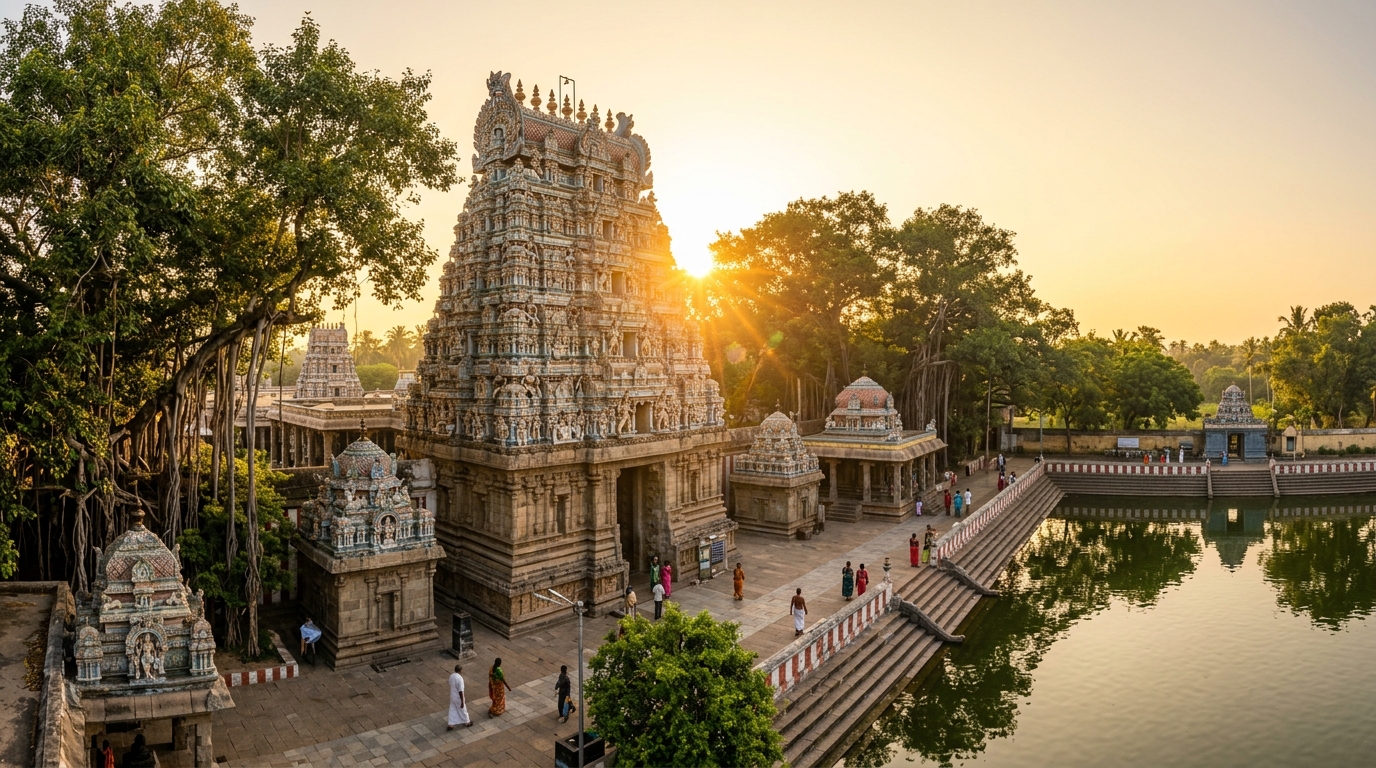
Thiruvalangadu Arulmigu Vadaranyeswarar Temple is an ancient Paadal Petra Sthalam nestled amid the tranquil rural landscape of Thiruvallur district. Sanctified as the Ratna Sabha (Gem/Ruby Hall) among Lord Shiva's five cosmic dance halls, the temple marks the historic Vadaranyam (Forest of Banyan Trees) where Lord Shiva performed His fierce Urdhva Tandava dance contest with Goddess Kali.

The temple is famous for housing the magnificent bronze idol of Nataraja in the vertical Urdhva Tandava posture with His left leg raised to His ear level, and for being the sacred sanctuary where Saint Karaikkal Ammaiyar attained eternal seat beneath the Lord's feet. In epigraphical history, the site gained world renown for the discovery of the monumental 11th-century Thiruvalangadu Copper Plates of Emperor Rajendra Chola I.

Sthala Puranam & Authentic Legends

The ancient forest of Vadaranyam (Forest of Banyan Trees) was once terrorized by two ferocious demon brothers, Shumbha and Nishumbha, along with their demon army. Responding to the prayers of the devas and rishis, Goddess Kali (Chandi) descended to the forest and annihilated the demons. However, after consuming the blood of the slain demon army, Kali became intoxicated with violent cosmic fury (Ugra). Unable to contain Her rage, She began rampaging through the banyan forest, disrupting cosmic order and terrifying the inhabitants.

The Great Dance Contest (Urdhva Tandava) & Ratna Sabha

To pacify Kali and restore cosmic equilibrium, Lord Shiva arrived at Vadaranyam. Kali challenged Lord Shiva to a fierce cosmic dance competition (Tandava Spardha), declaring that whoever surrendered or failed to execute a posture must leave the forest. Lord Shiva accepted the challenge.

Before the assembled Gods, devas, and rishis, Shiva and Kali performed 108 intricate dance postures in perfect synchronization. As the competition reached its crescendo, Lord Shiva intentionally loosened His gemstone earring (Ratna Kundalam), letting it fall to the earth. Without pausing the rhythm of the dance for even a fraction of a second, Shiva scooped up the fallen earring with His left toe, raised His left leg straight vertically above His head, and fitted the earring back into His ear with His foot (Urdhva Tandava). Out of innate feminine modesty (Lajja), Goddess Kali declined to raise Her leg in this posture before the public assembly and graciously conceded defeat. She pacified Her rage, bowed to Shiva's supreme mastery, and established Her shrine at the border of the forest, while Shiva manifested as Nataraja in the Ratna Sabha (Gem/Ruby Hall).

Karaikkal Ammaiyar's Devotion & Eternal Seat

Thiruvalangadu is intimately immortalized by the great female Nayanmar saint Karaikkal Ammaiyar (Punithavathi). Shedding her youthful physical beauty, she prayed to Shiva for a skeletal form (Pey Vadivam) to sing His praises free from worldly attachments. When she journeyed to Mount Kailash, she deemed it sacrilegious to walk on the holy mountain with her feet and instead climbed the mountain upside down on her head.

Moved by her supreme devotion, Lord Shiva greeted her with the eternal title "Amma" (Mother) and instructed her to travel to Thiruvalangadu to witness His eternal Urdhva Tandava dance. Karaikkal Ammaiyar again walked on her head all the way to Thiruvalangadu, took her seat beneath the feet of Lord Nataraja in the Ratna Sabha, and composed the immortal Thiruvalangattu Mootha Thirupathigam ("Pothavani Pathigam"). To this day, her idol resides directly beneath Nataraja's raised foot in the Ratna Sabha.

Classical Literary Canon & Sacred Hymns

Thiruvalangadu is immortalized by Karaikkal Ammaiyar's famous Thiruvalangattu Mootha Thirupathigam ("Pothavani Pathigam"), sung in a state of ecstatic mystic devotion under Nataraja's feet.

The Nayanmar saints Thirugnanasambandar, Appar, and Sundarar composed Tevaram hymns praising Vadaranyeswarar.

Epigraphical & Historical Events

Thiruvalangadu is world-renowned for the monumental Thiruvalangadu Copper Plates of Chola Emperor Rajendra Chola I (1012–1044 CE). Discovered in a subterranean chamber inside the temple precinct, these 31 massive copper plates bound by a royal bronze seal record the Chola dynasty genealogy, Rajendra Chola's naval campaign to Southeast Asia (Srivijaya), and extensive royal land grants to the Vadaranyeswarar Temple.

Archaeo-Engineering & Scientific Marvels

Ancient metallurgical marvels, Siddha alchemical sciences, archaeo-engineering, and GI-tagged heritage:

  • Rajendra Chola Copper Plates: One of the longest epigraphical copper plate records in Indian history, preserved in the Chennai Government Museum.
  • Ratna Sabha Gemstone Symbolism: The hall represents the cosmic elemental element of Ruby/Gemstone (Ratna), featuring a bronze Urdhva Tandava Nataraja idol adorned with ruby ornaments.
  • Banyan Tree Sthala Vriksham: Ancient banyan tree inside the complex associated with the original Vadaranyam forest.

Signature Rituals, Anomalies & Special Sevas

Authentic daily pooja timelines, spatika-lingam darshan hours, special sevas, and sacred temple anomalies:

  • Karaikkal Ammaiyar Guru Pooja: Celebrated during the Panguni month with special recitations of Thiruvalangattu Pathigam.
  • Margazhi Thiruvaathirai: Annual grand abhishekam to the Urdhva Tandava Nataraja Murti.

What to See in the Temple (Visual Highlights)

🛕

Ratna Sabha

The sacred Ruby Hall housing the stunning Urdhva Tandava Nataraja idol with Karaikkal Ammaiyar seated below.

🛕

Vadaranyeswarar Sanctum

Swayambhu Lingam of Lord Vadaranyeswarar.

🛕

Kali Temple Shrine

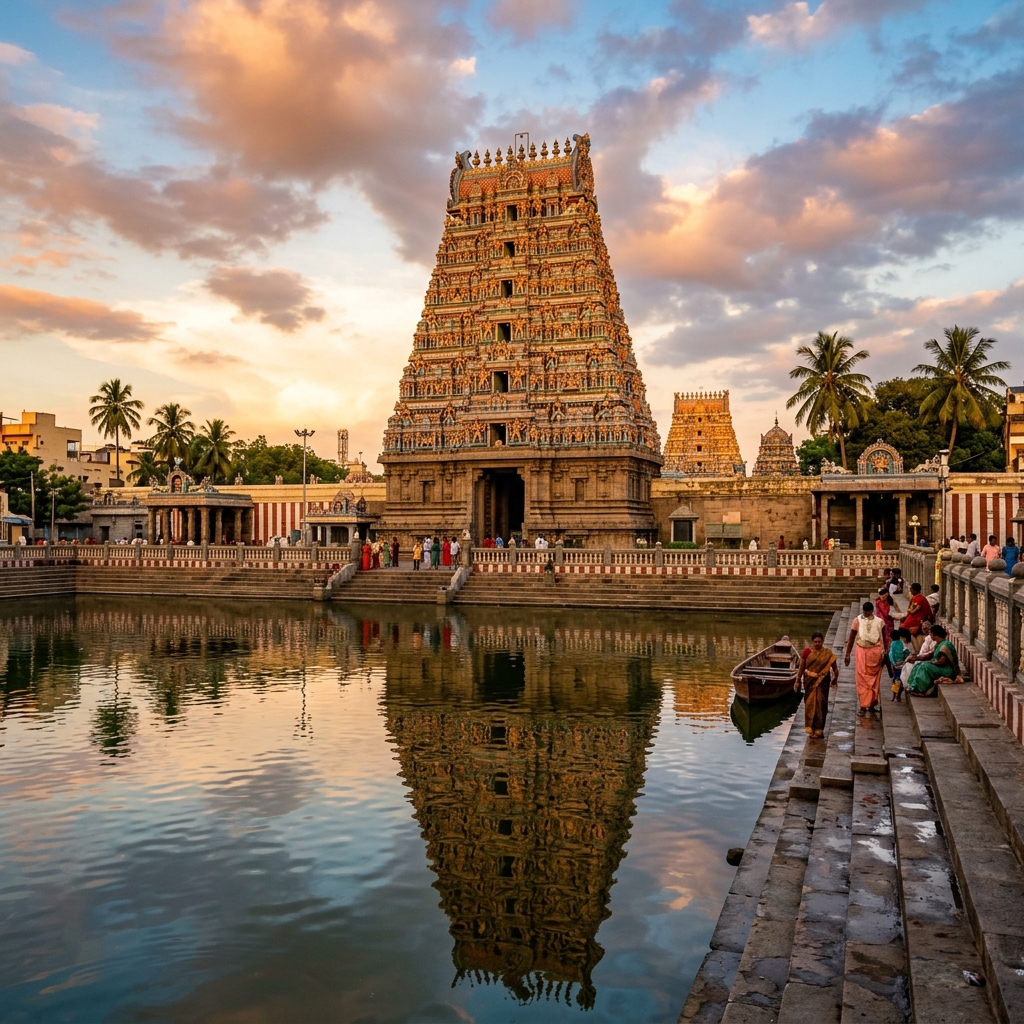
Located near the temple tank marking Kali's peaceful retreat.

🛕

Mukthi Theertham

Sacred temple water tank.

Practical Visitor Logistics & Dress Code

Temple Opening Timings & Daily Hours

Morning: 6:00 AM – 12:00 PM; Evening: 4:30 PM – 8:30 PM

Darshan & Special Entry Tickets

Free Darshan for all visitors

Dress Code & Special Rules

Traditional Indian attire required

Accessibility & Senior Citizens

Basic ramp access available

Car Parking & Footwear Cloakroom

Parking space available outside main Rajagopuram

Best Time to Visit & Festival Calendar

Seasonal weather guide, peaceful darshan timings, and annual Brahmotsavam festival dates:

  • Best Months: October to March
  • Major Festivals: Margazhi Thiruvaathirai (December–January), Panguni Swathi (Karaikkal Ammaiyar Festival), Maha Shivaratri

Transit, Accommodations & Prasadam Dining

How to Reach & Connectivity

• Nearest Railway Station: Thiruvalangadu Railway Station (MAF) - 5 km / Arakkonam Junction (AJJ) - 14 km • Nearest Airport: Chennai International Airport (MAA) - 65 km • Last-Mile Local Transport: Local buses and auto-rickshaws available from Thiruvalangadu railway station and Arakkonam

Free Annadhanam & Local Veg Dining

  • Temple Prasadam available during noon pooja
  • Local vegetarian eateries near Arakkonam bus stand

Accommodations & Lodging Hubs

  • Lodging options in Arakkonam (14 km) or Thiruvallur (18 km)

Nearby Heritage Spots (5–30 km Radius)

Combine your yatra with surrounding UNESCO heritage sites, Paadal Petra Sthalams & Divya Desams:

Thiruvallur Veeraraghava Perumal Temple

18 km
Sacred & Heritage Spot

Famous Vaishnavite Divya Desam

Tiruttani Subramanyaswamy Temple

28 km
Sacred & Heritage Spot

Fifth Arupadai Veedu of Lord Murugan

Kanchipuram Heritage City

35 km
Sacred & Heritage Spot

Temple city of Ekambareswarar & Varadaraja Perumal

Verified References & Source Bibliography

  • Epigraphia Indica Vol. XXII - Thiruvalangadu Copper Plates of Rajendra Chola I
  • Tevaram Hymns of Tondaimandalam
  • ASI Chennai Circle Records

Community Photo Gallery (1)

Pilgrim Reflections (0)

No reflections logged for this destination yet.